
Caltech Wildlife: Butterflies
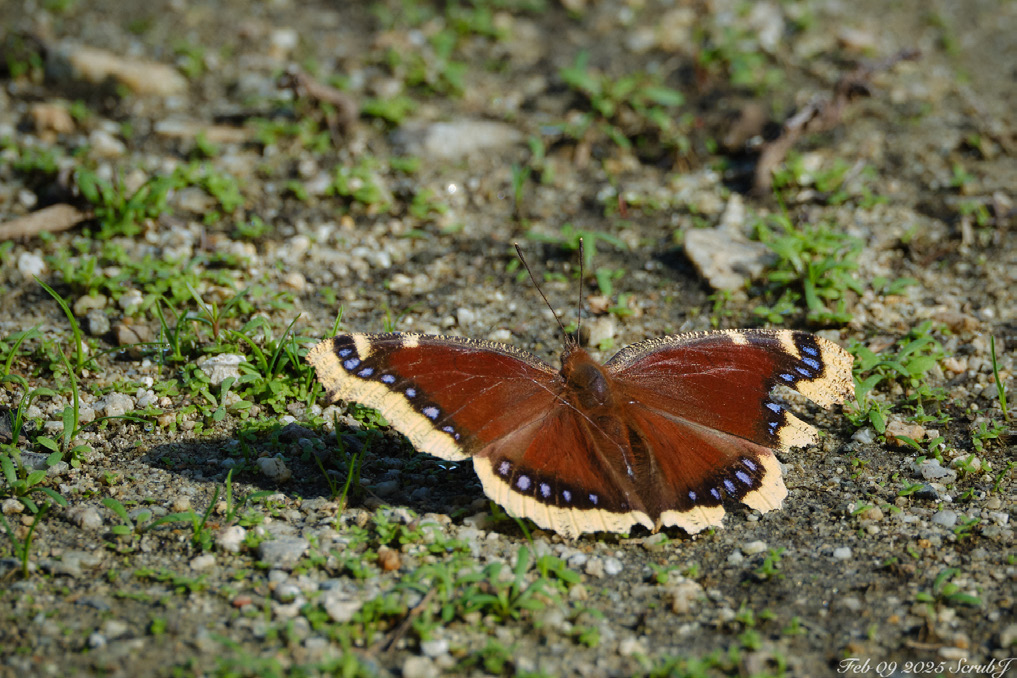
The mourning cloak has an elegant name and is less extravagant than the other butterflies, but they hang out for a long time.
It’s springtime, with blooms everywhere, and who wouldn’t appreciate a pair of colorful wings dancing in front of their eyes? In this issue, your avian specialist takes a small detour and presents some butterfly species on campus. While I haven’t surveyed the area thoroughly, there is a surprisingly rich collection of butterflies here, thanks to the variety of exotic flowers and plants. Once you start paying attention, the air itself feels a little more animated. Here are some that I have seen:
The mourning cloak sounds like an elegant name for an assassin. And surprisingly, they are native across much of the Northern Hemisphere, carrying equally elegant names in different languages. In English alone there are a few nicknames. In the U.K., they are called the “Camberwell beauty,” named after the biologist that discovered them. They also have an older name, “big surprise” — perhaps inspired by the striking contrast between the yellow rim and their otherwise dark cloak, or simply by how unexpectedly they appear across such a wide range of the world.
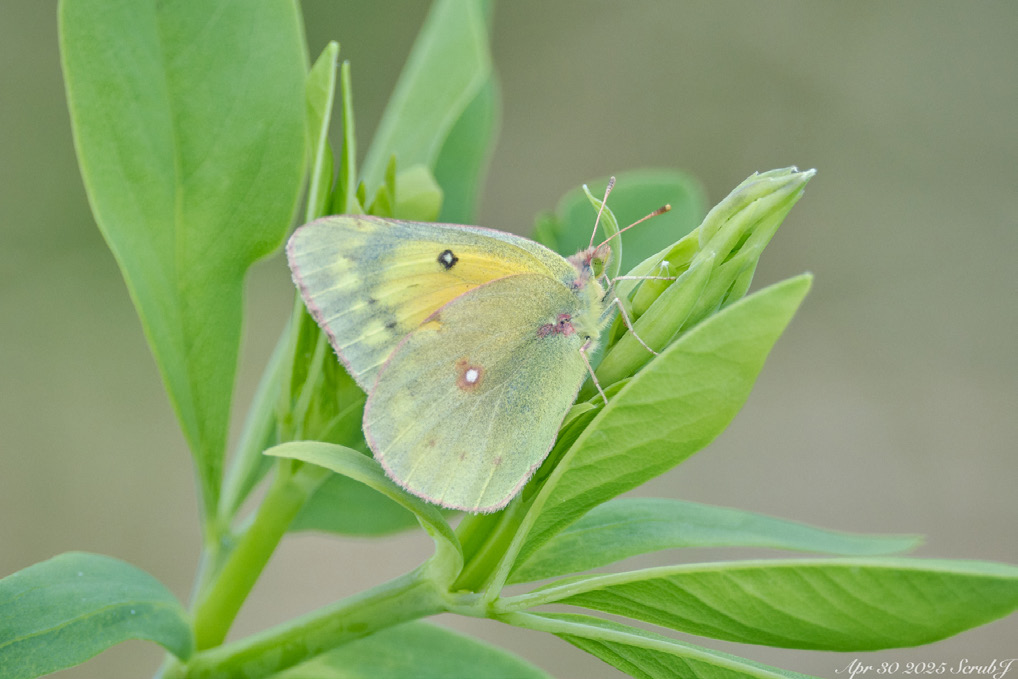
The orange sulphur looks cute and innocuous, but is also one of the biggest enemies to alfalfa. They are also called alfalfa butterflies.
Unlike most butterflies, which live only days to weeks after metamorphosis, mourning cloaks can survive up to 12 months. That longevity makes them feel almost mythological, like Greek gods that refuse to age. Under the California sun, when temperatures rise, they spread their dark wings to absorb heat, and for that reason they are often among the first butterflies to appear in early spring.
If the mourning cloak is a philosopher of time, the orange sulphur butterfly belongs to a much faster rhythm. Its bright, light-hearted color fits perfectly with spring. These butterflies live at a fast pace, moving through their life cycle almost impatiently. Males and females distinguish each other using ultraviolet light. During the busy breeding season, a female orange sulphur flies in quick, erratic bursts close to the ground, pairs with multiple eager males, and will then lay hundreds of eggs. I suppose their parents don’t have to complain and rush her into marriage.
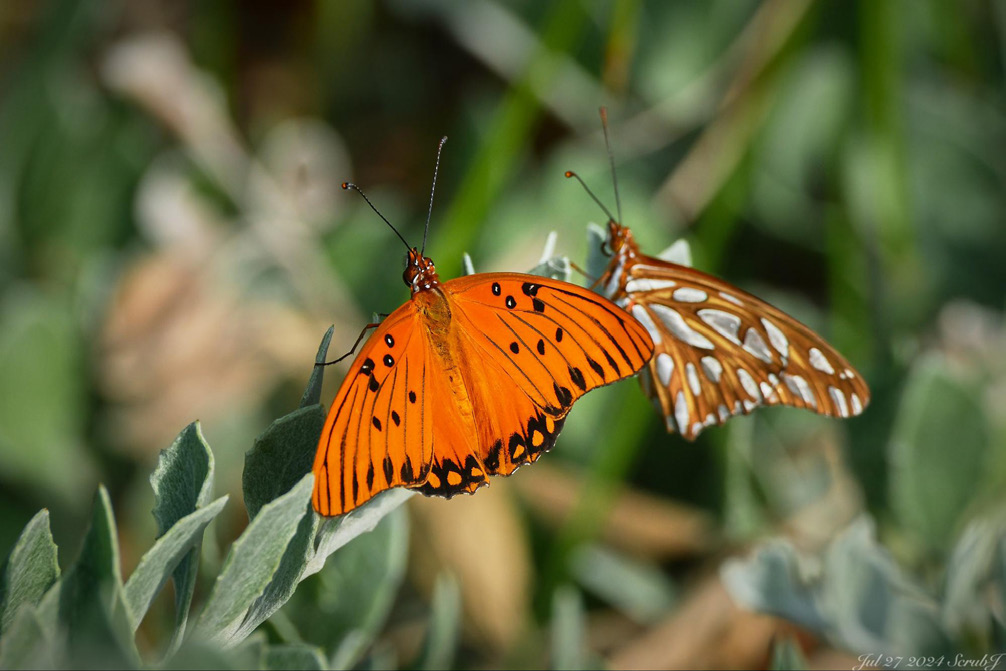
A pair of gulf fritillaries showing you a contrast of their dorsal and ventral views.
The gulf fritillary is larger and more vividly colored than the previous two species. Their bright orange wings make them easy to spot, but the color is not just for aesthetics. These butterflies deploy chemical defenses at predators and eat passion vines that make them toxic. As a result, birds quickly learn to respect the signal. Their orange becomes a far more effective warning label than the California Proposition 65 notice on your chips. They are also called passion butterflies, because their caterpillars rely solely on passion vines as host plants. Their presence in Southern California is much because of our gardening preferences.
Another orange butterfly — the monarch butterfly — is perhaps the most famous of them all, and they can be seen on campus as well. Their slow, deliberate wingbeats carry a different kind of story. Monarchs are known for their long-distance migration from Canada to Mexico, where a single “super generation” travels thousands of miles south over the course of months. Their descendants then make the return journey north in stages the following spring. For them, Caltech is just a temporary stop along a long trajectory. Still, any stop for fuel matters, just like for many of us here that are fueling up at Caltech for the next important stage of life.
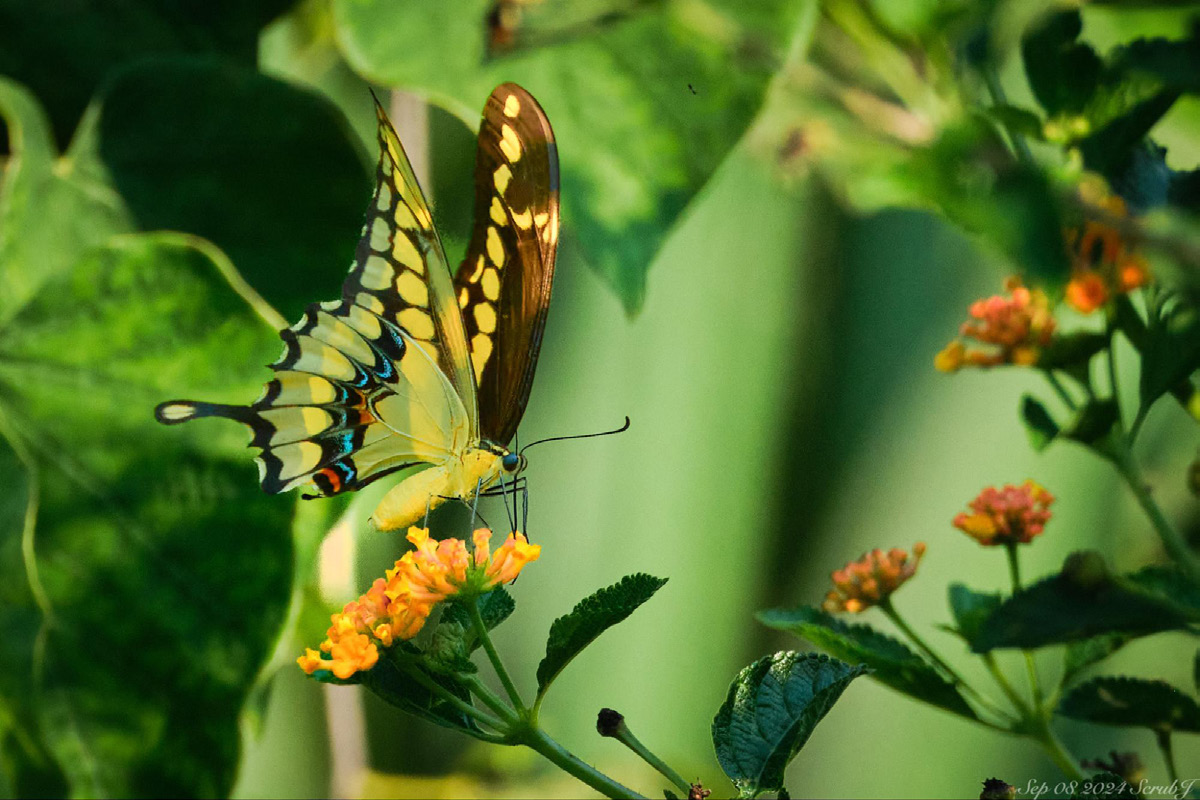
Western giant swallowtails have blue and red stripes on the ventral side.
Lastly, the western giant swallowtail is my personal favorite, perhaps because it was my first model for wildlife photography. On a sunny afternoon in July 2024, when I had just gotten my camera, I rushed outside with unreasonable excitement to test it.
The sun was scorching and most birds had retreated into the shade, but a giant swallowtail landed right in front of me among yellow flowers along Moore Walk. As the largest butterfly in North America, it is almost the size of a hummingbird, and the delicate swallowtail extensions on its wings add even more elegance. Since spotting the first swallowtail, I have started to pay more attention to insect life and even made peace with caterpillars (though I still keep a respectful distance towards their eerie wiggling bodies).
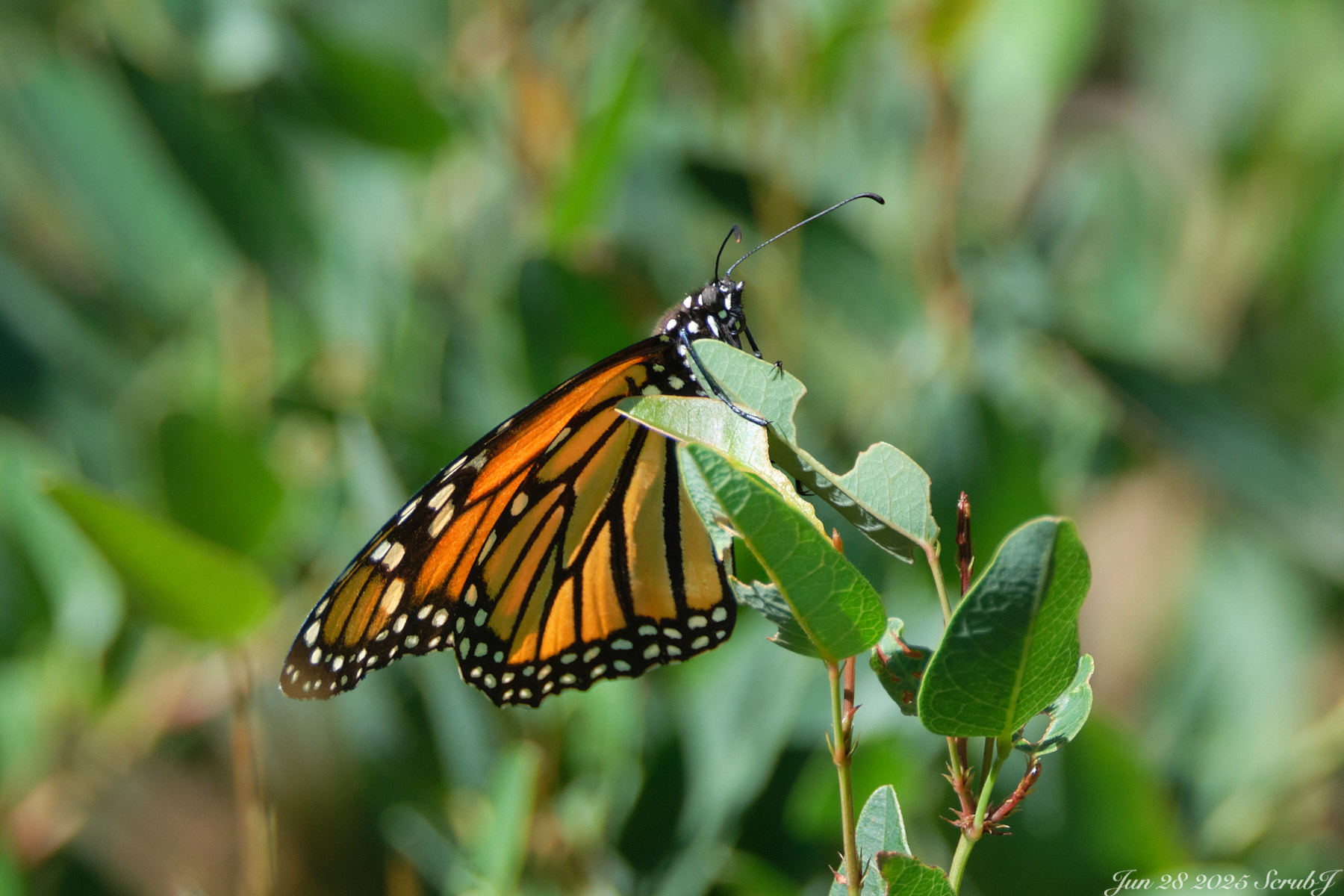
A monarch butterfly is fueling up for its long journey.
Butterflies, just like birds to those fast-walking Caltech people, often escape our attention simply because we are not looking for them. But try to practice tuning your attention to the language of Nature around us. Even within a five-minute walk from the parking lot to your office, you can still catch fleeting sounds of birds and shadows of butterflies. They remind us that even in our life filled with manuscripts, p-sets and grant deadlines, there are other ongoing missions that are equally important.
All photos by Jieyu Zheng.
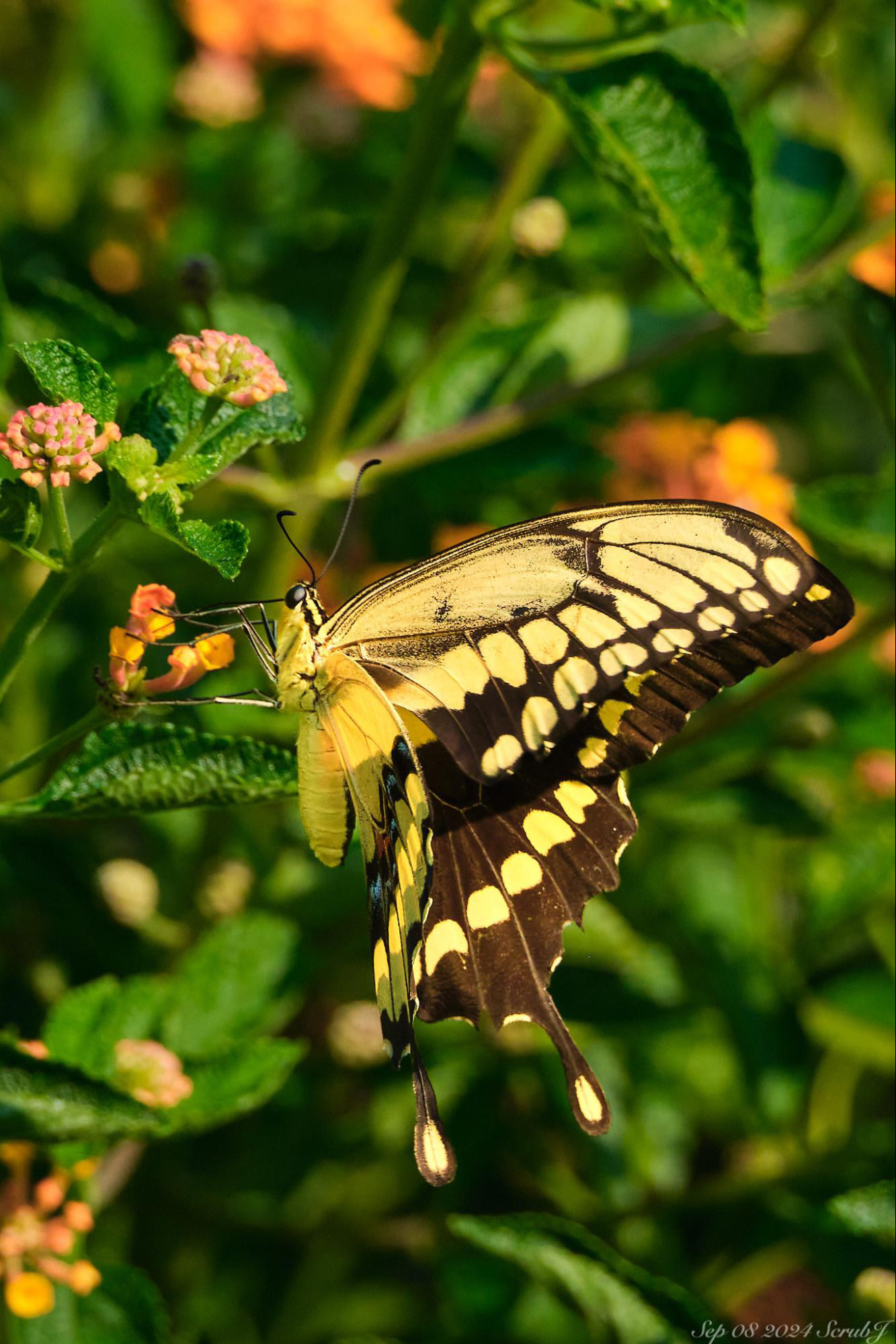
The western giant swallowtail is the largest butterfly in the United States!