
Caltech Wildlife: The Pond Ecosystem
Happy New Year to the loyal readers of my wildlife column! With ample winter rain and a lower likelihood of wildfires this year, it feels fitting to begin the term by turning our attention to aquatic animals and the ecosystems they inhabit.
Although Southern California is generally dry, humans have long built artificial water systems to satisfy their aesthetic desires. Caltech is no exception. The campus hosts several iconic water features: the turtle ponds in Throop Memorial Garden, the Caltech pond in front of Caltech Hall (no pun intended), the Gene Pool, and the two lily ponds just south of Beckman Mall. These carefully maintained systems are full of life, and wildlife takes advantage of urban resources across different seasons.
As a birder, my personal favorites are the waterfowl that occasionally land on campus. Over my five years as a Ph.D. student, I have seen mallards napping on the Water Forms sculpture at sunset, resting alongside turtles on sun-warmed rocks, and flying overhead with quacking calls. (Yes, ducks do fly high — see our previous article on bird immigrants.) Some especially lucky students have even spotted Canada geese that have abandoned long migrations in favor of the generous conditions provided by local parks. For me, however, the most thrilling sight is the flash of white wings from a snowy egret.
Snowy egrets feed primarily on fish and can engage in a concentrated state of fishing for hours. Last New Year’s Day, while searching campus for coyotes to photograph, I encountered a snowy egret preparing its meal in the lily ponds. It worked methodically in the ponds with elegant techniques: stirring up mud with its long legs, holding its head perfectly still, then striking the water with precise accuracy at the exact point of its gaze. By my rough count, more than half of its attempts were successful. It sometimes victoriously tossed a fish into the air like a chef stir-frying in a pan. The egret seemed entirely undisturbed by onlookers gathered nearby with smartphones. The rectangular edges of the pond acted like velvet stanchions, keeping the paparazzi at bay as the celebrity bird strutted its red carpet.
Why are there fish in Caltech’s ponds? Rumor has it that campus management intentionally introduced them to reduce mosquitoes during the summer months. While we still need to scratch our skins from mosquito bites, these small fish — likely mosquitofish or minnows — diligently protect us by feeding on mosquito larvae beneath the water’s surface. In turn, they provide food for predators like turtles and egrets and form a simple but complete food chain.
Though we are in the heart of winter now, there is much to look forward to in the warmer months. By summer, water lilies will bloom in white and pink, attracting dragonflies such as blue dashers and flame skimmers. Despite their small size, dragonflies are formidably skilled aerial hunters (their success rate may be higher than 90%). Their flight controls fascinated biologists for decades. Look closely, and you may spot a mating pair joined midflight.
Of course, the most important residents to the pond ecosystem—and perhaps to the student life at Caltech—are the turtles. After writing this column for a year, I must admit it is long overdue to address these animals that, according to more than 600 Caltech students, should be the alternative mascot. I have delayed this topic partly because I am no turtle expert and would love input from the Caltech Turtle Club. More on that in our next issue…
All photos by Jieyu Zheng.
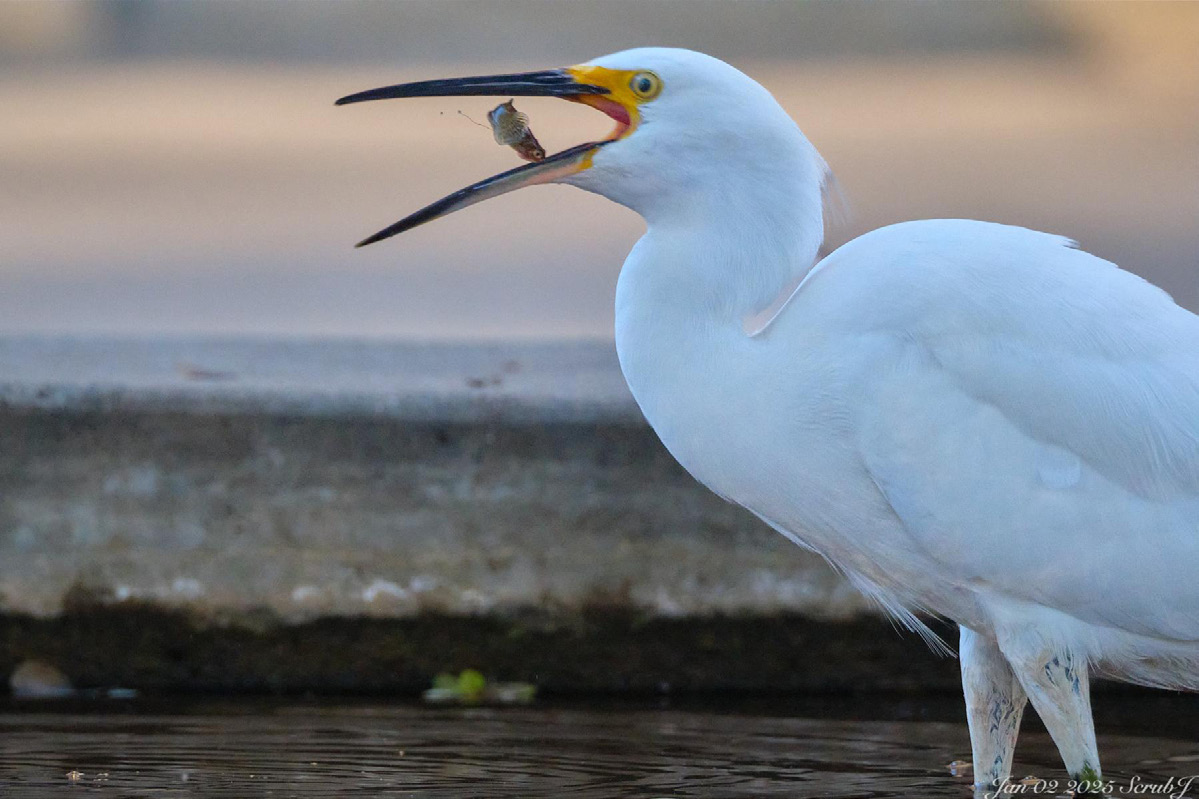
The final moment of (possibly) a mosquitofish, captured immediately before the end of its short life.
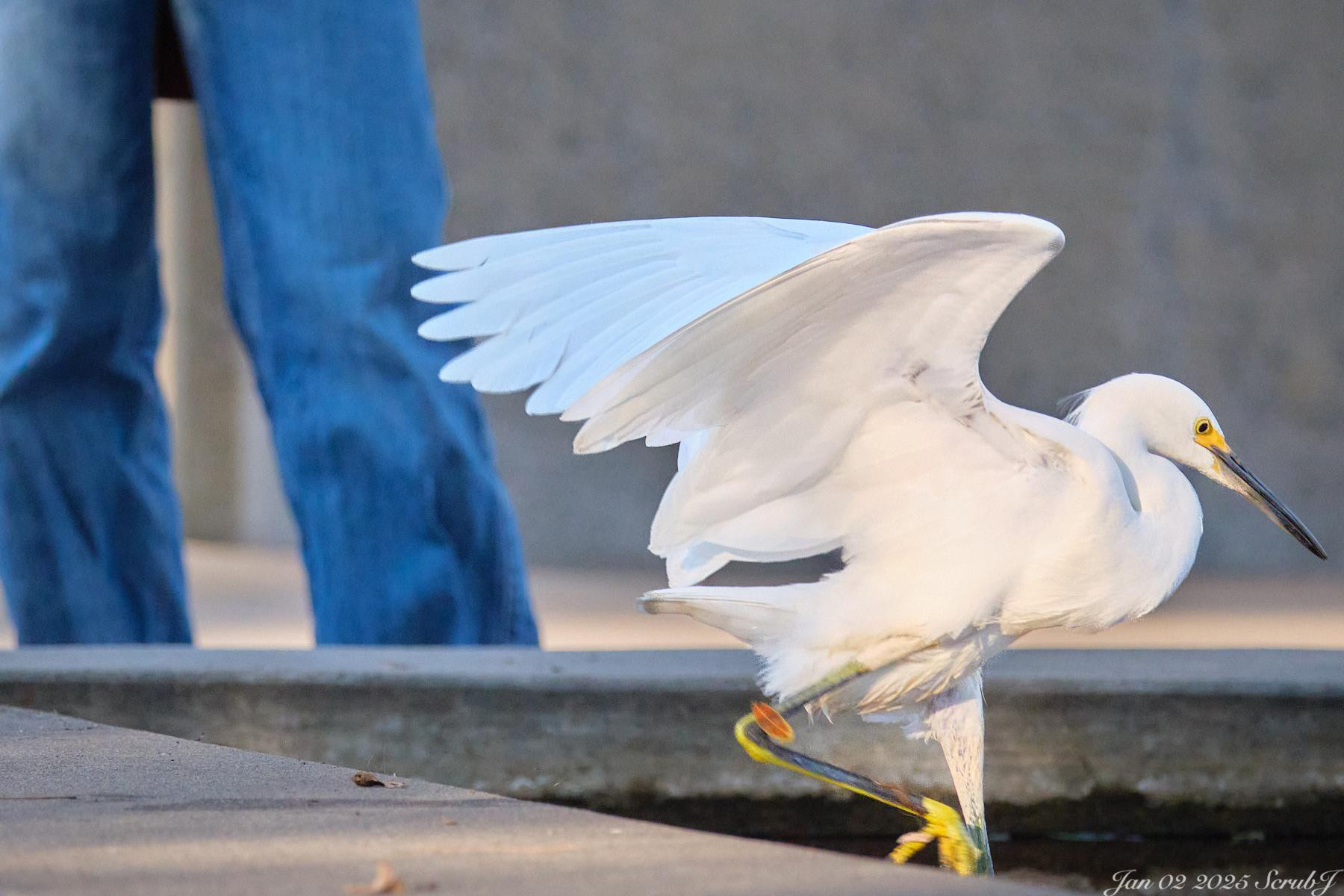
The snowy egret hopped into the lily pond under the stare of a Caltech student.
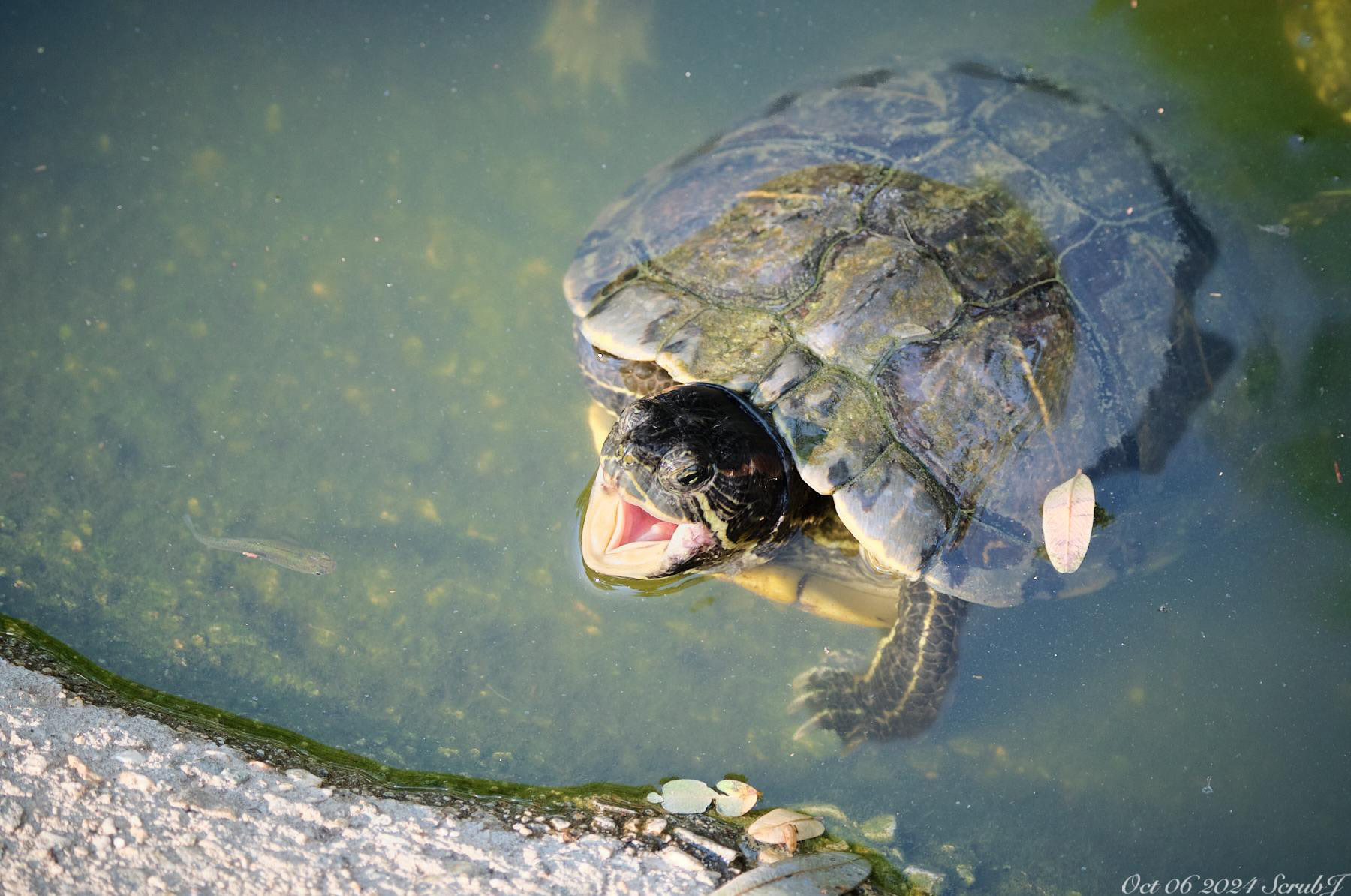
The famous Caltech red-eared slider along with a tiny fish on the left side.
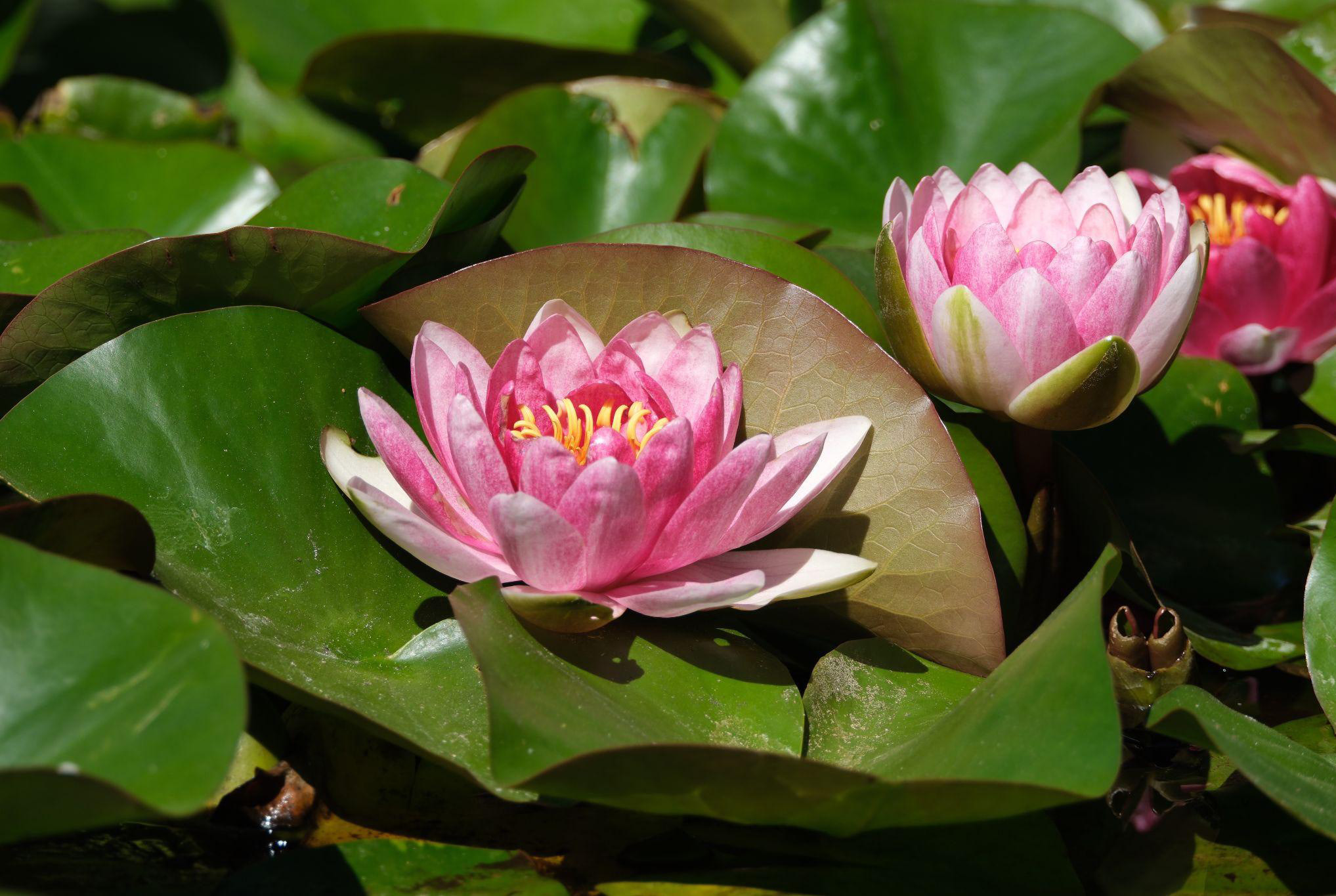
Pink water lilies that will soon bloom in the Spring term.

A blue dasher on the water lily. You will see many dragonflies in the summer.