← All issues

March 4, 2025

Issue 22 of 2078

Open the full PDF

You’ve probably heard a joke about JPL standing for Jack Parsons Laboratory. Or at least you’ve heard that Jack Parsons was one of the founders of JPL and that a crater on the moon’s dark side is named after him. But have you ever delved into the subtext, personality, habits, and life of Jack Parsons? Probably not. So, that’s what I’m here for. Over the last month, I’ve studied the life and legacy of this charismatic, visionary, dreamy, mystical… and possibly crazy guy. Remember that in a new
(continued)

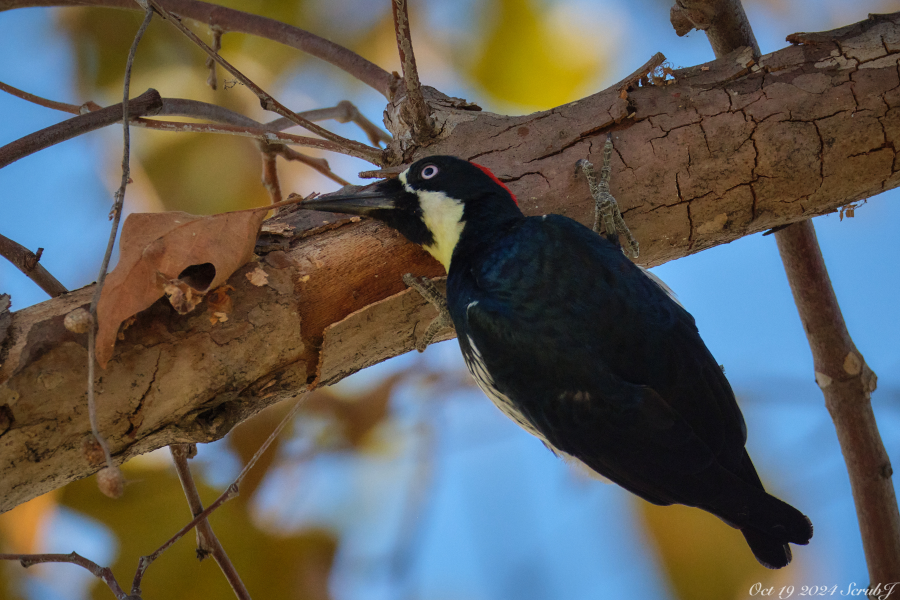
Woodpeckers are perhaps the most overlooked yet ever-present wildlife species on campus. Like the ubiquitous fox squirrels (a topic for another day), they are a daily sight if you know where to look. Every time I mention them to other Caltech students, the most common reaction is, “Wait, we have woodpeckers on campus?!” And I’ll nod slowly, like a long-time local: “Yes, we have at least three families of them.” Among all woodpecker species, acorn woodpeckers stand out for their habit of dri

(continued)

Well, this evening I find myself with one of my usual inspirations. I promised myself that I would go to bed early, but, in this place, that is never really possible. I tried, at least, and now, in this phase of almost REM relaxation, I write. Background music fills the room, my rosettes hanging on the wall watch me silently, and in these six square meters of chaos – today I would say around 70% – I try to put my thoughts in order. It has been a tough day. The bed is still unmade, but I will sle

(continued)

Democritus: The Ancient Greek Who Would Have Loved Caltech’s Labs (If He Had a Microscope) Imagine if some guy from 2,300 years ago walked into a Caltech physics lab, took one look at an electron microscope, and said, “Yep, told you so.” That guy would be Democritus, the ancient Greek philosopher who somehow managed to predict the existence of atoms without a single piece of scientific equipment—just pure brainpower, a lot of thinking, and probably too much free time. Sure, he didn’t get eve

(continued)

Caltech joined several other leading American research universities in a lawsuit against the National Institutes of Health (NIH). Filed on February 10, the lawsuit challenges what it describes as “a flagrantly unlawful action… that, if allowed to stand, will devastate medical research at America’s universities.” On February 7, the NIH announced that indirect costs for all new and existing grants would be standardized at a rate of 15%. When a grant is awarded, direct costs are how much is spent

(continued)

Over the last month, a series of federal funding cuts to scientific research has created disruptions and uncertainty for various agencies and institutions. The National Science Foundation (NSF), which funds research across all disciplines of science and engineering, and the National Oceanic and Atmospheric Administration (NOAA), which funds climate research and oversees environmental monitoring, are both facing significant reductions to their budgets and staff cuts of up to 50%. In addition to

(continued)

In research published last year by Ecology & Conservation Science, I showed that electromagnetic fields (EMFs) can selectively impact low-growing plants to make them explosively flammable. The terpene hydroperoxides that EMFs produce can also cause spontaneous combustion. Fires examined in this paper each showed multiple independent starts and wind patterns with extensive periods of very low wind followed by strong gusty winds, cons

(continued)