I’m sitting here three days later, and I still can’t get it out of my head. The movie, I mean. Wicked. I went because everyone was going and I needed a break from studying for finals and maybe because I was curious about all the hype but I wasn’t expecting… this. I wasn’t expecting to leave the theater feeling like someone had reached into my chest and rearranged everything.
I can’t quite explain it properly. It’s like when you’re looking at yourself in a mirror and suddenly see something you’ve never noticed before—some truth about your face, your body, your soul that was always there but you had learned not to see. Except the mirror was a movie about a green girl who can do magic, and I was sitting in a theater that smelled like stale popcorn, with my knees pressed against the seat in front of me, trying not to sob loud enough for strangers to hear.
The thing is, I’ve always been the kind of person who doesn’t really believe in herself. Not in that fake modest way where you fish for compliments. I mean, genuinely, bone-deep, convinced that everyone else got some manual for how to be a person, and I was absent that day. That everyone else knows how to exist without constantly apologizing for it.
(God, even writing that sounds dramatic. But it’s true, it hurts.)
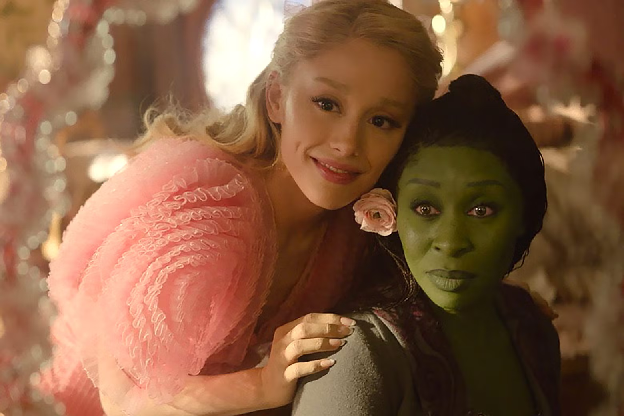
So when Elphaba showed up on screen — Cynthia Erivo with her perfect voice and her green skin and her way of holding herself like she’s apologizing for existing, like she’s trying to take up less space even though she’s literally green and can’t hide — something in my chest just… cracked open. Like a fault line I didn’t know was there.
That Quote Everyone’s Fighting About
Okay, so there’s this moment. Elphaba tells Fiero she wishes she could be beautiful for him, and he says, “It’s not lying, it’s looking at things another way.” And the entire internet is having feelings about it.
I saw this Reddit thread where someone called it backhanded, and honestly? I felt that. Like, just tell her she’s beautiful, you know? How hard is that? But then I kept thinking about it during the drive home (and the next day, and the day after that), and maybe that’s missing the point.
Maybe that’s not right but — what if he’s not being cruel? What if he’s trying to say something bigger about how beauty isn’t about the outside at all?
(I spent way too much time on that Reddit thread. People have OPINIONS.)
Because here’s what I think he means: Beauty isn’t skin-deep, it’s not about being blonde or having perfect skin or fitting into some mold. It’s about who you are inside. It’s about your mind, your courage, your heart. Elphaba is asking him to see her differently, but he says he already sees something deeper — something that matters more.
And here’s the thing that makes this hurt in the best way: later, Fiero becomes the Scarecrow. His beautiful face, his charm, his whole physical presence — gone. Transformed into straw and fabric. And Elphaba tells him the same thing back: “It’s not lying, it’s looking at things another way.”
Because now he understands. He’s not beautiful on the outside anymore, either. But that was never what mattered. What made him worth loving wasn’t his perfect hair or his smile. It was him. The person inside.
The circle of that just… god. It destroys me.
I’ve spent so much of my life obsessing over the outside. Am I pretty enough, thin enough, put-together enough. Asking people to validate my appearance because I thought that’s where value lived. But what if I’ve been asking the wrong question this entire time?
What if beauty — real beauty — is about who you are when everything external is stripped away? What if it’s about your thoughts, your integrity, your capacity to love and be loved? What if the thing that makes us beautiful is the thing that can never be taken from us, even when we’re turned into scarecrows?
Fiero knew this when he looked at Elphaba. And eventually, when his own exterior is destroyed, he learns it about himself too. That’s not backhanded. That’s profound.
I don’t know. Maybe I’m reading too much into it. But sitting there in the dark, this felt like the most important thing in the whole movie.
The Part Where I Started Crying
I need to tell you something. I never cry in movies. Like, never. I can watch the saddest thing and stay completely dry-eyed because some part of me is always aware
that it’s fiction, that it’s acting, that it’s not real.
But during this scene — Elphaba wishing she could be beautiful, Fiero saying it’s looking at things another way — I started crying. Not pretty tears. Ugly crying. The kind where you’re trying to be quiet but your breathing gets weird, and the person next to you definitely notices.
Because all I could think about was the mirror. My mirror. The one in my bathroom that I stand in front of every morning, cataloging everything wrong. Too much here, not enough there, never never never right. The scale that hasn’t shown the right number in years because I don’t even know what the right number is anymore. Maybe there is no right number. Maybe I’ve been trying to disappear into a number that doesn’t exist.
The anorexia. Let’s just say it. Let’s make it real. The eating disorder I don’t talk about because naming it means admitting I’m broken in a way I can’t fix with willpower or discipline or one more skipped meal.
I’ve spent years trying to make myself smaller. Literally smaller. Because somewhere along the way I learned that taking up less space meant being more acceptable. That if I could just be thin enough, controlled enough, perfect enough on the outside, maybe someone would finally see me. Maybe I would finally deserve to be seen.
But the irony is brutal. The irony kills me every single day. The more I disappeared physically, the more invisible I became. I thought shrinking myself would make me beautiful, would make me worthy of being looked at, would make me someone people choose. Instead I just… faded. Into background noise. Into nothing.
And sitting there watching Elphaba ask to be seen as beautiful, all I could feel was every morning I’ve skipped breakfast. Every meal I’ve calculated down to the calorie. Every time I’ve looked at my body and felt nothing but disgust, failure, wrongness. Every moment I’ve believed that my worth lived in my appearance, in the number on the scale, in whether I could fit into smaller and smaller spaces until maybe I wouldn’t exist at all and that would be easier than this.
The fear of not being seen. That’s what it’s always been about, isn’t it? The terror that I could disappear completely and no one would notice. That I’m already disappearing and no one cares.
I starved myself trying to become visible. Trying to become the kind of person people notice, people love, people choose. I made myself so hungry — for food, for validation, for proof that I matter — that I forgot what it feels like to be full. But Fiero is telling Elphaba — and maybe the universe was screaming at me through this movie — that we’ve been looking at the wrong thing entirely.
Beauty isn’t in the body. It’s not in the measurements or the weight or the perfect exterior I’ve been torturing myself to achieve. It’s in the mind, the heart, the person underneath all of it. The thing that stays when everything else is stripped away.
I sat there in that dark theater, tears running down my face and I couldn’t stop them, didn’t want to stop them, and thought: I’ve been trying to be beautiful in all the wrong ways. I’ve been asking to be seen while systematically erasing myself. I’ve been measuring my worth by the one metric that will never, ever be enough because it was designed to make me feel like I’m failing. It was always designed to make me fail.
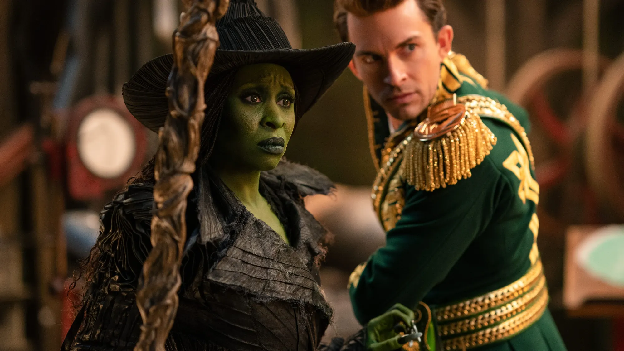
When Elphaba later tells Fiero the same thing — when he’s the Scarecrow and his beauty is gone, when all that’s left is straw and fabric and the person he actually is — I understood it differently. I understood it in my body, not just my brain. Because when you lose the exterior, when the body fails you or changes you or is taken from you, all that’s left is the truth of who you are inside. And that has to be enough. It has to be.
And maybe that’s what I need to learn. Maybe recovery isn’t about finding the right weight or the right body or the right way to be beautiful by someone else’s definition. Maybe it’s about learning that beauty was never about the outside at all. Maybe it’s about learning to exist in my body instead of at war with it.
(I’m still crying while I write this. Three days later and I can barely see the screen. That’s how deep this cut. That’s how much this matters.)
The Wizard Song (Dreams and Disappointment)
“The Wizard and I” destroyed me. Not because it’s sad — it’s actually hopeful, which is worse.
“Many years I have waited / For a gift like yours to appear…”
Elphaba is singing about meeting this powerful person who will finally see her potential and make everything make sense. All the years of being different, being mocked, being an outsider — it will all be worth it because the Wizard will understand.
And I’m watching this thinking: Oh no. Oh sweetie, no.
Because I’ve been there. Still am there. Waiting for some professor or boss or authority figure to notice me and say “Yes, you belong here, you’re special, everything is going to work out.” Pinning all my self-worth on external validation from people who probably don’t even remember my name, who will forget me the moment I leave the room. And I know it’s pathetic but I keep doing it anyway because I don’t know how else to know if I’m real.
The song is gorgeous and heartbreaking because you know it’s not going to work out. The Wizard is a fraud (spoiler alert, but also, come on, we all know the story). Elphaba is setting herself up for the kind of disappointment that changes you.
(Also, can we talk about how Cynthia Erivo’s voice just… exists? Like, how is that legal?)
But maybe that’s the point. Maybe we all need to have our Wizard moment — that crushing realization that the people we thought had the power to validate us are just… people. Flawed, scared, sometimes corrupt people who can’t give us what we’re looking for because what we’re looking for has to come from inside.
I’m still working on that part.
I’m Not That Girl (The Anthem I Didn’t Want)
“Don’t dream too far / Don’t lose sight of who you are / Don’t remember that rush of joy / He could be that boy / I’m not that girl”
I had to excuse myself to the bathroom after this one. Just sat there in the stall crying, trying to be quiet. It felt embarrassing, but also, I couldn’t stop because it felt like something inside me was finally breaking open.
It’s not even about the boy. I mean, it is, but it’s bigger than that. It’s about being the person who talks themselves out of everything before anyone else can reject them. It’s about being so convinced you’re not “that girl” — the one who gets chosen — that you don’t even try.
I know this song. I’ve been singing it in my head for years. Every time I talk myself out of speaking up, showing up, taking up space. This is my anthem and I hate that it is.
Not out loud. Never out loud. But in my head, when I don’t apply for things I want. When I don’t speak up in class. When I assume I’m not invited, not wanted, or not enough.
The worst part is how it sounds like wisdom. “Don’t dream too far, don’t lose sight of who you are.” But really, it’s just fear wearing a disguise.
And the thing that kills me is that later — spoiler again but whatever — we find out Elphaba WAS that girl. Fiero did see her. I chose her. Her whole tragic self-protection thing was based on a lie she told herself.
How many times have I been wrong about not being “that girl”? How many opportunities did I miss because I decided in advance I wasn’t good enough? How much of my life have I wasted protecting myself from rejection that might never have come?
(This is getting depressing. But also maybe necessary?)
Popular (The Violence of Trying to Fix People)
Ariana Grande is perfect in this. Too perfect. Which is exactly the point.
“Popular” should be funny — and it is — but it’s also kind of horrifying when you think about it. Glinda isn’t trying to be mean. She genuinely thinks she’s helping by teaching Elphaba how to be more… acceptable.
“Popular! You’re gonna be popular! / I’ll teach you the proper poise when you talk to boys…”
It sounds so helpful. So generous. But listen to what she’s actually saying: You need to be different. You need to perform femininity better. You need to hide who you are and become someone more palatable.
The song is about conformity dressed up as friendship. And the tragedy is that Elphaba wants it to work. For a minute there, she believes maybe if she just tries hard enough to be normal, everything will be okay.
But normal is a cage. And some of us aren’t built for cages.
Defying Gravity (The Moment Everything Changes)
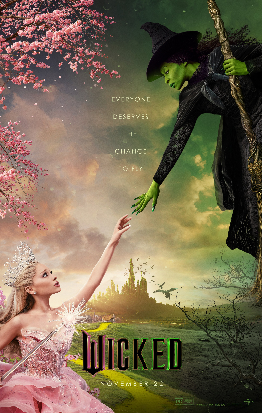
This is the song everyone knows. The big number. The eleven o’clock moment where Elphaba rises above the stage and you forget you’re watching a movie because it feels like witnessing actual magic.
But sitting there in the theater, I wasn’t thinking about the technical aspects or the staging. I was thinking about the exact moment she decides to stop playing by everyone else’s rules.
“I’m through with playing by the rules of someone else’s game / Too late for second-guessing, too late to go back to sleep / It’s time to trust my instincts, close my eyes, and leap!”
That’s not about flying. That’s about the psychological moment when you stop seeking approval and start trusting yourself. When you realize that being liked and being right aren’t the same thing. When you choose authenticity over acceptance even though it’s going to cost you.
I’ve never had a “Defying Gravity” moment. But watching Elphaba rise above that stage, watching her literally defy the forces trying to keep her down, something in me broke and whispered: What would it feel like to trust my instincts for once? What would it feel like to just… rise?
(Probably nothing dramatic. I’m not going to suddenly develop magical powers. But maybe that’s not the point.)
The metaphor is perfect though. Gravity keeps us grounded, literally. But it also keeps us small. Safe. Predictable. And sometimes you have to fight against the fundamental forces holding you down if you want to rise.
Even if it means everyone thinks you’re wicked.
The Green Skin Thing (Being Visibly Different)
Elphaba’s green skin is the part of the metaphor I keep coming back to. She can’t hide it. Can’t minimize it. Can’t make it more comfortable for other people.
There’s this moment where Glinda says, “You’re green,” and Elphaba just says, “I AM.” Not apologetically. Not defensively. Not trying to minimize it or explain it away. Just… claiming it. Owning it. Yes, I’m green. Yes, I’m different. I AM.
I want to be able to do that. To say I AM without flinching, without apologizing, without making myself smaller so they can feel bigger.
Because here’s what I’m starting to understand: The green skin isn’t the problem. The world’s reaction to the green skin is the problem. And we can’t control other people’s reactions but we can control whether we let their discomfort become our shame.
Elphaba spends the whole first act trying to fit in despite being green. By the end, she’s powerful BECAUSE she’s green. The thing that made her different made her magical.
Maybe that’s true for all of us. Maybe the things we’re most self-conscious about are actually our superpowers waiting to be claimed.
(I’m still working on believing this. Some days are better than others.)
What This Movie Did to Me (I Think)
I left the theater feeling weird. Not good-weird or bad-weird, just… different. Like something had shifted that I couldn’t name yet.
It’s been three days and I think I’m starting to figure it out.
I’ve spent so much time trying to be the right kind of person. Interesting but not weird. Present but not too much. Real but not too real.
But Elphaba doesn’t do that. She tries, in the beginning. But eventually she stops managing other people’s comfort and starts managing her own integrity.
And yeah, it costs her. People think she’s wicked. She loses friends. She has to leave everything familiar behind. But she also becomes the most powerful person in the story. She also becomes free.
Maybe freedom and comfort are mutually exclusive. Maybe you can’t be free and safe at the same time. Maybe choosing yourself always costs something.
I don’t know if I’m brave enough for my own “Defying Gravity” moment yet. But I think I want to try.
The movie gave me a different framework for thinking about these things. What if the things I think are wrong with me are actually just… different? And what if different can be powerful?
(I realize I sound like a self-help book right now. But also maybe that’s okay.)
There’s this line from “For Good” at the end: “Because I knew you, I have been changed for good.” That’s what good art does. It changes you in ways you can’t undo. Shows you possibilities you can’t unsee.
I can’t unsee Elphaba rising above that stage, choosing herself over approval even though it meant losing everything. I can’t unhear “I’m through with playing by the rules of someone else’s game.” I can’t unfeel that moment in the theater when I realized I’ve been playing by the rules of someone else’s game my entire life. So what if I played by mine?
So maybe that’s enough for now. Maybe transformation doesn’t happen all at once in one perfect movie-moment revelation. Maybe it starts with seeing what’s possible and then learning to believe you deserve it too.
Maybe defying gravity starts with just… looking up. With imagining, for just one second, what it would feel like to rise.
I don’t know how to explain what Wicked did to me. But I’m different now. Something shifted. Something cracked open and I can’t close it again and I don’t want to. I’m different now. And I think that’s the point. I think that’s everything.