Strictly speaking, predators are animals that eat other animals, so a large proportion of our campus species qualify, including the undergrads ordering beef pho, the squirrels eating baby hummingbirds, and the occasionally cannibalistic turtles. While you are still blinking in disbelief and digesting that info, I am going to limit this column to a few obvious predators: those deemed dangerous by the consensus of two security forces – Caltech Security and the natural security league of American crows. Consider it a cool and rare chance to see predators up close in an urban habitat like Caltech. Observe with caution, using this wildlife guide below.
The birds of prey on campus are elegant predators at the top of the food chain. While there are no known nesting spots for them at Caltech, the pine trees and building ledges have served as great watchtowers for territory supervision. Contrary to the stereotypical image of outstretched talons, they spend most of their time quietly perched on a branch, scanning the distance. They can be surprisingly easy to miss unless their tranquility is actively disturbed. A shortcut for spotting hawks is to follow the dive-bombing mockingbirds or a gang of anxiously calling crows. They will lead you to the hawk they are harassing.
Several raptor species visit our campus. The red-tailed hawk, the most widespread hawk in North America, comes in many color variations. Juveniles, for example, don’t have red tails yet and can be an ID challenge for beginner birders. Slightly smaller are red-shouldered hawks, known for their repeated calls that set them apart from the single screams of red-tails. Once, I followed that distinctive call and found a red-shoulder at Red Door Cafe, but before I could admire the beautiful bird of prey, a crow gangster swooped in and chased it away. Cooper’s hawks are also very common in urban Southern California. Since they are smaller still and roughly crow-sized, I’ve occasionally mistaken a Cooper’s for a stout band-tailed pigeon, exactly what Cooper’s hawks like to eat.
Theoretically, we have great horned owls in Pasadena, and indeed, we have an owl – drum rolls – statue on campus too. A fake owl sits atop the Beckman Institute, overlooking the Gene Pool. Rumor has it that it’s there to deter sparrows from nesting. Unfortunately, it remains my only owl sighting at Caltech.
Another neighborhood celebrity is the coyote, a canine somewhere between a fox and a wolf in size. Coyotes usually live in small family groups of two or three. Their midnight howling is eerily wolf-like and can give you goosebumps, creating a Halloween-worthy illusion that there are a dozen of them around.
You might have noticed the coyote warning signs around campus. Follow their advice and do not approach or feed coyotes, and report sightings to Caltech Security (I’d love to hear about them too, if you wish). Although coyotes usually shy away from humans, attacks have been recorded in Southern California, with victims including toddlers and small dogs. If you can’t avoid a coyote, don’t run away; instead, use a somewhat counterintuitive tactic. Remember that you are a predator too, and predators size each other up. Make yourself big and loud and hold your ground, and the coyote will usually show you due deference. Bare your teeth if you want, but just don’t turn it into a selfie smile.
The matriarch coyote was very active around campus back in 2024, and I was lucky enough to photograph her on Wilson Ave. That set of photos was an instant hit during that era of frequent coyote sightings and won me my initial fame as a wildlife photographer. Unfortunately, I haven’t seen her or her family on campus since mid 2025, and my friends’ anecdotes about them have also grown sparse. This is likely a result of controlled trimming on campus: the lower parts of the bushes were cut back so that coyotes would be less willing to hide in them. I am in favor of a safer campus, but I also miss the days when they ran around purposefully, sending alarmed squirrels scrambling up the tree trunks.
Snowy egrets are underrated predators that also frequent our campus. They eat almost nothing but other animals: fish, crustaceans, and insects. What attracts them to our campus is the tiny mosquitofish in the ponds, so keep an eye on the bodies of water on campus, including the lily ponds and turtle ponds. Their white plumage might look too obvious, but it is thought to blend in against the bright sky and fool the fish below. They stir the water with their yellow feet (nicknamed “golden slippers”), then aim their long black bills at their targets with precision. Despite their hunting skills, they can become targets of the crow gangsters too, sometimes paying a mafia fee in fish.
True predators hunt discreetly and often alone, but you, as a predator, don’t have to – grab a friend and socialize over beef pho instead (served every Tuesday at Browne Dining Hall). Meanwhile, the crows will keep watch for the other predators, so you don’t have to stay constantly on guard.
All photos by Jieyu Zheng.
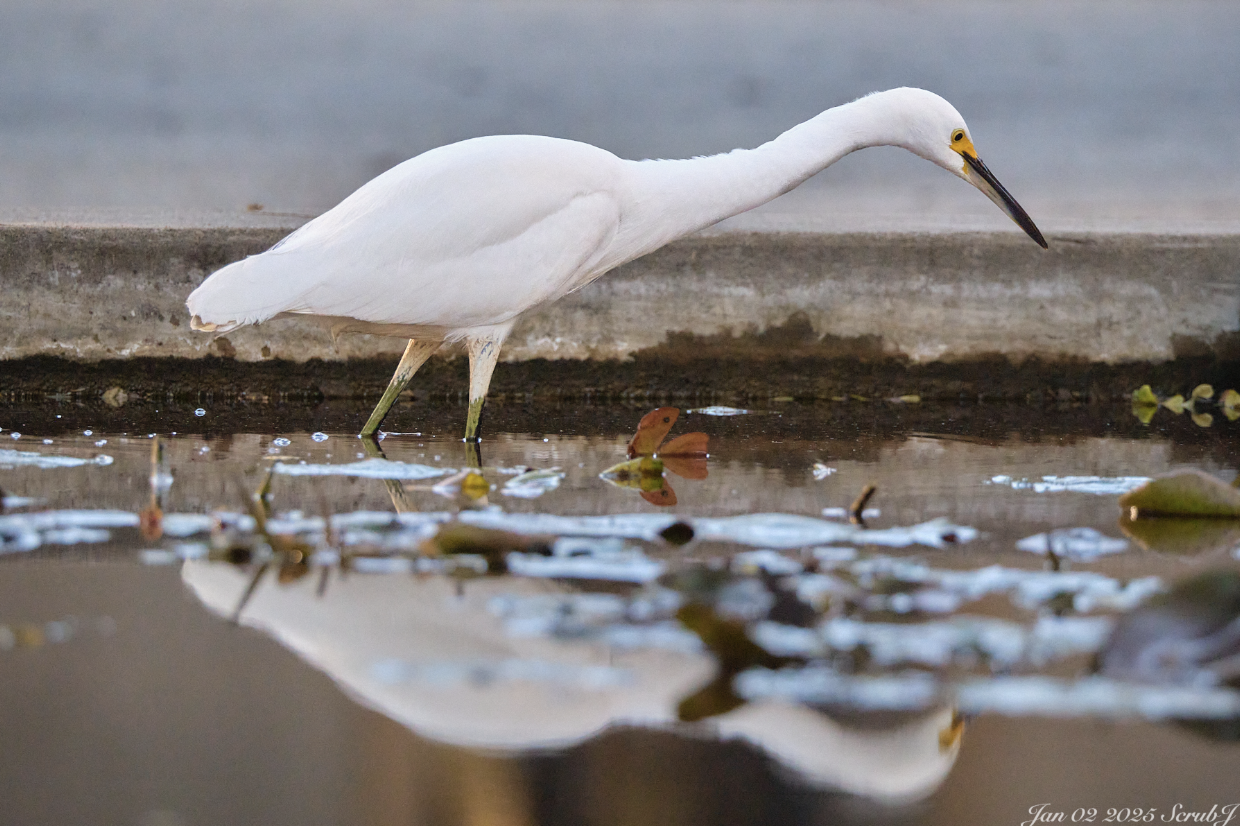
Only occasionally sighted, snow egrets are focused hunters at the lily ponds.
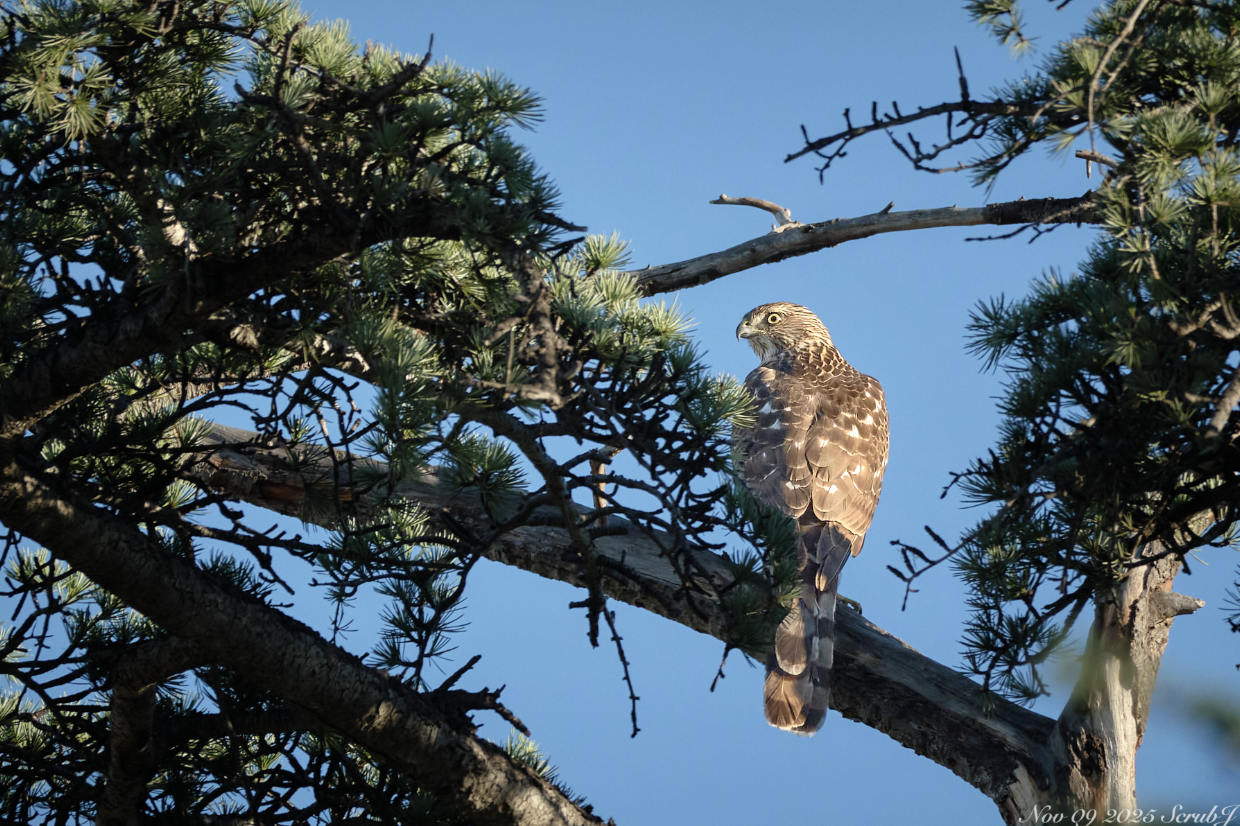
A juvenile Cooper’s hawk on a tall pine tree is almost shaped like a pigeon.
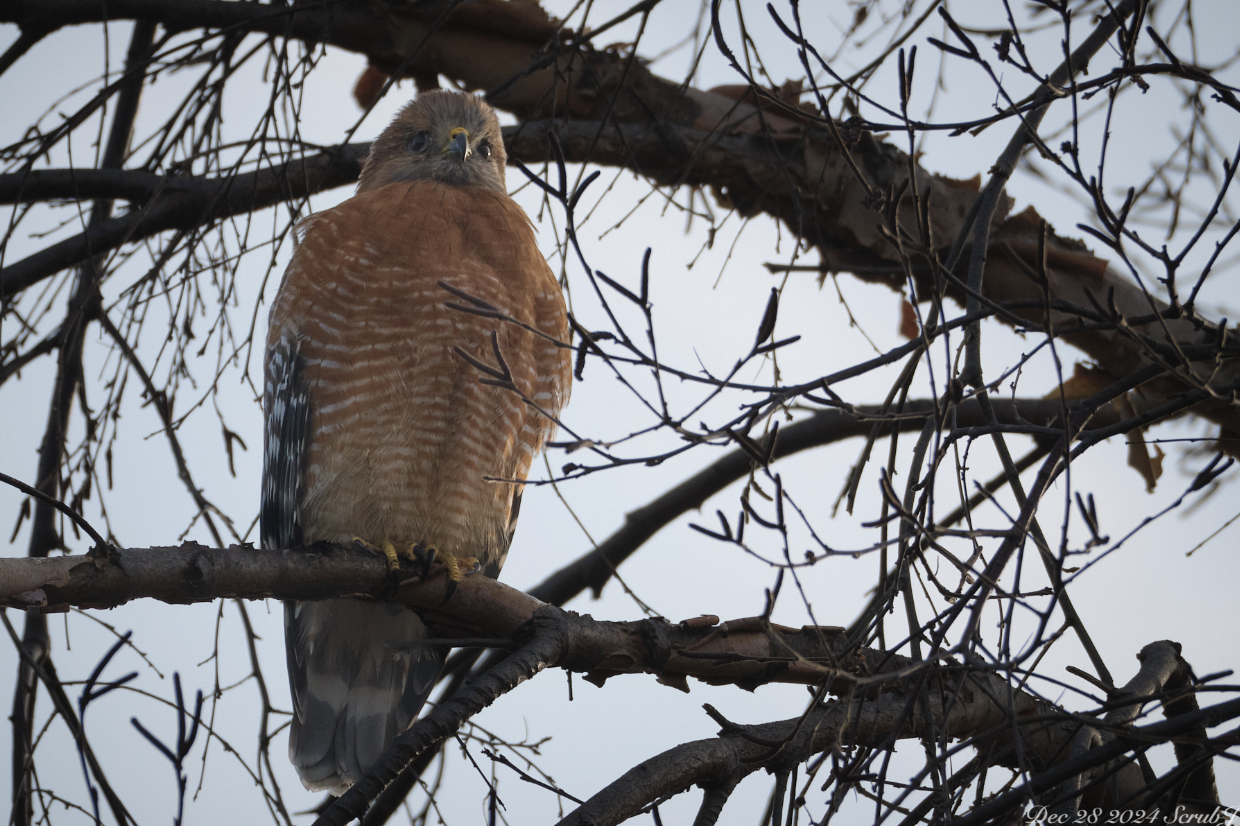
Red-shouldered hawks are smaller than red-tails, but still ominous to the campus squirrels.
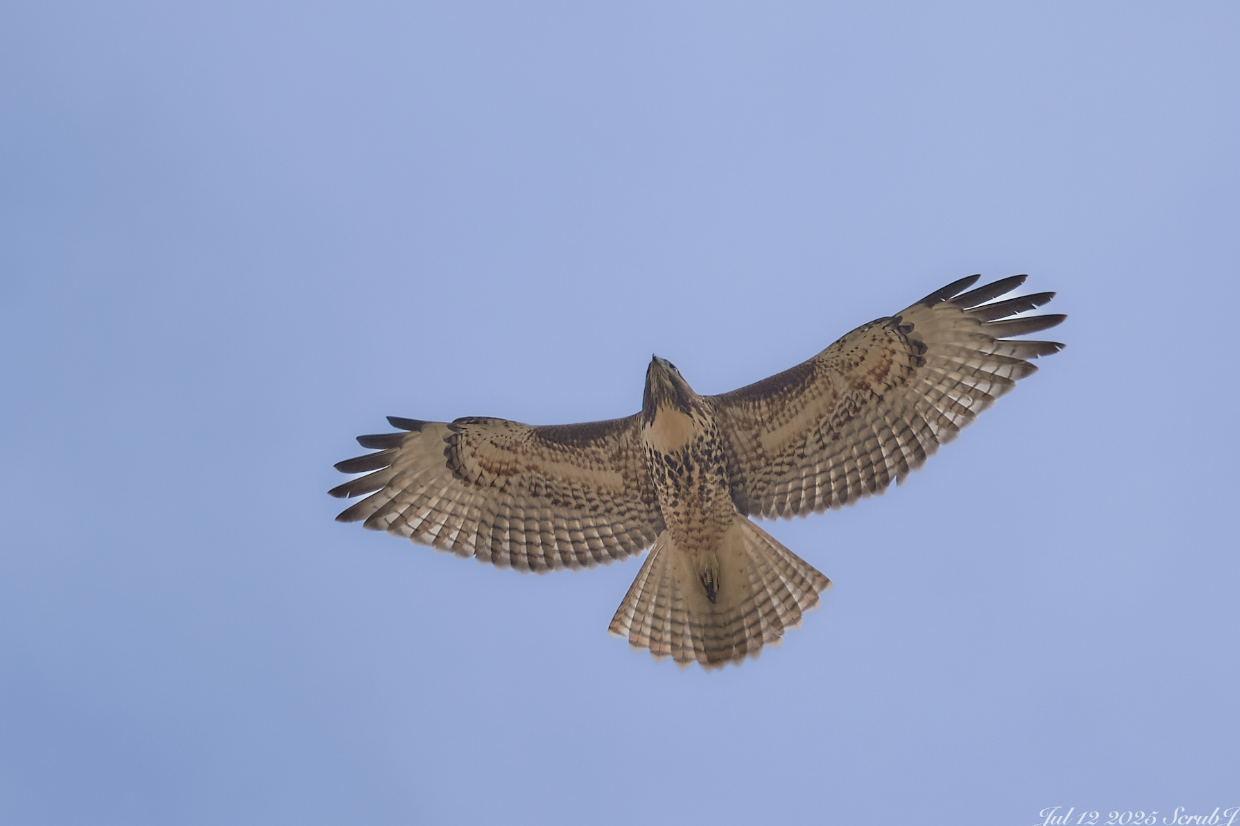
Juvenile red-tailed hawks lack the signature red tails and can be difficult for bird ID.
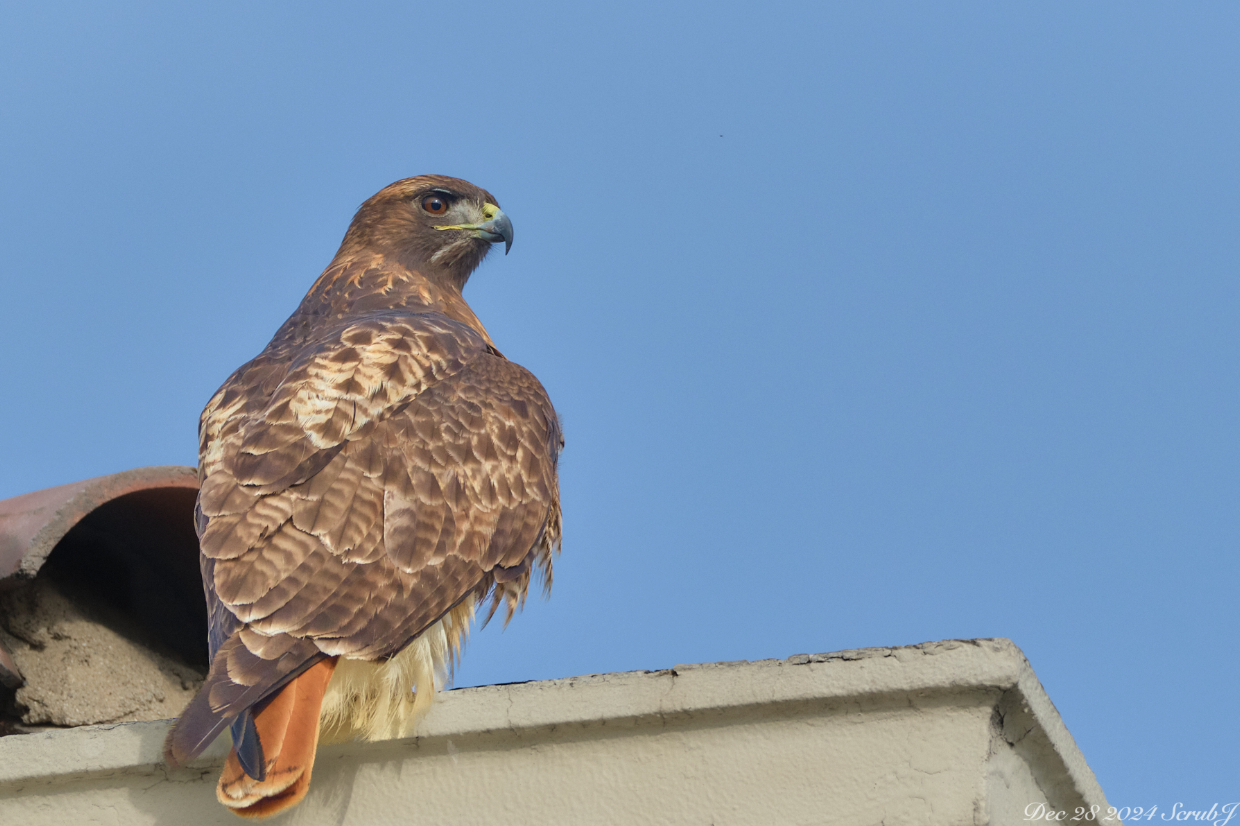
An adult red-tailed hawk perching on the roof.
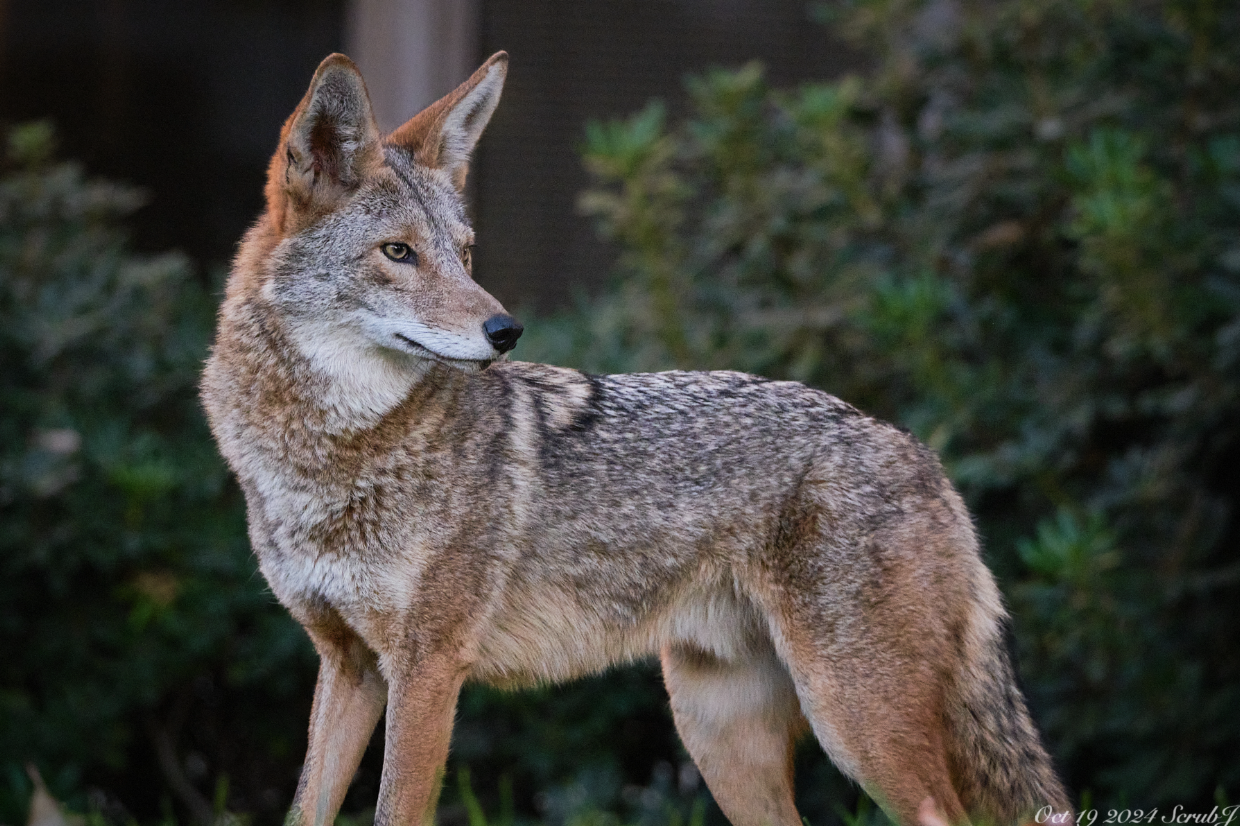
A majestic female coyote reigning over her Caltech territory.