This month, the Jet Propulsion Laboratory (JPL) and Caltech are celebrating 90 years of partnership, having worked together on the world’s most advanced guidance and navigation systems in space. In the bird world, many Caltech birds are also masters of precision flight, known for their signature hunting behavior – flycatching. They launch from a stationary position, track a moving target with pinpoint accuracy, intercept it at the best moment, and return to where they started. This sally-and-return move mirrors JPL’s Stardust mission, which flew through the dust cloud of a comet hundreds of millions of kilometers from Earth and brought its catch home in glory.
You are almost guaranteed to see a black phoebe flycatching at the lily pond behind Ramo Auditorium. This tiny bird likes to perch on the concrete rim of the pond and suddenly sweep out into the air. Before you can see what it is aiming at, it has already returned to the same perch with a small fly in its beak. Phoebes belong to the tyrant flycatcher family (Tyrannidae). They didn’t get their name from Phoebe Buffay from “Friends” or Pasadena’s own Phoebe Bridgers (who hasn’t listened to “Lost Weekend”???), but from the eastern phoebe’s song, which sounds like “fee-bee.” Black phoebes borrowed the name from their eastern cousins, but their own song sounds more like “tee-hee.” More often, they make single-note chirps, and each chirp tends to come with a tail wag, as if the bird is trying to make itself look as big as possible. In fact, one theory suggests that phoebes pump their tails to deter predators.
Perhaps to get a clear view, flycatchers favor exposed perches, and on campus, many of those are man-made structures. From my observations, their favorites include lampposts, parking signs, and the blue plastic armchairs scattered around the lawns. Like students with their favorite library seats, they return to the same perches again and again – which is why some of those spots come with streaks of bird poop. From the perch, they dart into the air or drop to the grass, every flight far more focused than the sparrows’ hopping and pecking. Sparrows keep their heads down, searching for seeds; flycatchers hold their heads high, always waiting for your applause for their spectacular moves. If you see a male vermilion flycatcher, you’ll agree with me that it looks like an attention-seeker. Its plumage is probably the brightest red on any backyard bird in Los Angeles.
The whole tyrant flycatcher family takes its name from its most belligerent members, the kingbirds (genus Tyrannus). I once found a breeding pair of Cassin’s kingbirds on a cable tower in Altadena. Their chicks had already fledged and were almost as big as the adults, but the parents were still highly protective. A poor American crow, a full 100 meters away from their nest, became the target. The two parents took turns dive-bombing the crow, at one point even going for its tail feathers. I couldn’t help laughing at the karma in action – readers of previous columns may remember that crows are usually the bullies, chasing away hawks. The kingbirds really showed that crow who was king.
Many birds outside the Tyrannidae family also take up flycatching as a part-time job when flying insects are abundant. Our resident western bluebirds, for example, feed on insects in warm weather. In the spring, with hungry chicks waiting at home (likely an old tree hole left by woodpeckers), the bluebird parents fly around the Red Door dining area, snapping up flies buzzing over students’ pizzas (I always feel a deep appreciation for them over my protected lunch). Surprisingly, acorn woodpeckers also make sally-and-return flights. I once saw one catch a big wasp midair, its stocky body almost as agile as a kingbird’s. Right now, the acorn woodpeckers (covered in my first wildlife column back in 2025) are busy with their full-time job – stockpiling acorns. All day long, they drill holes and hammer acorns into the palm trees, creating a bountiful stash for themselves and many lurking opportunists, including fox squirrels.
Once you know about flycatching behavior, spotting these birds becomes much easier. A sweeping silhouette and a chirp can reveal a lot about the species. While your friends are still squinting at a tiny dot in the distance, you can show off your birder magic, like mission control tracking Stardust.
All photos by Jieyu Zheng.
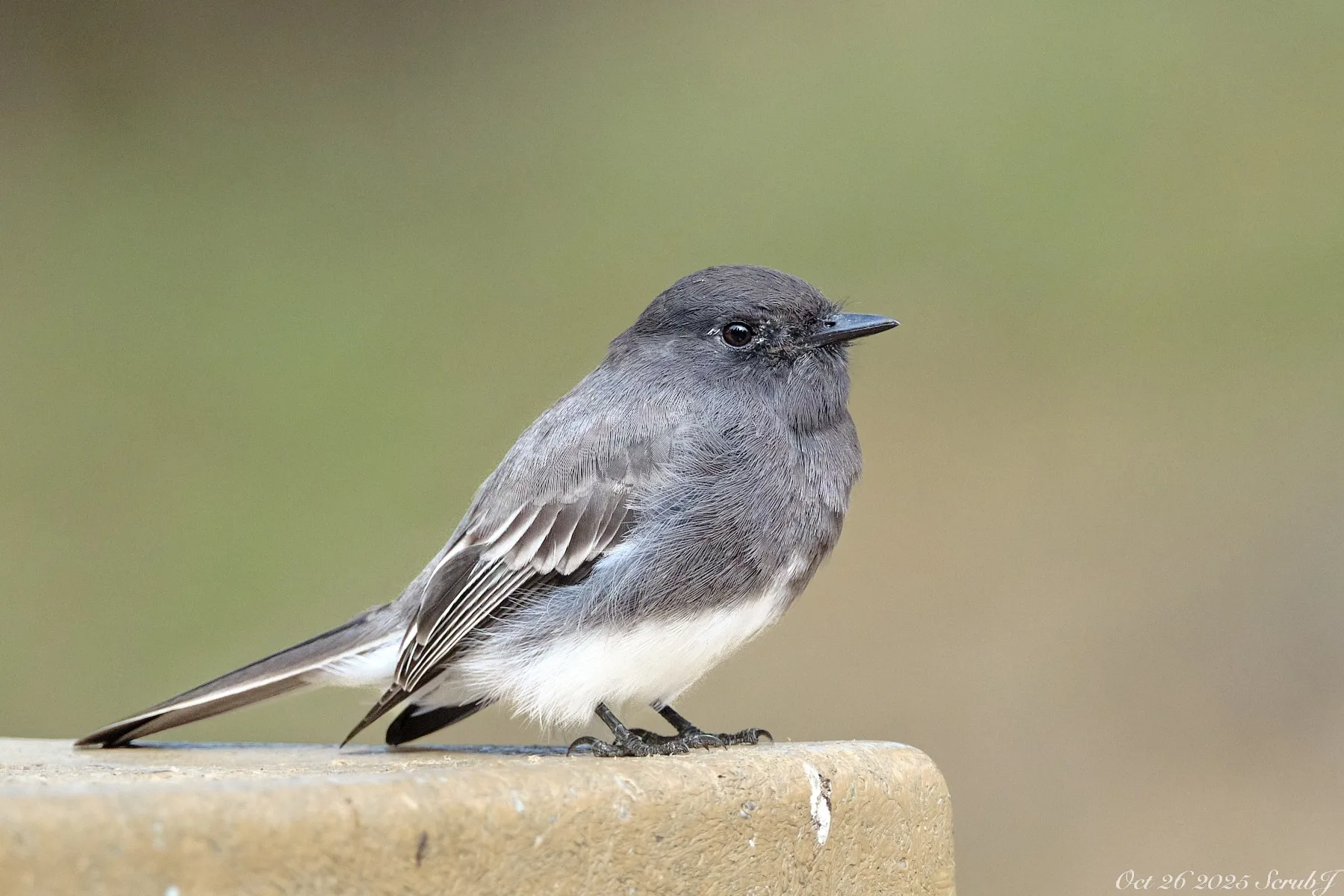
Black phoebes don’t mind perching on man-made structures.
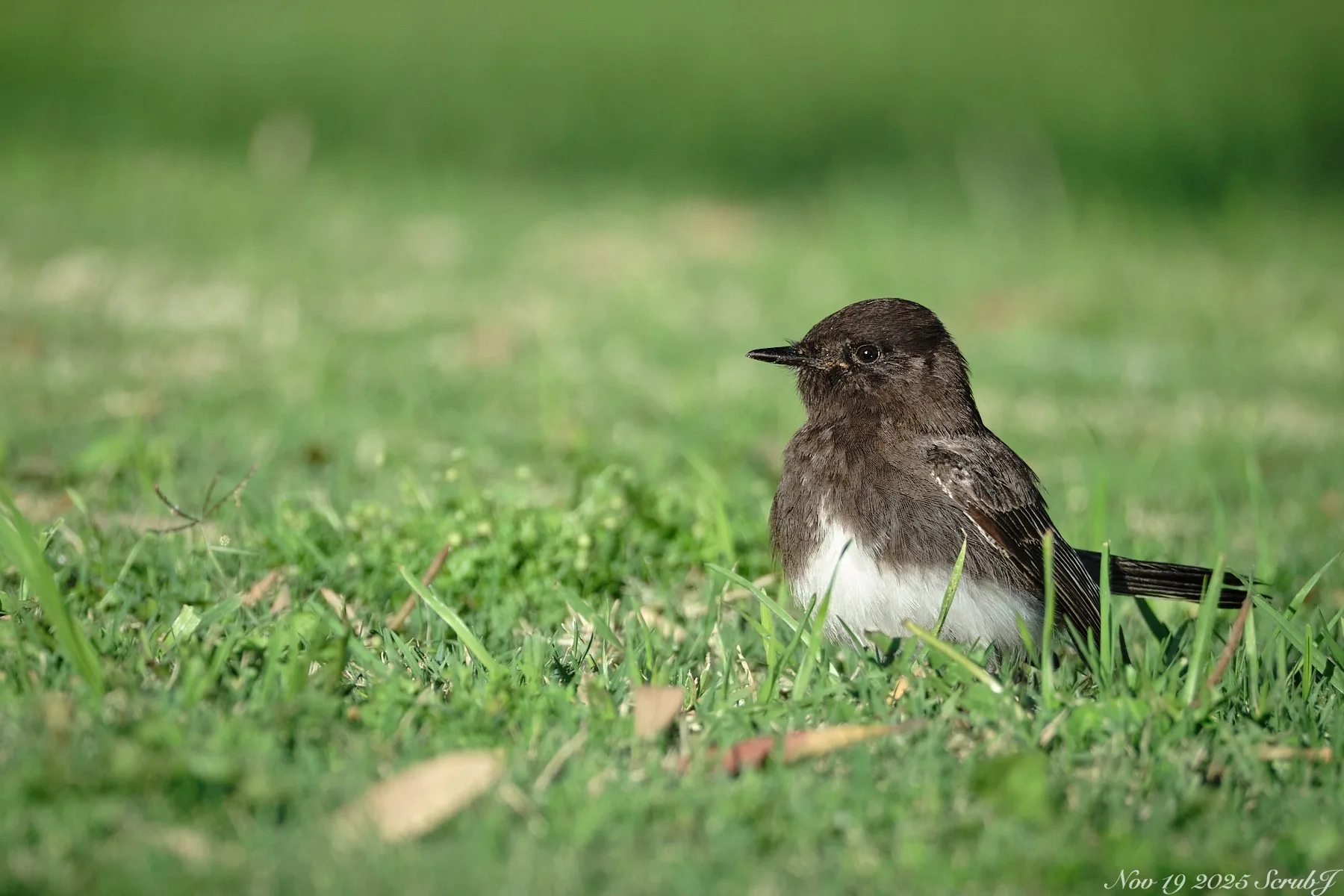
Black phoebes are the most common flycatchers on campus.
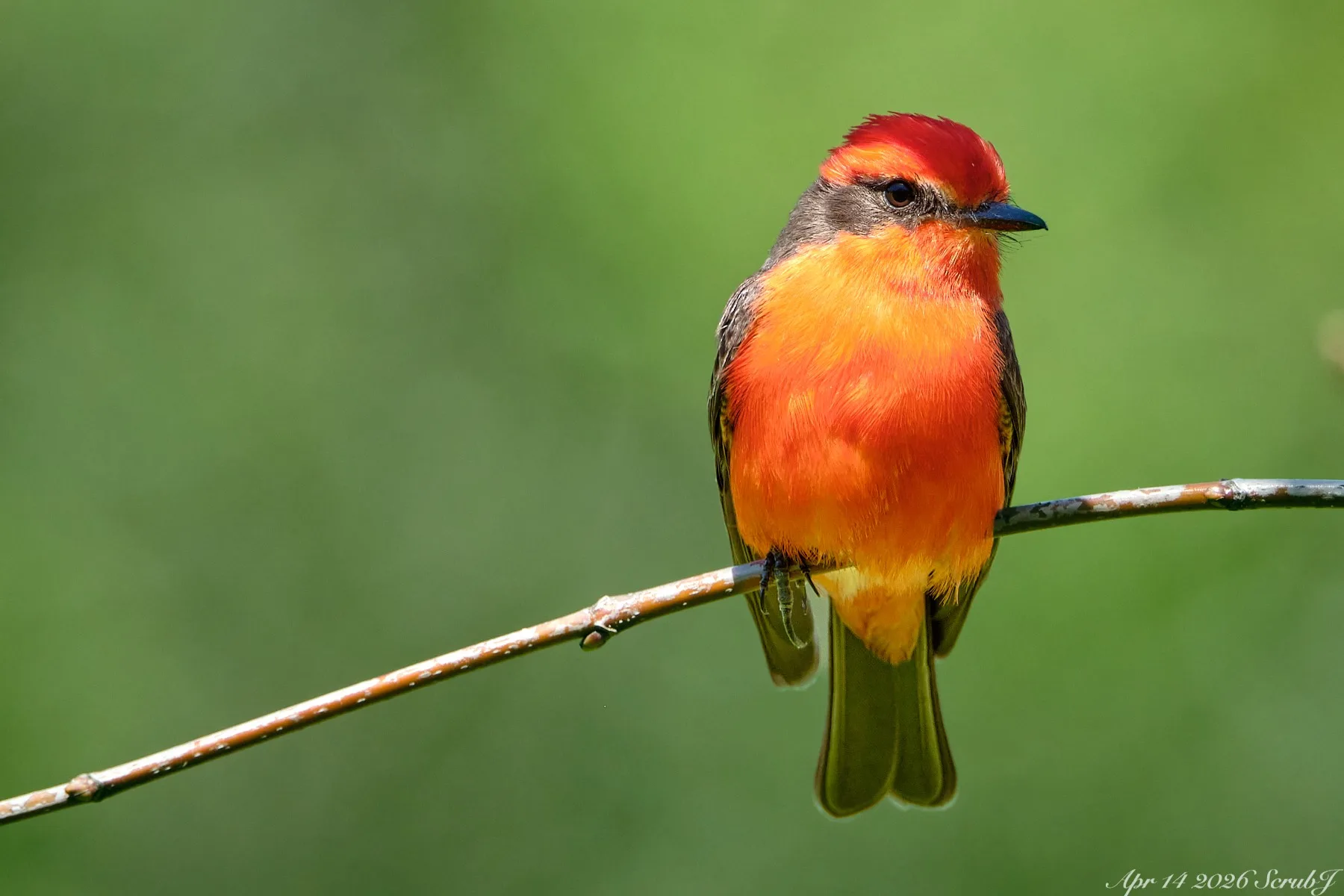
Vermilion flycatchers are year-round LA residents. So far, none live on campus, but if you see a male, his flaming red is unmistakable.
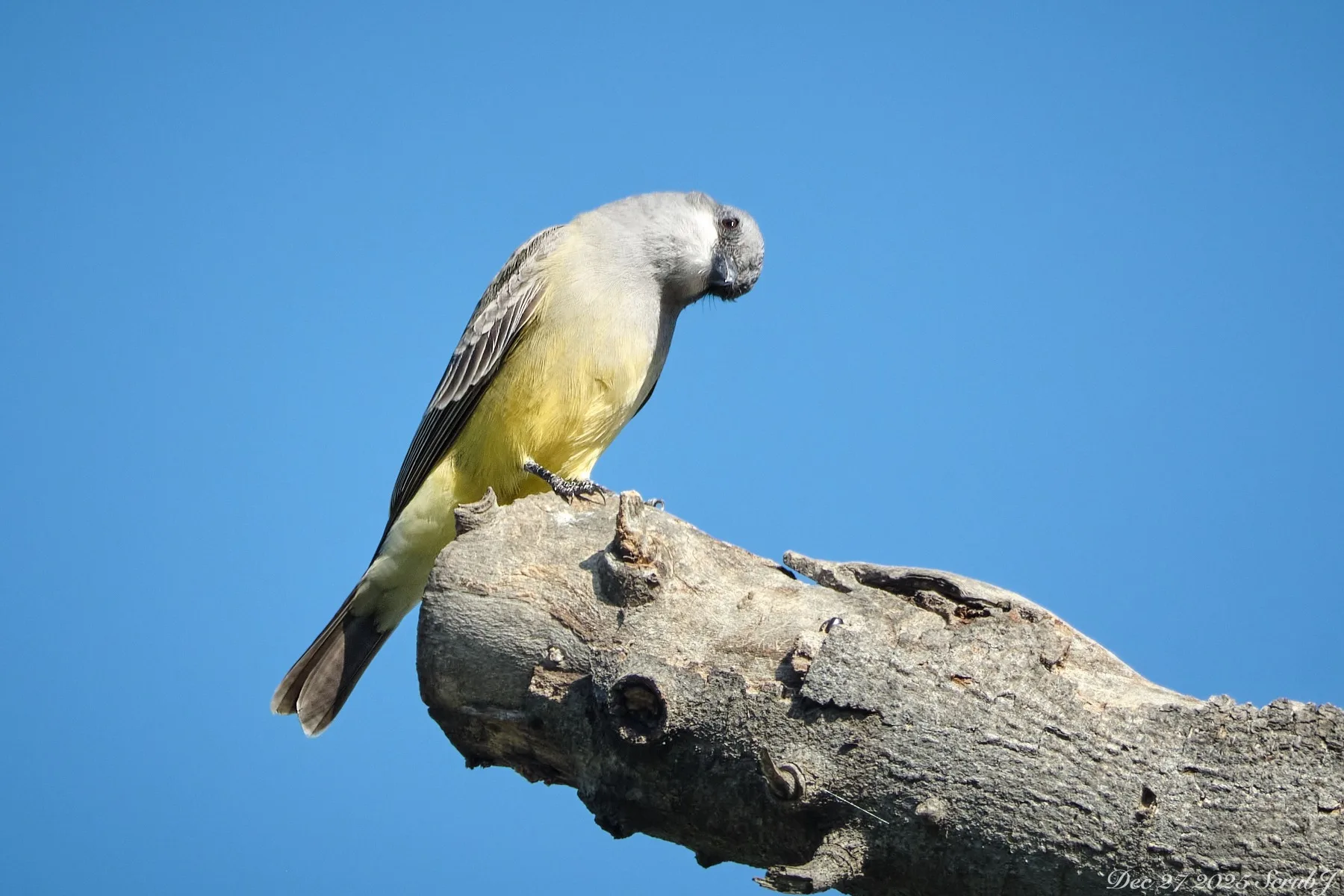
Cassin’s kingbirds are also year-round residents. The head tilt in the picture is both cute and useful for scanning the ground.
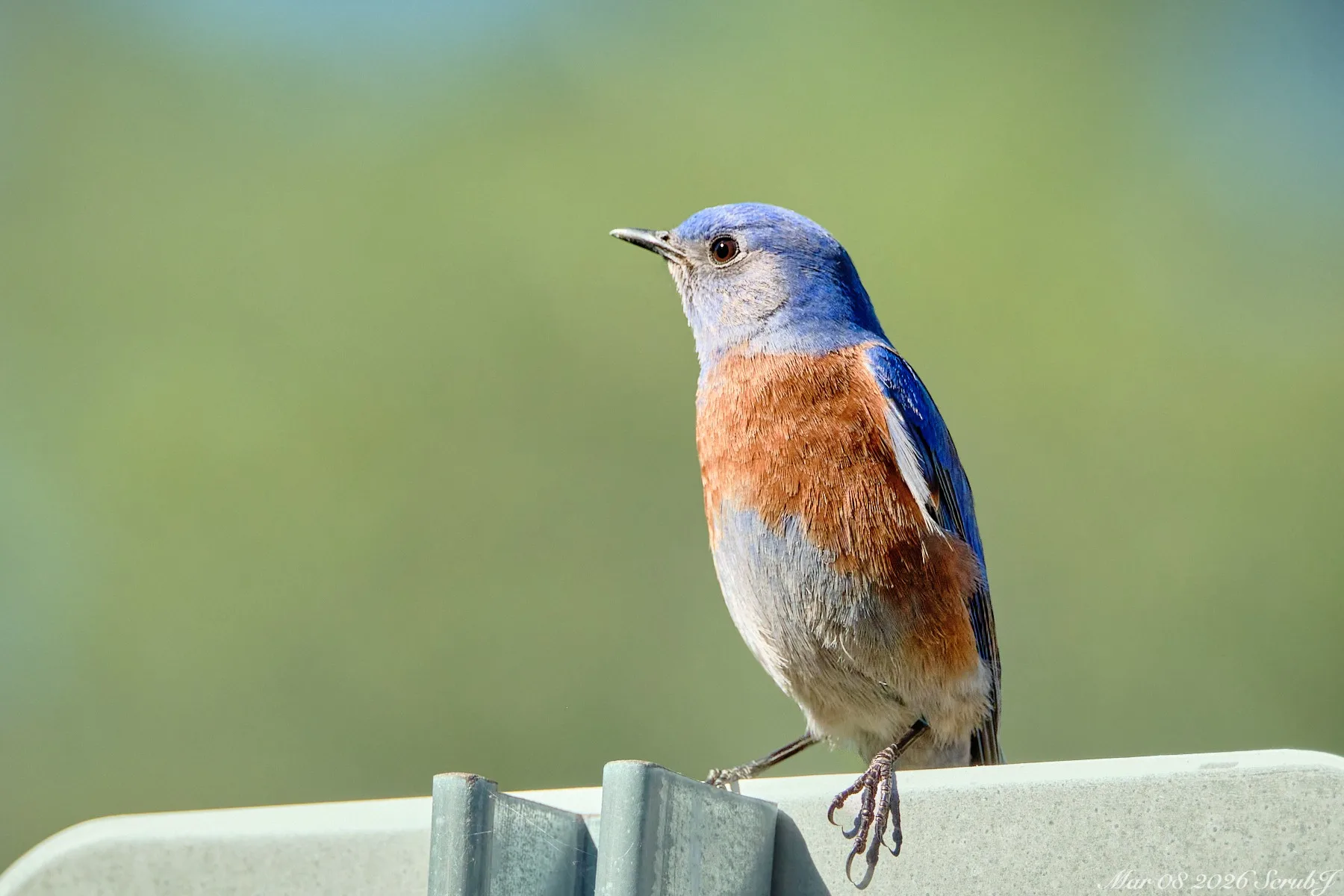
The male western bluebird is monitoring parking violations on campus. Make sure you put on a permit!
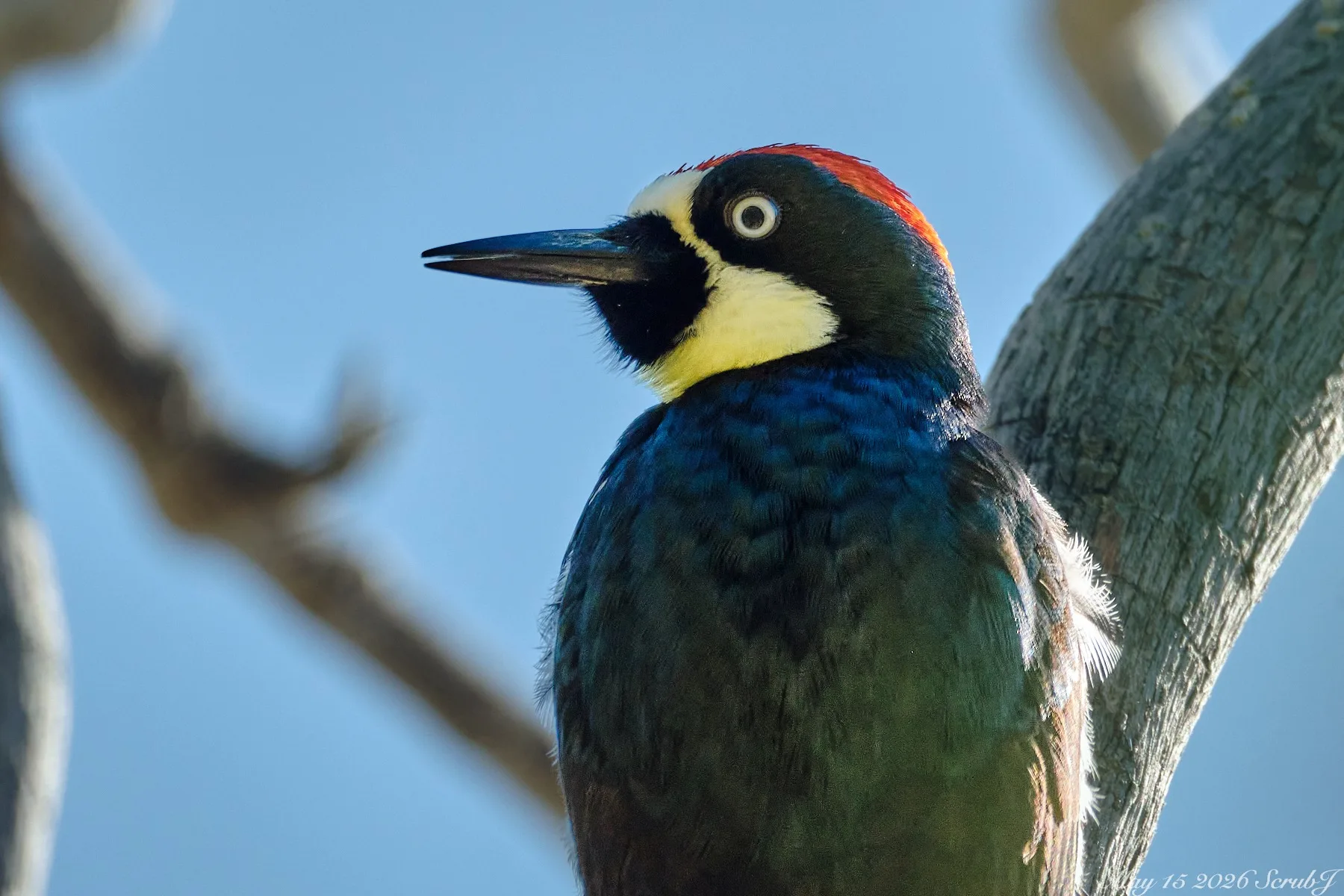
Surprisingly, acorn woodpeckers (male in the picture) are also great at catching flying insects midair.