Amid deadlines, data, and delayed dreams, it’s easy to overlook the fact that life doesn’t wait for us to solve every problem. At Caltech, where ambition surrounds us and the future feels constant, the present can easily fade into the background. Yet beneath the weight of equations, lab reports, and sleepless nights lies a truth waiting to be unearthed: hic et nunc—“here and now.” This simple, ancient Latin phrase serves as a profound reminder that our only true existence is in the present.
When I first set foot on Caltech’s campus, I felt like a contestant on a reality show called Survivor: Genius Island. I was fresh off the plane from Milan, armed with a suitcase full of dreams, a double major in biology and chemistry (because why not suffer twice as much?), and a secret hope to someday heal cancer. I planned to take the world by storm—or, at the very least, survive my first quarter without accidentally setting something on fire in the lab.
I had my mouth pressed into the sand. I was breathing hard—desperate, shallow, uneven. I could feel the grains entering my nose, throat, and lungs. Somewhere nearby, I heard the rapid thudding of hooves, the panicked exhale of a frightened horse. For a moment, I couldn’t remember where I was. I couldn’t piece it together. The memories didn’t come in order; they arrived like broken glass, sharp and disjointed. My helmet. My shoulder. The ground. Pain. Sharp pain. A blinding throb in my knee.
I am obsessed with David Lynch. Maybe unhealthily so. Few directors feel as fluent in the art of the somnambulistic; I know of no other director who could so deftly craft phantasmagorical operas of the manifold dream-nightmare that is the human experience.
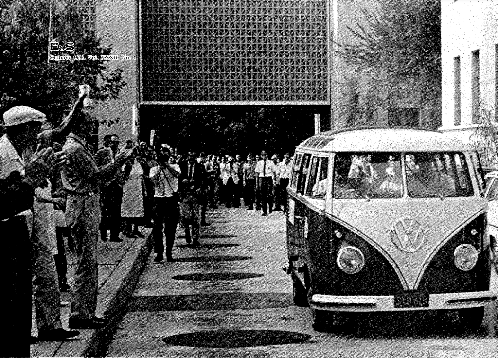
The Mount Wilson Solar Observatory was founded in 1904 by George Hale, who was also a trustee of Throop Polytechnic Institute (which later became Caltech). The first telescope built on-site was the Snow Solar Telescope in 1904, followed closely by the 60-foot Solar Tower and the 60-inch telescope, both of which were completed in 1908. Hale hosted many famous individuals during this time, including Andrew Carnegie in 1910 and Harlow Shapley in 1914. Carnegie was the main financial supporter of the observatory from its inception in 1904, and Shapley was an astronomer who discovered our position in the Milky Way galaxy using the 60-inch telescope.
I can’t be sure, but if I had to take a gamble, I would guess most of you—like me—are always trying to optimize our paths around campus. There are multiple reasons this could be true: (almost) late for class and want to minimize how much you miss? Want to make it to Tom Mannion’s OH before the rest of campus wipes out all the Flamin’ Hot Cheetos? Want to get to bed when a coyote is chasing you down? Want to get the latest sighting of Ted Danson on campus? Want to make that last 2:58 p.m. dash to Browne on the weekend before all you have is Red Door? Want to beat the 10:30 a.m. line explosion at Red Door? Or the weekend 3 p.m. line explosion? Or the 10 p.m. line explosion, or… You get the idea.
I read the article in The California Tech about the Caltech Rugby Club with great interest because I organised a rugby team at Caltech about 60 years ago (between 1965 and 1967). Most of the team were foreign graduate students from rugby-playing countries, but a few Americans joined us. We had mixed success but managed a few wins, notably against UCLA. The games against USC and Eagle Rock were particularly scary, as their teams consisted of very large American Football players looking for blood and violence in the off-season. We won a few games we didn’t deserve to because of the athletic ability of Mick Mortell from Ireland—he could kick penalties from 50 meters and more.
On May 3rd, Frautschi Hall, 7 p.m., as part of MACH 33: The Caltech Festival of New Science-Driven Plays, was the latest version of Tom Lavagnino’s Dementia Doula. Like the festival’s other show, entitled The Null Test (which explores the legal hijinks of a self-driving car company), this was a staged reading: the cast, directed by Susan Dalian, performing from scripts on music stands. Originally presented under the name Crisis Goalie at the 2024 Utah Shakespeare Festival, then directed by Britannia Howe, this pared-down staging celebrates the script on its own terms, privileging nuanced acting over elaborate production.
On April 21st, 2025, Pope Francis passed away. His successor is Pope Leo XIV, whose papacy began on May 8th, 2025. Pope Leo was a close advisor to Pope Francis.
Looking down from a plane, Wang Mansheng felt uneasy about how much of the Earth is now covered by roads and buildings. Reflecting on this environmental change, he stated, “Pure nature is now unattainable except through my imagination or brush.” His new works at the Huntington put that imagined nature on display.