Editor’s note: This and related pieces were originally collected for Professor Spiropulu’s memorial essay, which is also accessible from the bottommost external link in Mark Wise’s Wikipedia page.
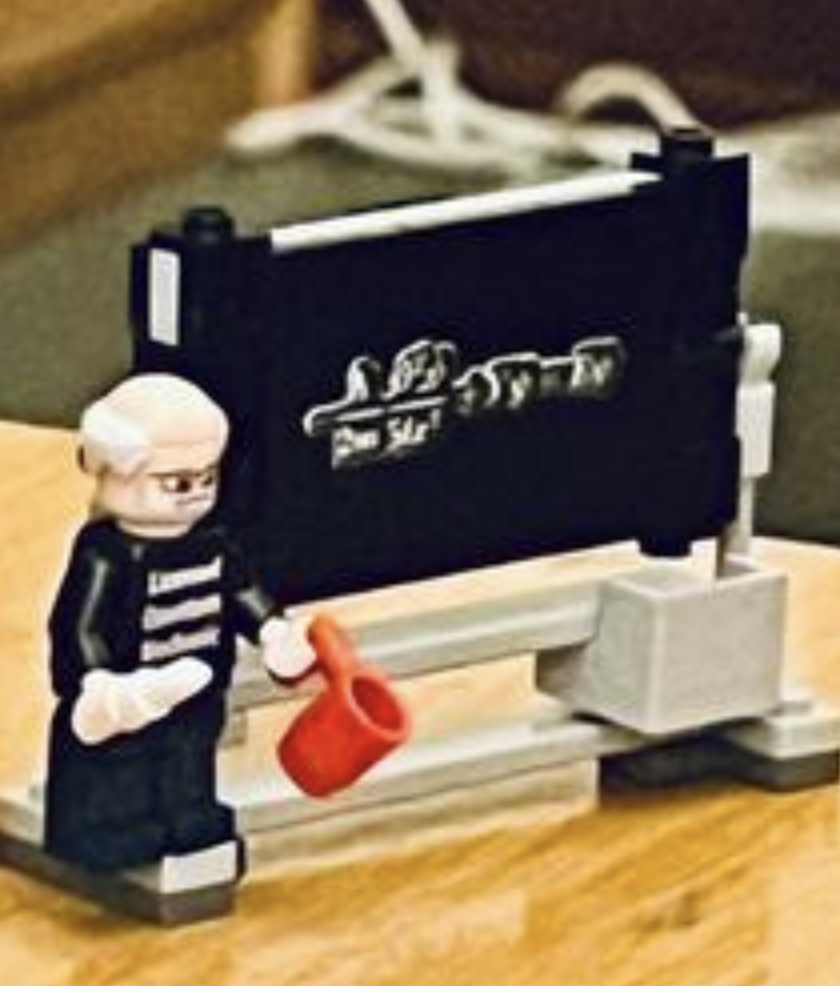
Built by his students: Mark Wise at the blackboard, in LEGO. (Credit: Mark Wise)
Mark Wise died on July 10, 2026. He was a member of the Division of Physics, Mathematics and Astronomy at Caltech for forty-three years. The obituaries will say, correctly, that he was one of the great theoretical physicists of his generation: an architect of heavy-quark effective theory, a student of Fred Gilman at Stanford, recruited to Pasadena by Murray Gell-Mann, a member of the P5 panel that set the national course for particle physics, and for sixteen years the principal investigator of Caltech’s high energy physics program.
All of that is true, and none of it is the reason the people who worked beside him are bereft. I want to set down what else he actually did. In the classroom, he paid students a quarter (later a dollar for inflation) for every correct answer — an economy of encouragement he ran for years out of his own pocket, twenty-five cents at a time. His students answered in kind: the undergraduates of Dabney built him in LEGO — a whitehaired figure at a blackboard, mug in hand, lecturing to eternity. (The full story of how, and of the challenge and the thousand dollars behind it, is told later in these pages.)
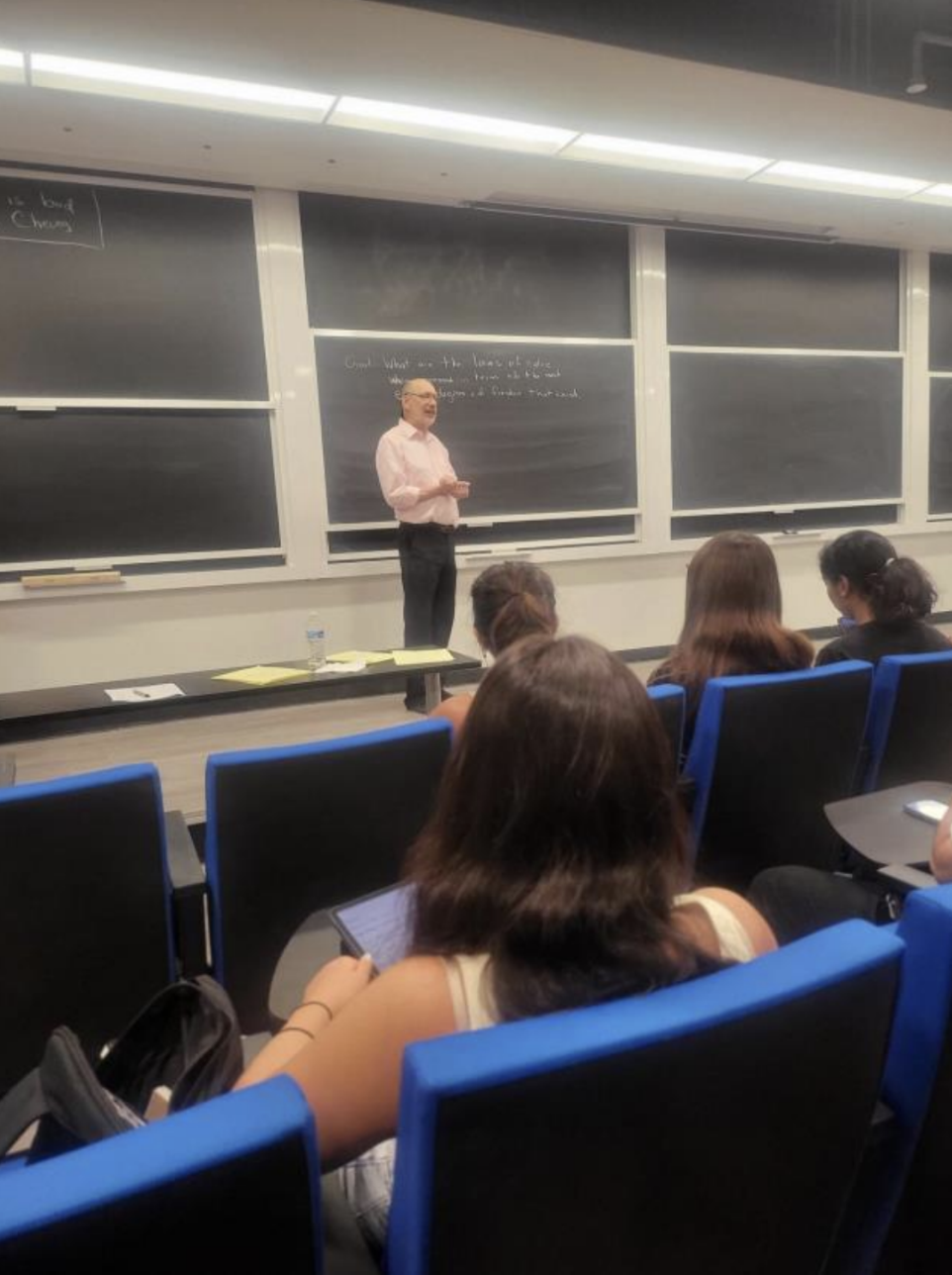
In the classroom, Fall 2024, October 2. The board reads: “Goal: What are the laws of nature when expressed in terms of the most elementary degrees of freedom that exist.”
Institutions confer medals and chairs. Students build you out of LEGO only if they love you. Paul Dieterle, a distinguished Caltech alumnus of Tombrello’s Physics 11 — a Tombrelite — wrote: “Mark Wise’s homework sets were full of stylish, original problems that taught physics without pedantry. Each problem was like little slide knot, requiring a delicate pull at the right place before unraveling to the students’ delight.” In his last spring quarter, he taught his course to the end, graded the finals himself, and completed what he called, without ceremony, his final Caltech responsibilities of the academic year — some by Zoom, in pain, days after learning his diagnosis.
That was one thread of the pattern. Here is another. In September of last year, an administrative assistant in our group lost her dog. I wanted to send her flowers and did not have her home address. I asked Mark. Within the hour, he had gone to Carol, put the question in motion, and written back: “I asked my boss, Carol,” he said — he called his assistant of many years his boss, and meant it. He was seventy-two years old, holder of an endowed chair, with four decades of foundational physics behind him, and he treated the errand of a colleague’s grief as work worth doing immediately. It was.
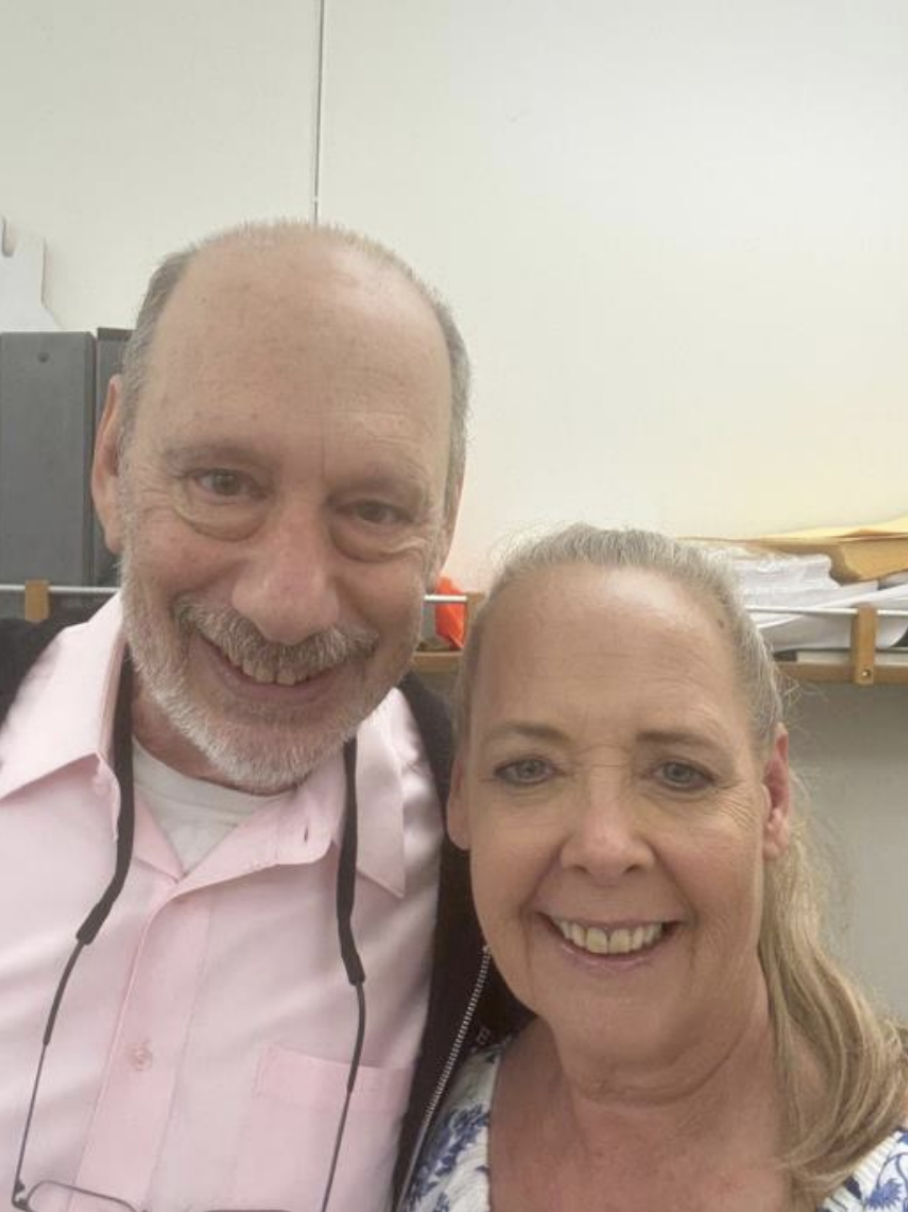
With Tracy Sheffer, whom he stood beside when no one else would.
When a graduate student scheduled a candidacy exam and circulated the logistics, the student noted that only one committee member would be attending in person — “which I believe is just Mark.” It usually was. He sat in the room. He asked the questions. Afterward, he would write to the committee that a student’s oral was one of the best he had recently attended — praise he gave freely and meant, because he never gave praise he did not mean.
He took the students and staff of our laboratory to lunch as a habit, not an occasion. He was present when the senior leadership of the Department of Energy visited, and when Fermilab’s directors came, and he was present at the bench conversations no dignitary ever saw. Five weeks before he died, a graduating senior wrote to thank him for winning the Feynman Prize in Theoretical Physics — a nomination Mark had made quietly and mentioned to no one until the thank-you arrived. He forwarded the note with seven words of explanation: “I nominated Stavros for the Feynman Prize.” The deed, then silence. That was his style.
It extended past physics: every morning he fed the stray cats that came to his lawn, and he reported with real delight the first day the cautious black one let itself be pet.
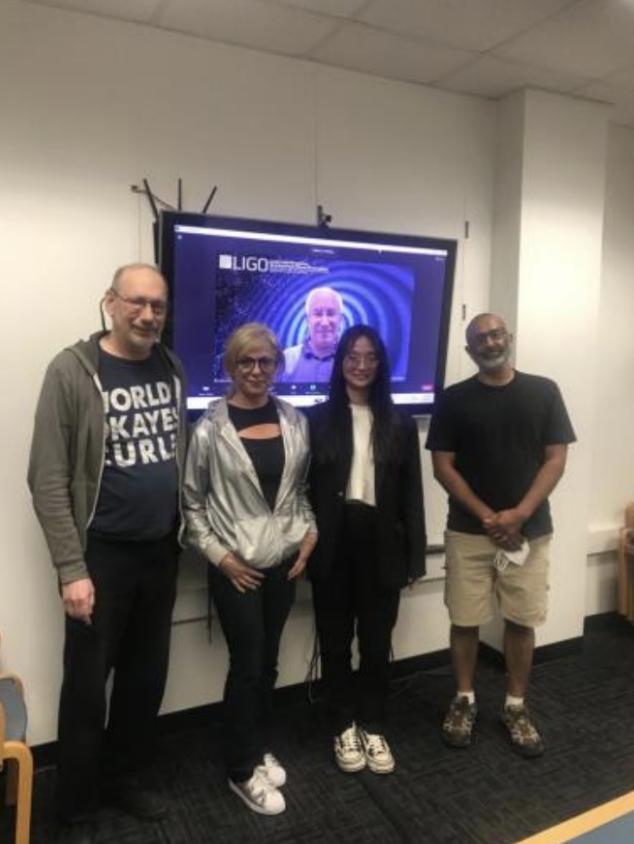
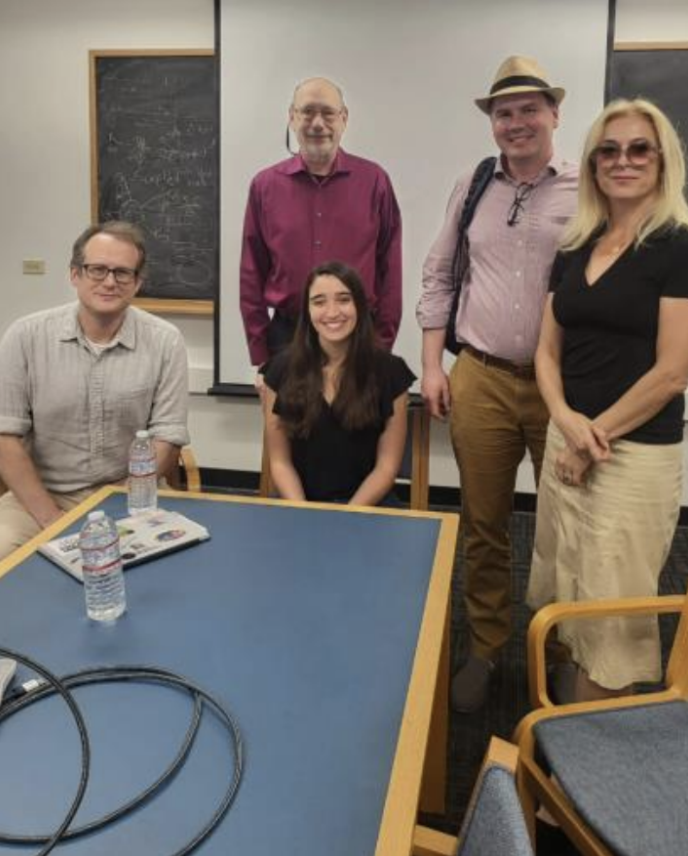
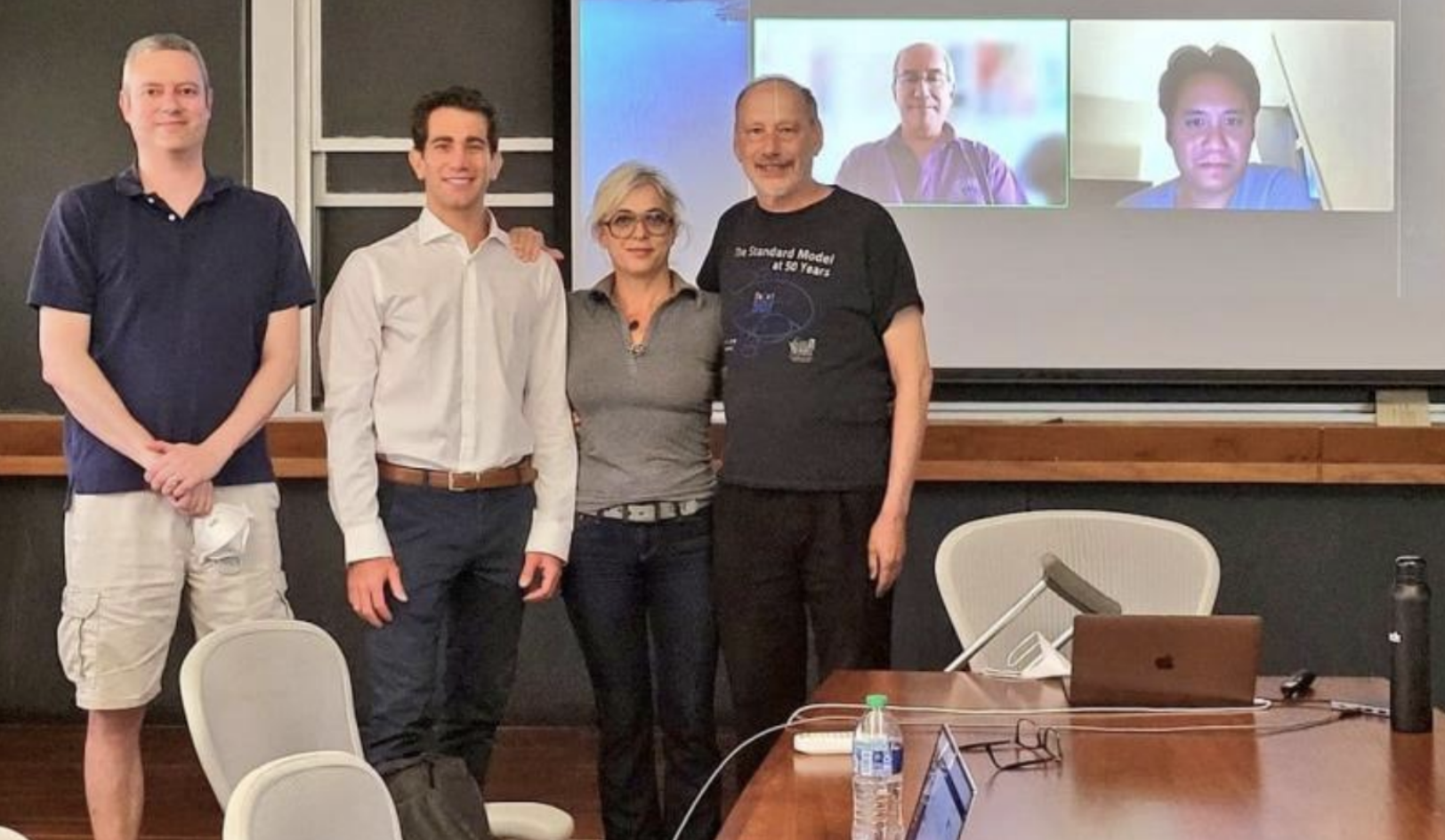
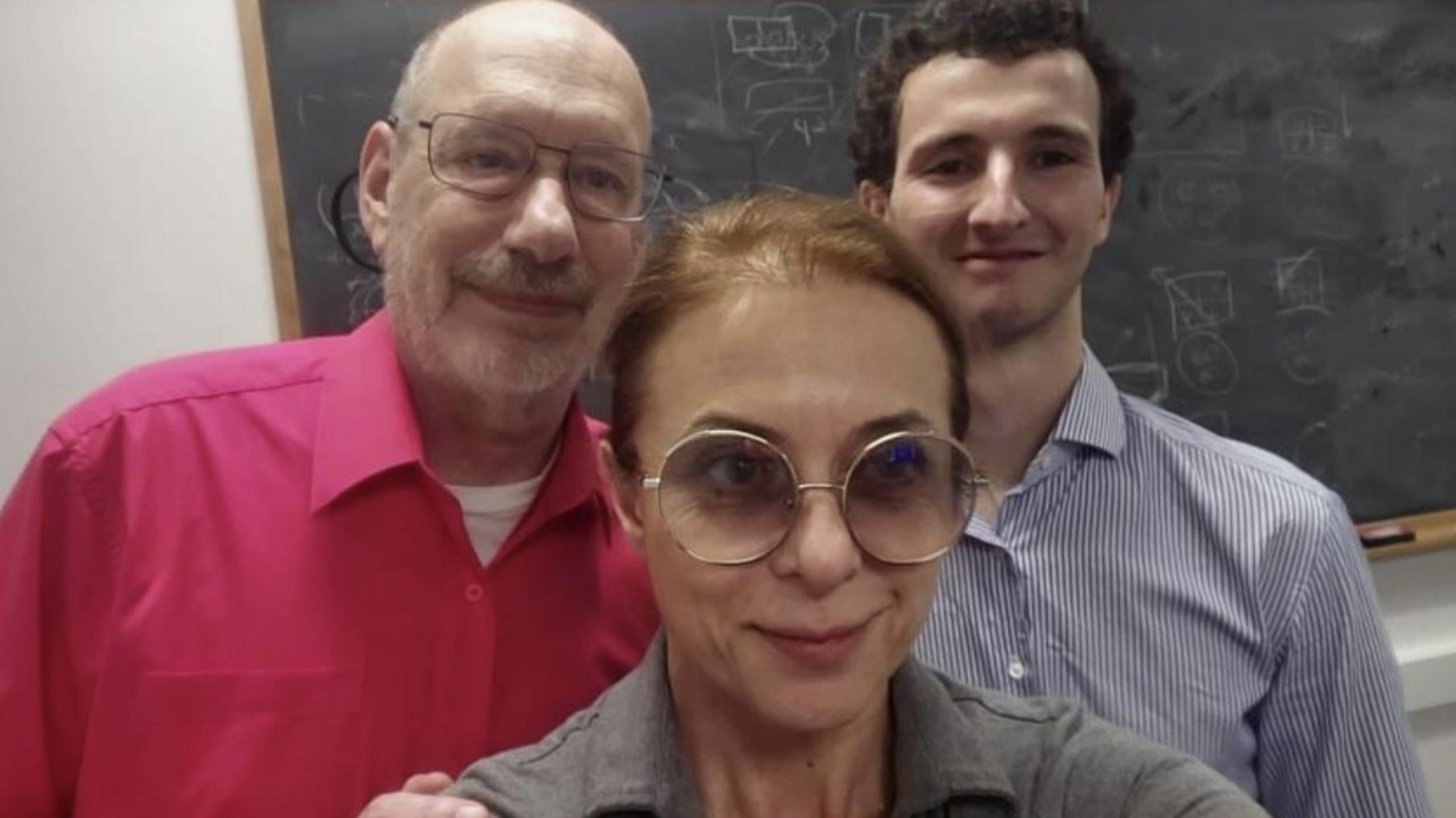
“Which I believe is just Mark…” — in person at the candidacy exams and defenses, year after year.
He offered his own funds where the Institute or DOE fell short — and always after asking Jackie. In October 2025, undergraduates were needed urgently for detector assembly carrying hard deadlines to the Department of Energy — hardware bound for CERN. The requests for their support had gone nowhere. Mark instructed his grant manager to open an account with funds of his own chair so the students could be hired and trained. When the paperwork stalled, he wrote that the students could simply be charged to his chair directly, and added, in passing, that if their costs ran over he would pay the difference himself.
When students’ travel reimbursements sat frozen for months, he quietly told his grant manager to accept their expenses against the remaining balance, reasoning, in his laconic way: “It’s hard for the division to complain if I am helping students.” He offered funding to cover grant management for federal awards — management that had been requested through channels, without result, for five years. He regarded all of it as part of the research enterprise: support the work, and the people who do it.
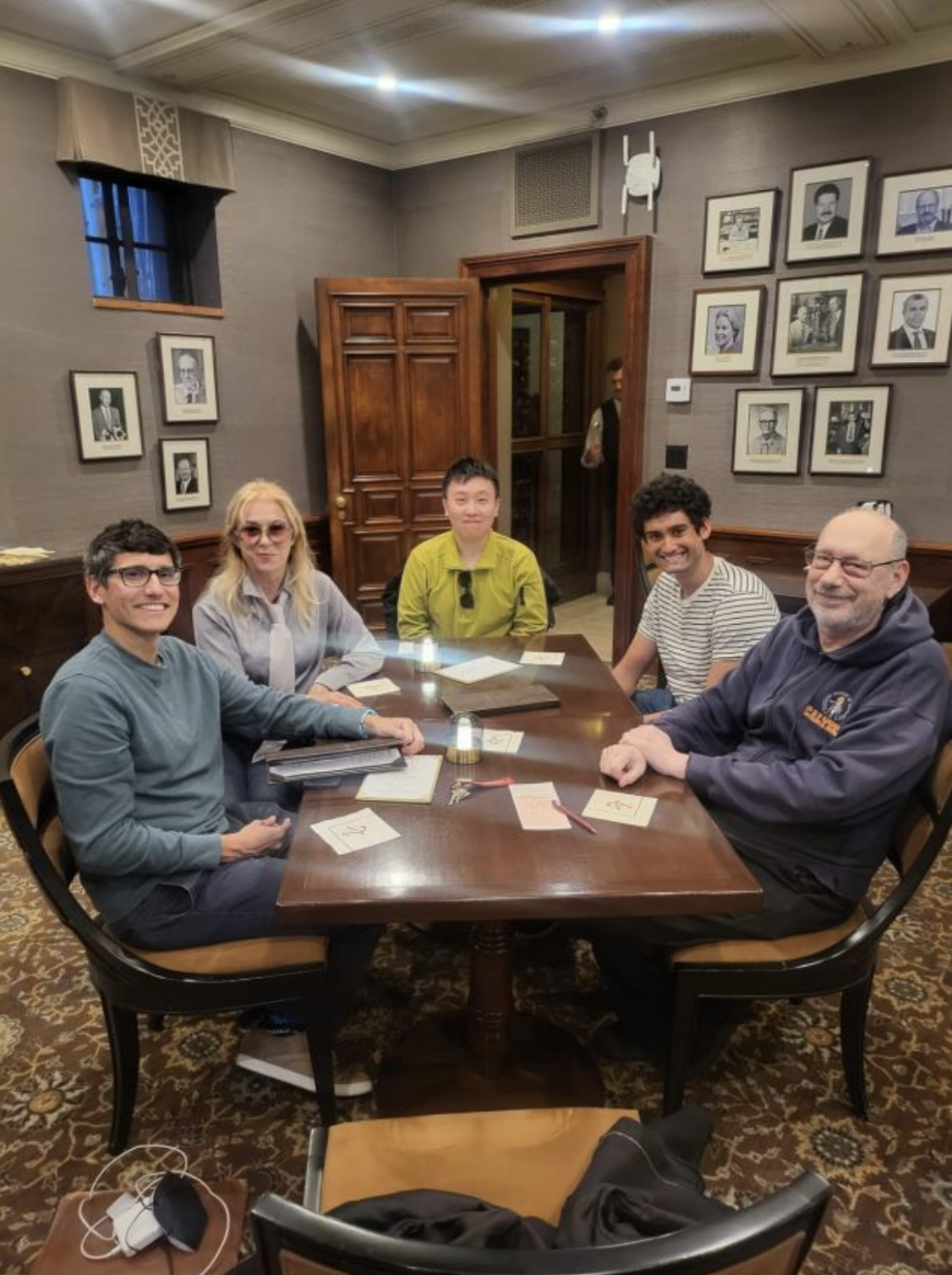
Taking the students to dinner at the Athenaeum. A habit, not an occasion.
He was a witness in the honest sense of the word. Through five years of a documented administrative vacuum in the handling of research awards, Mark sat in the meetings. He did not observe from a distance; he came, he listened, he read financial exhibits at eight in the morning with a magnifying glass, apologizing that he was “terrible at this type of stuff” — and then catching discrepancies the professionals had missed. When the record of a crucial meeting was later disputed, he settled it in three sentences that will outlast every ledger: “I can confirm point 3. It is my understanding as well. I was at the meeting.”
When a staff member was summoned to a meeting she found frightening, he agreed at once to sit beside her as her witness. And when a decision was made badly, in an area where he had once had standing, his first instinct was to apologize for it — to write, of a failure that was in no sense his, “I let both you and them down.” He was the only person in the affair who took responsibility, even when it was not his to take.
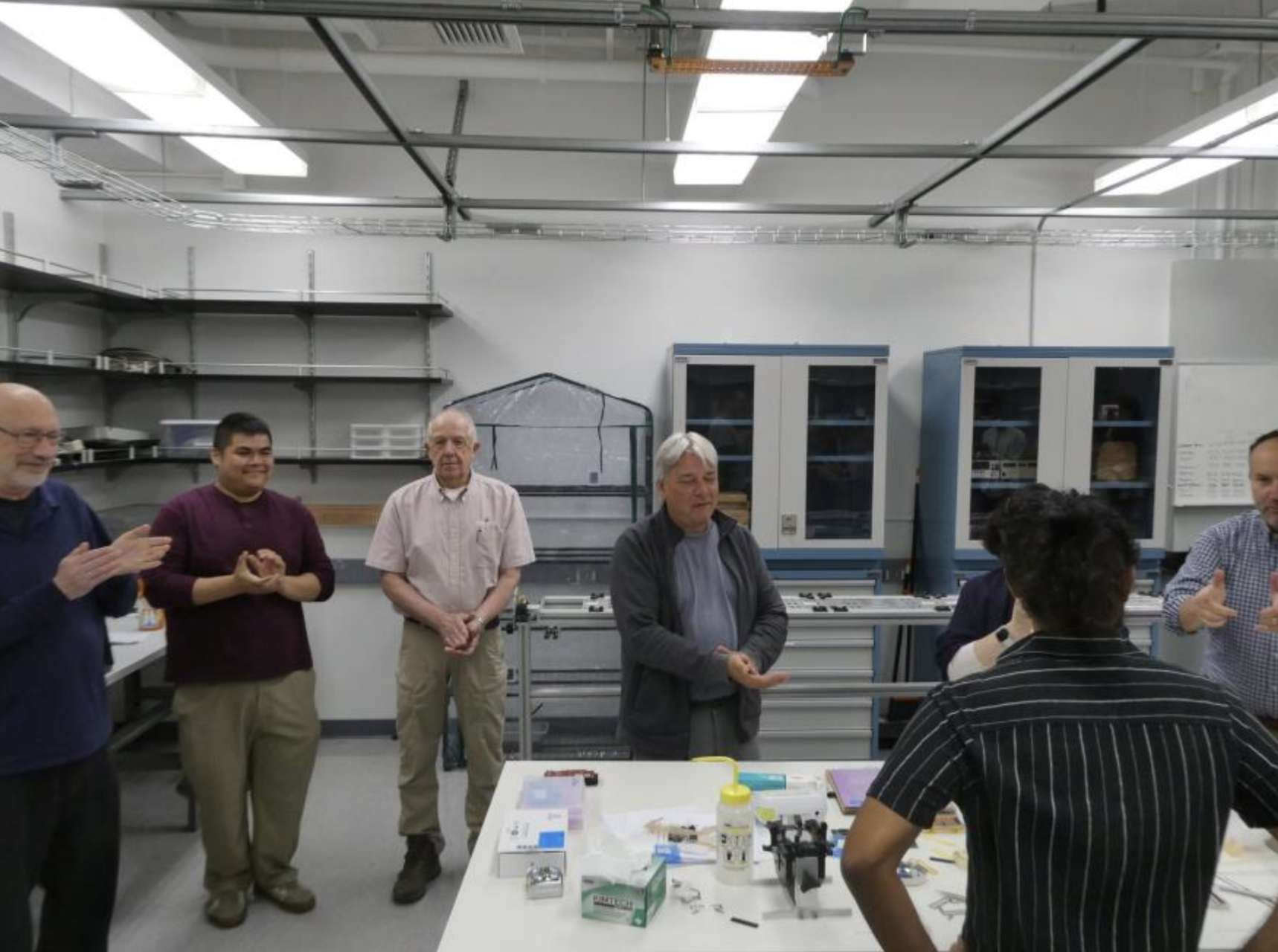
At the CPT laboratory visits — DOE and Fermilab leadership touring the CERN Barrel Timing Layer assembly. Mark stood with the students, postdocs, and staff at every one.
He worked until the work was done. He received his diagnosis on a Friday evening at the end of May and told no one for a day so as not to spoil his grandson’s graduation weekend. Within the week, between scans at the hospital, he finished the term’s obligations. From the hospital, he arranged the reassignment of his graduate students, gave instructions for the support of the undergraduates in his care, and told the Dean of Students what each of them would need.
He put every one of his people in order before he permitted anyone to put him first. The last time I went to his office was May 27. His door stood open; he was down the hall, sitting in a student’s oral exam, because of course he was. I photographed his blackboard and texted him: “I am at your office, your door is open.” He came back and closed it. The board deserves a word, because it says what he was doing with the time. Above the half-erased ghosts of older calculations, laid out in proposal language — “Aim 1,” “Aim 3” — was a new project in a field that was not his: the quantum many-body physics of magnetic devices.
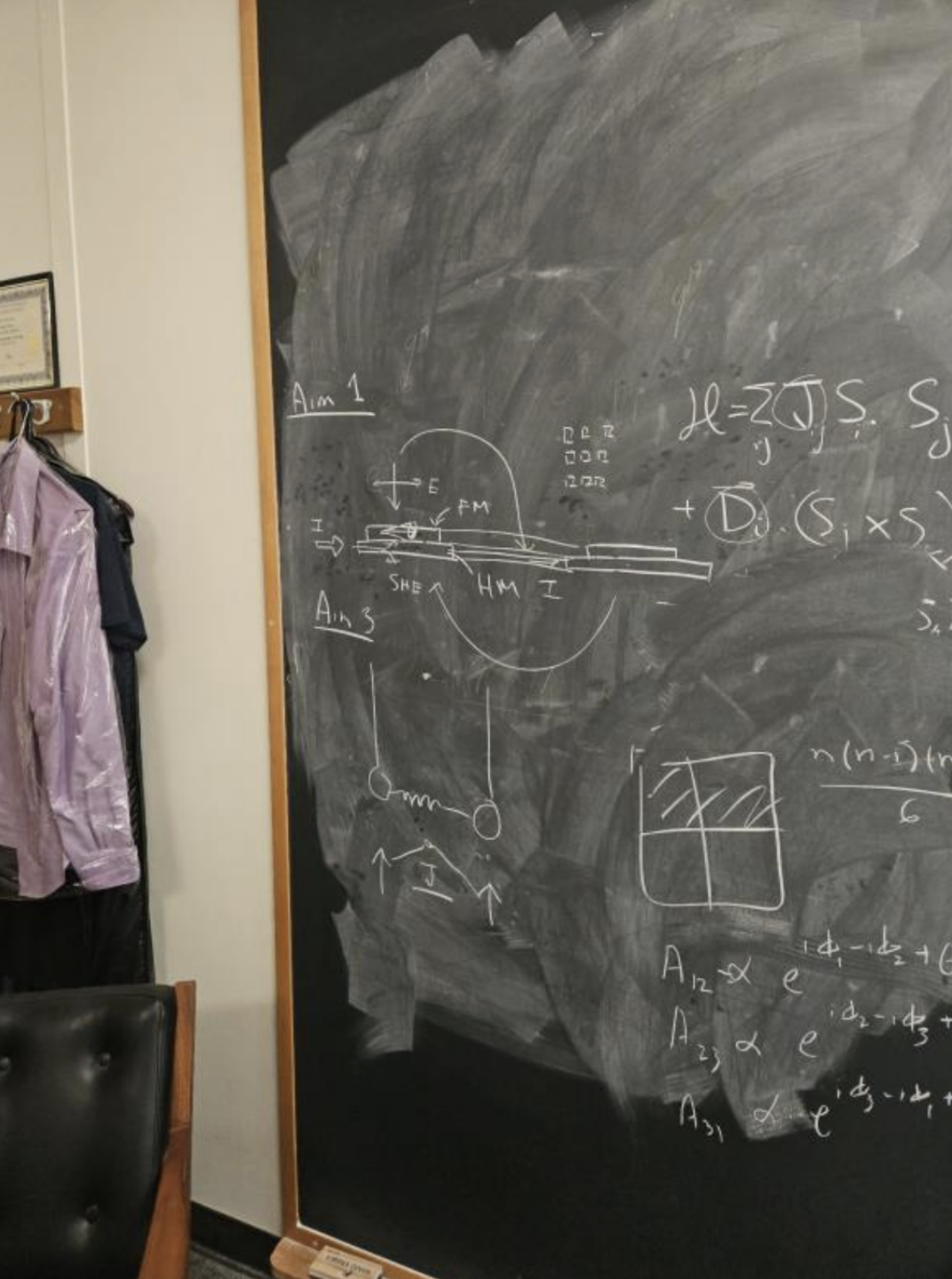
A blackboard from Mark’s work on the many-body physics of magnetic devices.
Aim 1 was a device, drawn with an experimenter’s care: a current driven through a heavy metal, the spin Hall effect converting it into a torque on the ferromagnet layered above — the working mechanism of next-generation magnetic memory, each layer labeled in his hand. Beside it, the theory the device lives in: a Heisenberg model of interacting spins carrying the Dzyaloshinskii–Moriya twist, the term that winds spins into chiral textures.
And below, the jewel: amplitudes A₁₂, A₂₃, A₃₁, each a phase, multiplied around a closed triangle of spins — a Berry phase, the quantum flux an electron feels circling a loop — with the count of triangles among n spins, n(n−1)(n−2)/6, worked out in the corner. Mark counted the loops. He was seventy-two. He had built heavy-quark theory, and he was teaching himself another field from the ground, in chalk. On the hook beside the board, his shirts hung pressed in their plastic, waiting for weeks he did not get. The writing is probably still there.
In the 1990s, with Savage and Kaplan, Mark built the effective field theory of nuclear forces — the operator structure and power counting that turned nucleon interactions into a calculable expansion — and with Mehen and Stewart he showed how Wigner’s mysterious spin-flavor symmetry emerges from it. Twenty-five years later, that scaffolding had a second life he did not expect: quantum information moved in. Entanglement suppression in the S-matrix was shown to be the origin of the very symmetries he had mapped, and the idea now runs from nuclear forces to the Higgs sector — Carena and collaborators’ entanglement analysis of two-Higgs-doublet models stands directly on his 1990s papers.
I brought it to Mark as a potential SURF undergraduate project, and of course he saw it immediately. “If entanglement could somehow help with understanding where so-called (approximate) Wigner Symmetry comes from,” he wrote to me from his phone, “that would be profound.” That is the definition of a theorist whose work is alive. Mark believed in institutions. It was his one extravagance. He had served Caltech within its channels and its proprieties for forty-three years, and he extended to it the good faith he extended to everyone — the assumption that a place devoted to truth in physics would practice truth in its dealings.
In his final year he offered his counsel to the Division he had served, freely, as he always had. The Caltech he believed in was real. It is the one in the founding idea of the place: excellence in science and technology, and a community — faculty, students, staff — that takes care of its own.
Mark did not invoke Caltech. He constituted it. Where it existed in our corridors of the Lauritsen High Energy Physics building, it existed largely because he was in the room. His friends and colleagues across the world — at Roma Sapienza, Stanford and Fermilab, at UCSD and Perimeter and CERN — are now honoring him and his family for what he spent forty-three years doing for everyone else’s people, and that, too, is his doing: he taught us how.
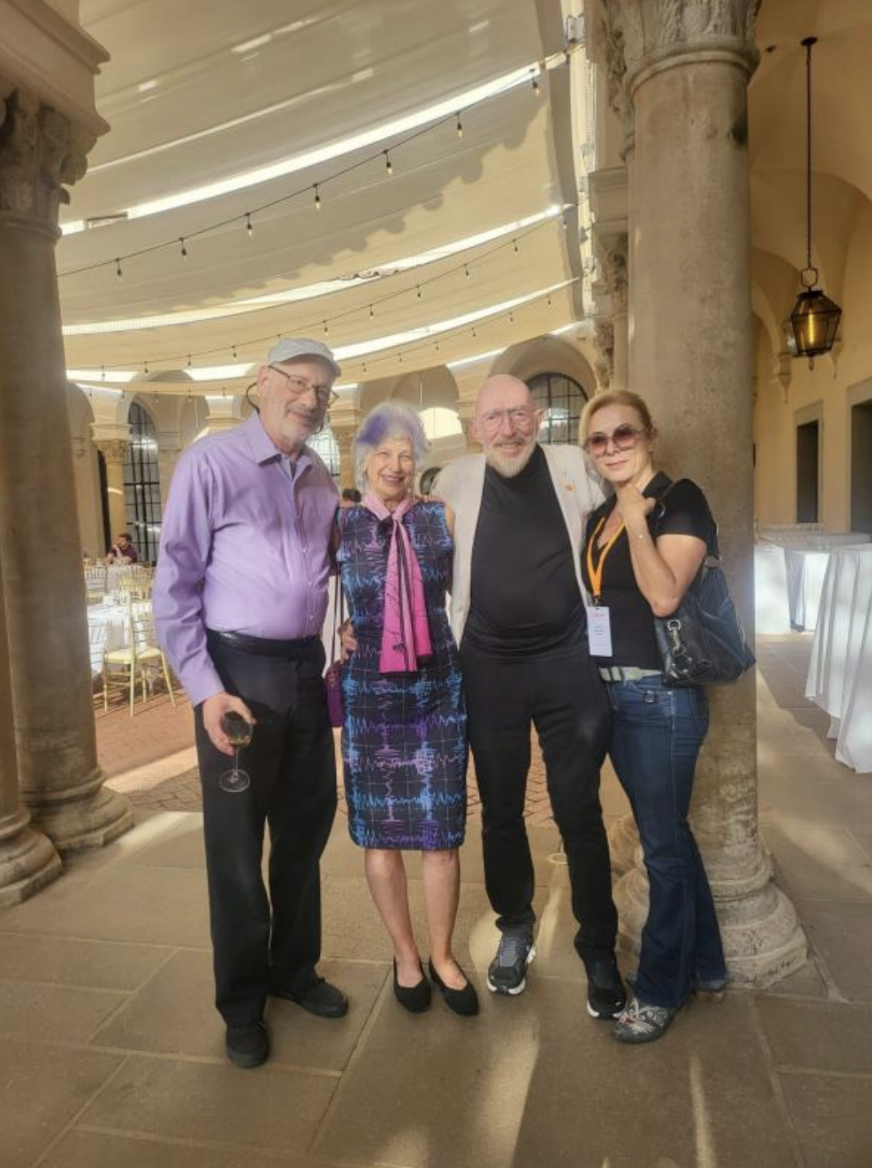
With Kip Thorne, Carolee — in her LIGO dress, the gravitational-wave chirps printed on the fabric — and Maria Spiropulu, at the Athenaeum, 2025 (ML4JETS). The Caltech he believed in.
To his wife Jackie, his children and grandchildren, his students across three generations of theoretical physics, know that it will be a tall order for all of us to live by the standard he set. For my HEP CMS/QIST group, the honoring will be done the way he would have wanted: with results. The 4th crate of fast-timing detector trays our group is completing for CERN will ship in August with his name etched on them. The students he paid for— a quarter, a lunch, a semester at a time — are still assembling the hardware now.
The work continues, which is the only tribute he ever asked of anyone.
Take care, Mark.
All images provided by Maria Spiropulu.