Current Caltech undergraduates are talented, accomplished, and frequently dissatisfied. Many leave Caltech less willing to recommend their student experience to others than their peers at MIT and Ivy League schools. Alumni can attest that similar dissatisfaction with the undergraduate student experience was not present in earlier years.

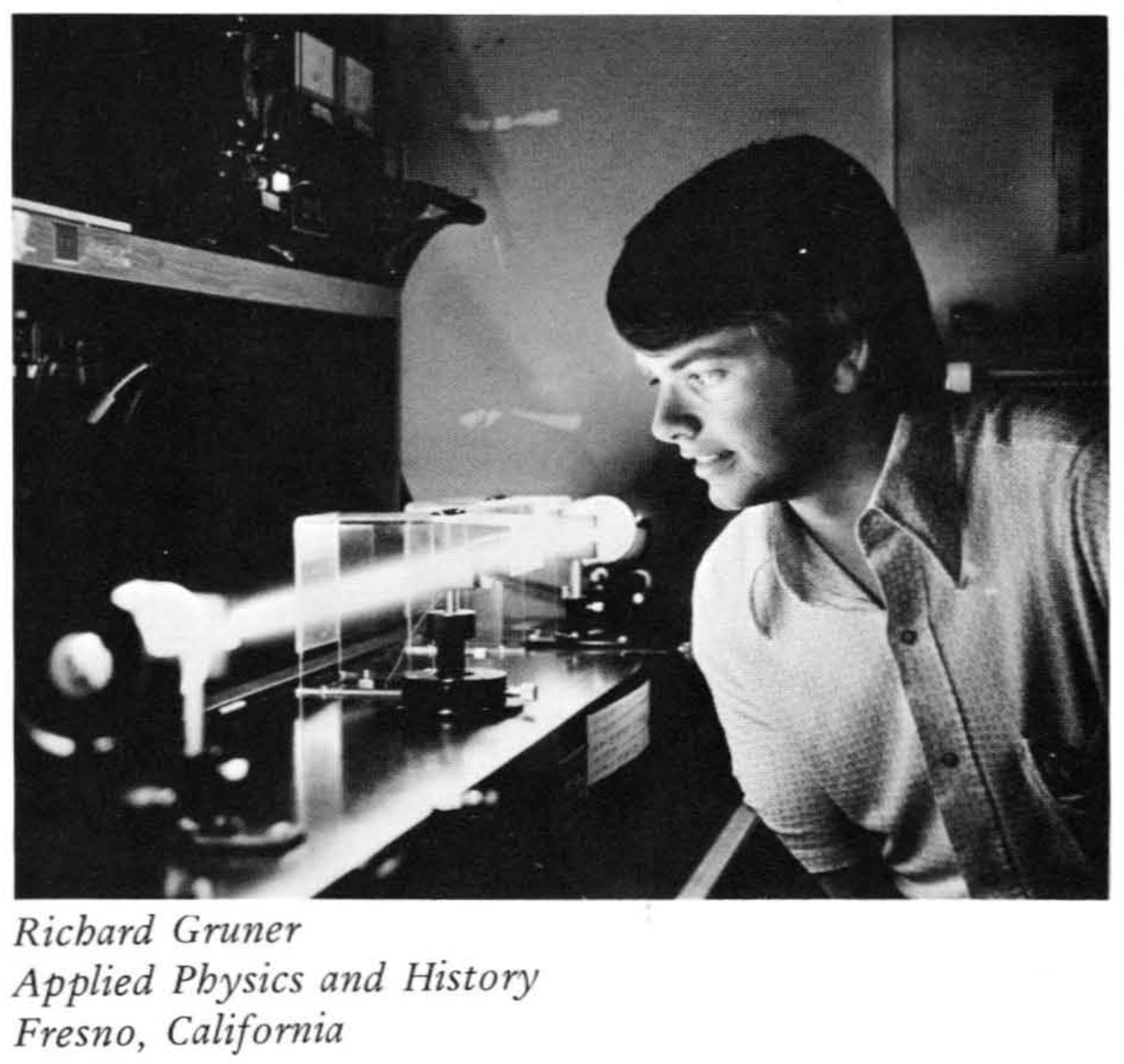
Richard Gruner (BS 1975); Former Co-Editor-in-Chief, The California Tech; former Professor of Law and Director of the Center for Intellectual Property at the University of Illinois, Chicago, School of Law. (Credit: USC Gould)
What has been lost?
Certainly, the stresses of Caltech have not changed. Each year, Caltech recruits the best of the best in science, admitting them in extremely small entering classes (the Class of 2029 has only 248 enrolled students) under highly selective admission standards (the enrolled students in the Class of 2029 reflect only 2.2 percent of the 11,285 individuals who applied for admission). Once there, Caltech undergraduates, who were previously at the top of their high school classes, are given curriculums intended to be difficult even for persons with their exceptional abilities. Students find that they are nowhere near the top of their classes (indeed, they will be lucky if they are near the top of any one course). Learning and new skills follow from determining how to approach new analyses and new problems. The pace and content of Caltech undergraduate education are demanding but rewarding. The stresses are large by design.
None of this is new. For many years, Caltech has been admitting and educating students on this model, helping them to build on their entering talents and emerge with extraordinary undergraduate educations in math, science and technology disciplines, educations that have been the launching points for leading careers in academia, industry, and professions such as law and medicine. Through the caring efforts of professors, grad students, and other educators plus a strong and effective ethic of cooperation and mutual support among students, Caltech undergraduates complete a difficult but rewarding educational journey that most later feel was worth the effort. Indeed, the journey may be the ultimate educational experience at Caltech. By learning how to survive and prosper at Caltech, students acquire the discipline, learning approaches, problem solving skills, collaborative behaviors, and dedication needed to study and understand math, science, and technology at the highest levels.
For many of us who passed through the Caltech undergraduate experience in an earlier era (both my wife and I are BS Class of 1975), the years at Caltech are remembered as perhaps the most intense yet most satisfying and rewarding of our lives. Nothing that came after was quite the same. We formed life-long friendships there and undertook activities that are among our most meaningful life memories. It was a highly positive time all things considered.
Since then, however, undergraduate dissatisfaction has grown. Many recent students have left Caltech with poor memories of their student days. Among Caltech students graduating between 2005 and 2020, only 35 percent indicated in a survey that they were very satisfied with their undergraduate education, while 54 percent of similar students at MIT and Ivy League schools indicated they were very satisfied. Only 28 percent of the same Caltech undergraduates indicated they definitely would recommend that a high school student attend Caltech while 64-67 percent of MIT and Ivy League students said they definitely would make such a recommendation. Clearly, Caltech can do better in creating positive student experiences that graduates will recommend at levels similar to students at peer schools such as MIT and Ivy League universities. The survey results are described in the Caltech Co-Curricular Group (C3) Final Report (April 2022).
These are not the only signs of discontent. Articles in the California Tech newspaper have recounted repeated incidents in which student initiatives aimed at organizing social events for students or other student-initiated projects have been frustrated by refusals of the administration to support them or by threats to impose exorbitant costs on the students or house organizations in the case of modest damage. Similar comments (many of them from student leaders such as ASCIT officers and house presidents) have been received by alumni when they go on campus and talk to present students. It is a frustrating and socially isolating time for current Caltech undergraduates in which student community-building activities and support for student life outside the classrooms seem to have diminished in scope and quality from prior eras.
What is missing in today’s student experience?
Interestingly, alumni can provide much of the answer. The stresses at Caltech have not changed materially in the last 50 years. Classes are tough, time is short, and this is not going to change because Caltech cannot provide the top-quality science education it is known for without these pressuring features. But the undergraduate student experience is arguably weaker than 50 years ago. We who saw the student support then and the lesser actions now can see the difference. We can identify what has been lost.
To put it simply, the Caltech undergraduate experience is not positive enough outside of the classroom.
This commentary identifies some of the lost elements in the Caltech undergraduate experience that were positive in an earlier era and that are missing today. They are presented with the hope that the account will help the present administration to make improvements. These were all workable measures at Caltech in earlier eras with substantial impacts on the quality of student life outside of the classroom. The addition of these or close equivalents would go a long way toward improving the present undergraduate student experience and ensuring that this experience is as rich, supportive, and satisfying for undergraduates as student life 50 years ago.
I. Frosh Camp
The gap begins with the absence of Frosh Camp. This event was conducted as new undergraduates first arrived in Southern California and involved several days off campus on the beach or in the woods. Frosh Camp started the Caltech undergraduate experience with a community-welcoming and building event. It demonstrated that Caltech was a special community and that new undergraduates were important members of that community.
Frosh Camp taught by example the supportive and informal nature of undergraduate life at Caltech. The event mixed all entering freshmen and women, some undergraduates (primarily student leaders and other representatives of the breadth of student life at Caltech) and a substantial number of Caltech faculty. The aim was discussing student life and the broader Caltech community (as well as having some shared fun). The more mechanical steps of describing campus features and resource availability would be accomplished later on campus via orientation events and processes.
Frosh Camp was held in a setting that was not only away from campus, but fun itself. A relaxed and interesting setting detached from Caltech served to isolate students and faculty in an enjoyable way from perceived pressures on campus. Over the years, a number of locations served as Frosh Camp settings. In the 1970s, Frosh Camp took over a YMCA camp on Catalina Island. Later, a camp in the mountains near Crestline, California, was used. More recently, students and faculty went to Ventura County. The following description of the version of Frosh Camp held in 2017 highlights the community building importance of this type of event:
“This year, Caltech’s freshman orientation took place on September 18 and 19 in Ventura, California. Over the two days, students from the class of 2021 attended talks about the Honor Code and academics, met deans and resident associates, and participated in elective activities such as a boat design contest and a geology hike.
Paul Asimow (MS ’93, PhD ’97), the Eleanor and John R. McMillan Professor of Geology and Geochemistry, has led the annual geology hike for 10 years, with increasing attendance each year. With panoramic views of the Channel Islands, the Ventura River Valley, and the Santa Clara River Valley — weather almost always permitting — the 1.5-mile trail is located in the hills above Ventura and passes through fossil-rich rocks and landforms testifying to the extremely rapid uplift of those hills and the nearly-as-rapid resulting erosion.”
Professor Asimow’s presence at Frosh Camp and his leadership of activities stressing both science and recreation were typical although the specific faculty members in attendance varied year to year. Frosh Camp illustrated the Caltech community at its best: informal, relatively hierarchy free, extremely sharp, and active.

Professor Asimow talks to students from atop a stump during the 2017 Frosh Camp geology hike. (Credit: Caltech)
One could meet the most remarkable people at Frosh Camp. Richard Murray, Class of 1985 and later a Caltech Professor and winner of the Richard P. Feynman Prize for Excellence in Teaching at Caltech, recounted his first, highly informal contact with Nobel Prize winner Feynman at Frosh Camp on Catalina Island in the early 1980s:
“I was sitting down, looking across a field, and a professor sat down next to me and started talking about some shells he had found while he was swimming. Lo and behold, it was Richard Feynman – although I was an engineering student and not in physics, and I’m not sure I knew who he was at the time. That willingness to talk to a student typified his approach to teaching.”
Not a bad introduction to Caltech.
Frosh Camp established firmly that freshmen were part of the Caltech community. From day one, it was communicated – from the existence of Frosh Camp, the involvement of many faculty in the Camp, and the comments of both faculty and students at the Camp – that Caltech valued community over all else and that freshmen were part of this rare community. Essential features of student life – including the norms of cooperation and collaboration and the benefits of operating under the honor system in which students are honor bound not to take unfair advantage of other members of the community – were communicated to freshmen from day one. The availability of help from fellow upperclassmen (and the fact that pretty much every student would need help at some point) was made clear in the first discussions. Support was a pervasive theme. New undergraduates met, in the faculty members and students at the Camp, some of the people who would be immediately available sources of support when new students returned to campus.
Perhaps most importantly, new undergraduates met each other at Frosh Camp with time to just talk and hang out, discovering (perhaps with some surprise) that their classmates were much like themselves – precocious, brilliant students, often shy, and frequently a little (or even a lot) socially backward. The undergraduates had never known many (if any) persons like themselves; now they were surrounded by a group of peers, which provided some inspiration and comfort.
Frosh Camp was regularly undertaken in stunning settings such as Catalina Island or the San Bernardino Mountains where participants could engage in enjoyable joint activities and build shared memories. Later, on campus, these shared experiences would promote continued interactions among new frosh, with resulting benefits in support and further enjoyable activities. Frosh Camp is now gone with the loss of these sorts of community benefits.
II. The Student Run Coffee House
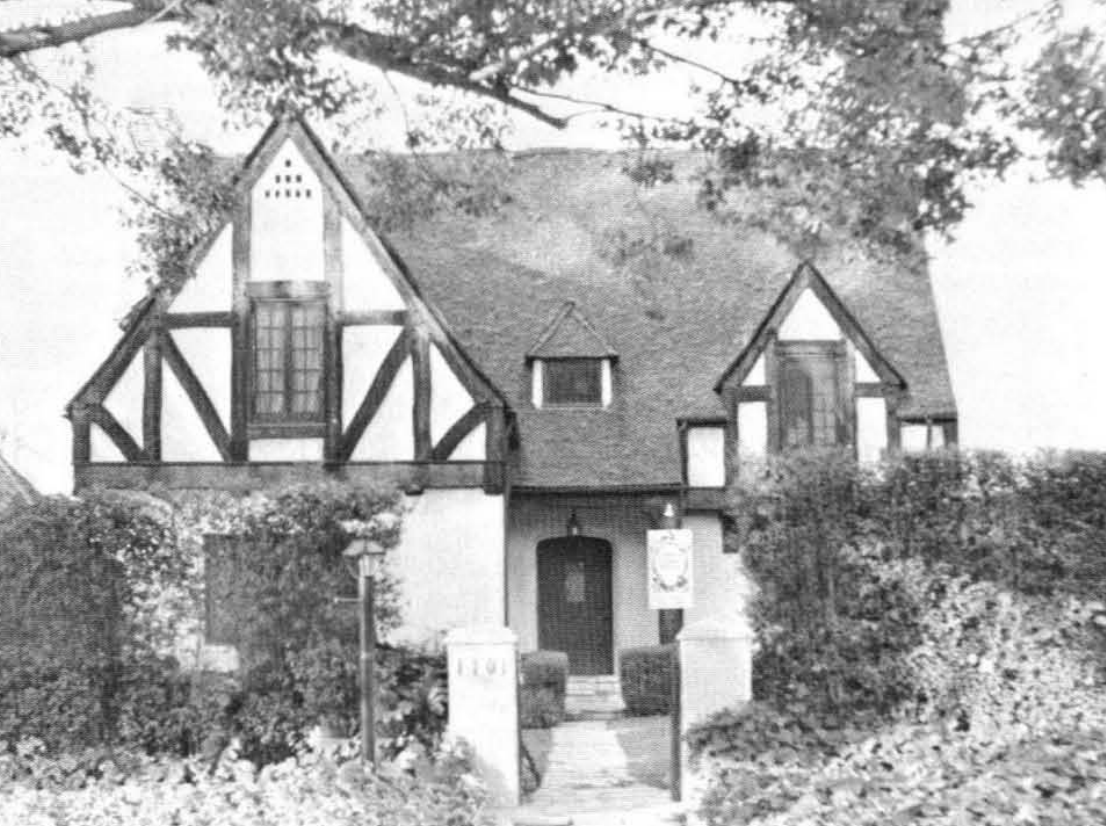
Coffeehouse. (Credit: The Big T, 1970)
In the 1970s, Caltech had a student run Coffee House, located in a Caltech-owned house on San Pasqual street (when it was a continuous street). Later a similar facility operated in the basement of the old student houses. The purpose was to serve Caltech students (mostly undergraduates) in a friendly, personalized environment. The features of that environment (the menu, the music, the physical elements like pinball machines and other aspects of the setting) were all curated by students. It was open late (because that was when Caltech students needed a break from long homework sets) and was a short but meaningful walk from the student dorms (with the result that a Coffee House run forced students to get out of their rooms and have a brief interlude of physical activity amidst long homework sessions). The Coffee House also provided a limited amount of student employment, aiding the tight budgets of a number of undergrads.
Walks to and from the Coffee House were often group affairs organized off the cuff, adding social benefits to the individual relaxation provided by the Coffee House. People who ate at Coffee House have pleasant memories of milkshakes, burgers grilled to order, loud music, and lots of pinball. It was fun and easily available every night.
Today, there is no student-curated equivalent. A professionally run café reopens in the evenings in a period it calls “Coffee House”, but this is a pale substitute for the student-created, student-focused Coffee House of an earlier period. Simply having a place to have coffee is not the same as having a place run by peers for peers. Where are the student-selected decorations, music, and menu items? And where are the pinball equivalents? Relief should be there every night into the night. The student run Coffee House provided this; today there is only a student support gap in the evening hours.
III. Robust Interhouse Dance Constructions and Themed Events
The term “Interhouse Dance” was a misnomer 50 years ago. The dance aspects had largely fallen away and the building of decorations and the holding of parties dominated by the decorations were the essence of Interhouse. The event might have better been called “House Engineering and Fantasy Night” as most houses focused on either major constructions or other theme events with plays and costumed activities. Dancing, if it occurred at all, was minimal. For reasons of changed scheduling and diminished projects, some of the community building opportunities of Interhouse seem to have been lost.
A single night was selected for Interhouse Dance 50 years ago in the middle of the fall quarter. This served two purposes. First, having the event on a single night allowed all house members to cruise around and see what other houses had done. Second, by holding the event relatively early in the fall quarter, the construction of Interhouse projects or the development of elaborate themed events became important bonding processes. New frosh (who generally knew few upperclass persons upon arriving in their houses) were encouraged to come out of their rooms and join in the major house projects. By the end of the projects at the Interhouse Dance, the frosh knew many of the upperclass house members and vice versa. They had all worked on joint efforts and could share pride in the major projects they completed as house communities.
Today, Interhouse events are spread throughout the year, with each house having its event on a different day. Constructions are optional. For the houses that have their events after the fall quarter, this timing loses the community building advantages of quickly bringing new students into house activities via participation in group projects leading up to a fall Interhouse event. By winter and spring terms, students will already have felt the isolating and often crushing effects of extreme workloads and finals. The best community building opportunities will be lost in houses that must defer their Interhouse events past the fall quarter.
The diminished scope of decoration and theme projects also seems to be a loss. The scope of community building opportunities revolving around Interhouse 50 years ago is reflected in the ambitious features of the house projects involved (and, hence, the magnitude of the group efforts that students organized and executed within the houses to carry out these projects). To give an idea of the scope of constructions undertaken in just one house 50 years ago, the following were Interhouse projects completed in Page House between 1971 and 1974 (students in other houses worked on their own competing projects):
1) The Page House Railroad – The main downstairs hallway in the dorm was transformed into a railroad by laying down a track using small conduit pipe as rails. Cars riding on the rails were mounted with little red wagon wheels with the rubber portions stripped off (leaving behind a metal hub with a “C” shaped profile that fit on the track). The wheels were swapped out like racing tires as the bearings in each wheel hub wore out after a certain number of hallway transits. The engineering triumph in the railroad design was the motivation mechanism – this was a rider powered railroad! Riders added energy to the system by climbing stairs to a relatively high point in the lobby near the beginning of the hallway. There they were loaded into seats on a car. Once loaded, the rail car was released down an immediate slope which brought it to sufficient speed to send it rolling down the length of the track where it was caught at the end of the hallway on a spring. The riders got off and the stretched spring had sufficient power to send the now lighter car all the way back down the track to the beginning of the ride (or thereabouts). A brilliant physics demonstration that even worked!
2) The Sewers of Paris – This involved placing reinforcements and water seals in the lower portions of all the doorways in the downstairs hallway, lining the hallway with a waterproof liner, and flooding the hallway to a two-foot depth. A catwalk built above the flooded portion allowed guests to walk down a sewer tunnel along the length of the hallway. Grey and decayed wall decorations along with some fake cobwebs lined the hallway to make it look appropriately gross and disgusting. Fortunately, at least for the persons living in the dorm rooms adjacent to the flooded hallway, realism ended there – rats and stench were not part of the sewer simulation.
3) Transporter to Star Trek – This project turned on the heat shrinking features of large sheets of mylar plastic and the optical effects that persons could create over entire rooms by taking mylar coated with reflective aluminum, mounting it to large frames, and heat shrinking it to produce entire mirrored walls. The Star Trek inspired project started with a “transporter room” in which guests entered a room, lights flashed and went out, and when the lights came back on the room was a different shape. This was a low-tech effect based on pure people power – the apparent change in rooms and location was achieved by parties behind the scenes moving the walls of the transporter room at the appropriate moment. From this transporter, guests moved down a long hallway (the same one formerly containing the railroad and sewer) along a mirrored path. Shrink-wrapped aluminized mylar walls mounted down the length of the hallway created a corridor with a funhouse set of mirrored reflections. At the other end was a recreation of the full Star Trek Enterprise Bridge with appropriate visual displays, control panels, and blinking lights.
4) The Disco – Once again, the optical effects of shrink-wrapped mylar provided inspiration. The construction project aimed at creating a disco parlor with actual dancing. Mirrored walls were again created with heat-shrunk aluminized mylar (probably using an excess supply of mylar left over from the year before). These surrounded a disco dance floor with a mirrored disco ball suspended from the ceiling that completed the lighting effects as colored lights reflected off the ball and the mirrored walls.
These efforts illustrate the types of student-generated, science-infused projects the minds of Caltech undergraduates create when unleashed (and given a bit of project money to work with and a bit of forgiveness as to damage done). It takes student-generated projects like these to distract and engage Caltech-level students. With this engagement, communities are formed and students gain distraction from the otherwise crushing pace of academic work. This is well-recognized autonomy. Yet similar projects seem unlikely to proceed today. The need for pre-approvals is likely to deter thinking big about Interhouse Dance decorations, particularly where the parties with approval powers do not share the cleverness and scientific bent of Caltech students but do have strong interests in risk avoidance and minor damage prevention.
IV. Student Services in Winnett

Winnett Center in the 1960s. (Credit: Caltech)
The now destroyed Winnett building was the source of many student activities and supports which were not fully restored in student-proximate forms when the substitute Houseman building was completed. Winnett was located a short walk from students in all seven houses. The services it provided were immediately available to undergraduates. These included:
A. The Personal Touch: Flora and her Friday donuts
Presently, many undergraduates are distressed about their student lives – in some cases because of actions taken by the Caltech administration – yet feel that they do not know who to talk to or how to complain. This lack of an outlet becomes its own further source of stress – a pressure cooker without an escape valve is inherently dangerous.
In an earlier era, Caltech had a simple solution. It institutionalized listening. It provided a human face as an entry point to student support. With approximately 250 entering freshmen and women entering each year and a total of only about 1000 undergraduates on campus at any given time, Caltech can afford to give personal attention to support of each undergraduate. At one time, this personal touch was provided by one-on-one contacts with a friendly staff member named Flora prominently housed in Winnett within steps of the student dorms. Flora supplied the personal touch to student support and she was armed with donuts.
Flora was an administrator (with a title related to student life) who provided an ever-present ear to students in trouble or who just wanted to talk. She offered some practical advice and was particularly popular on Friday mornings when she dispensed free donuts from her office. The lure of the donuts ensured that she saw many students at least once a week and could engage in friendly conversation with help given if needed. It probably added to her popularity that she had once been married to a member of the Grateful Dead (Tom Constanten). She was a caring individual who was always interested in undergraduates and was an ongoing and immediately available source of compassion. She provided a human entry point for student services, steps away from where students lived.
B. Events in Winnett Lounge
A substantial sized lounge in Winnett hosted (at Caltech’s expense) an ongoing series of free events ranging from comedy to serious public affairs. A representative comedy event is reflected in the following announcement from 2009:
“The Caltech Comedy club is presenting Saturday Night Stand-Up Comedy, featuring some of LA’s best emerging and established comics. This free show will feature comics from Comedy Central, the Improv, the Laugh Factory, and more.”
Winnett Lounge also hosted diverse speakers addressing more serious matters. Martin Luther King Jr. visited the campus in 1958 and met with students in Winnett Lounge. Roy Wilkins spoke there in 1964. In one year alone, speakers in Winnett included Ken Kesey (noted author), Dick Tuck (political prankster), Linus Pauling (two-time Nobel Prize winner and former Caltech faculty member) and Zhores Medvedev (world famous Russian political dissident and scientist). Ray Bradbury, Leonard Nimoy, and Chappy James (the first African-American USAF General) gave informal lectures for students there. Mason Williams played his hit “Classical Gas” and Virgil Fox, organ virtuoso, gave a concert in Winnett Lounge. Nobel Prize winner Richard Feynman dropped by on a series of Wednesday afternoons and told stories of his time at Los Alamos.

Martin Luther King Jr., pictured (center left) with a group of students in Winnett Lounge in 1958. (Credit: Caltech Archives)
There were many more similar events and insights from extremely talented and engaging outsiders. Sessions provided in Winnett Lounge were all aimed at students, made available near where they lived and for free. There does not appear to be any substitute speaker or artist series presently aimed at students, with the associated loss of both entertaining diversion and broadening cultural experiences.
C. Caltech Y
The Caltech Y has been a major force in shaping the non-academic features of undergraduate life at Caltech for many years. Up until the loss of Winnett, the Caltech Y offices were located in Winnett, steps away from the students they served. Now they are relegated to a Caltech-owned house on the periphery of campus. Still a major force in undergraduate life, the Caltech Y is nonetheless hindered by its lack of proximity to undergraduates who can no longer drop in for a few minutes (all that many have free amidst crushing academic schedules) for informal Caltech Y activities and conversations.
D. Student Publications
Winnett also included the offices of The California Tech newspaper, the Big T yearbook, and other student publications, along with a darkroom that supported the photographic activities of those publications. Proximity to the student houses meant that students were easily able to participate in campus news reporting supplemented with many student-generated photos of events. The presence of the paper in immediately available offices helped make the paper an active student voice amidst the student population, providing student curated information on student affairs, student government activities, related Caltech administration activities, and entertainment options both on campus and off.
V. Nearby Entertainment on Campus
A. Student-Focused Performances on the Olive Walk
Every year professional entertainers performed on the Olive Walk (in a space near Winnett) to provide distraction for students and other members of the Caltech community. These events were organized by the Master of Student Houses (MOSH), a faculty member with responsibility for the quality of life in the student houses. The level of entertainment booked and paid for by Caltech for the distraction of students was topflight. For example, on one occasion 50 years ago, the San Francisco Mime Troupe (a nationally recognized political satire act) provided hilarious spoofs of current politics and social life. A local troop of belly dancers was such a hit they were invited back several times, with one of their performances highlighted by the presence of a camel ridden by the then MOSH David Smith. Needless to say, these events were distracting – they were aimed at undergraduate students in particular.
At present, there is no MOSH (perhaps reflecting a diminished faculty interest and involvement in student life outside the classroom). Hence, it is not clear who would organize the equivalent of these memorable entertainment events.
B. Other Caltech Sponsored Events
Caltech was a lively source of cultural events in the past. One of the highlights of 50 years ago illustrates the exceptional persons brought to campus in that era. In 1974, Caltech hosted an extraordinary gathering of science fiction writers at a conference open to students, with attendees including Robert Heinlein, Poul Anderson, Robert Silverberg, Larry Niven, Harry Harrison, Randall Garrett, and Jerry Pournelle (Caltech Professor John Pierce presided).
C. World Class Entertainment at Beckman Auditorium
For many years, Beckman Auditorium (Beckman) on the Caltech campus regularly hosted many leading artists and lecturers. Artists appearing at Beckman ranged from Marcel Marceau to PDQ Bach (Peter Schickele) to the Modern Jazz Quartet to the Vienna Boys’ Choir. Beckman hosted lectures by such luminaries as David Hockney, Frank Gehry, Tom Stoppard, Oliver Stone, Michael Crichton, Herman Wouk, and Beverly Sills. Beckman was the centerpiece of entertainment and culture at Caltech. An outside observer once described Beckman Auditorium as “a vibrant cultural hub. … [I]t hosts a diverse array of events including performing arts, lectures, films, and classes throughout the academic year.”
Caltech once recognized that the programs at Beckman were a significant source of positive student experiences. Some years ago, a video describing student culture at Caltech pointed to events at Beckman as significant highlights of student life. The student narrator mentioned recent programs that included a lecture by James Cameron on the science behind the movie Avatar, a talk by Stephen Hawking on black holes, and two different sessions of TED talks.
Caltech turned away from providing a season of diverse performances at Beckman Auditorium in the early 2000s, limiting use of Beckman to Caltech events, internal academic programming, student-led productions, and public science outreach initiatives. A series of chamber music concerts appears to be the only outside entertainment booked there now. Broader entertainment seems to be gone to the detriment of undergraduates and the entire Caltech community.
Updating for the Needs of Today
The accounts here focus on features of the Caltech student environment of 50 years ago that were meaningful then but appear to be missing now. These stand out to persons who had positive student experiences in an earlier time as features that aided those experiences and which might also benefit students now.
Of course, times and student needs change. New needs of students may suggest the desirability of student life features beyond those described here as beneficial 50 years ago. The only way for the administration to identify the specific student life features and administrative supports that will produce more positive student experiences is by listening to present undergraduates. The fact that the administration does not seem to be actively investigating the concerns of present students in searching for sources of continuing undergraduate discontent and seeking additional changes to produce more positive student experiences suggests that student discontent is likely to continue.
Discontent continues to be expressed when alumni speak to students today. More troublingly, students do not have a sense that things are changing for the better or that the administration is even interested in these problems. Worst of all, some students express concerns that they do not even know how or to whom they should voice their distress about undergraduate life and the limitations that certain administration figures are placing on student-initiated activities. If students’ present concerns remain unheard, it seems highly unlikely that the administration will understand the concerns and take accurately targeted steps to make improvements. If one does not hear about and understand a problem, it is unlikely that one can take effective measures to fix it.
In sum, two types of administrative action would help counteract recent student dissatisfaction with the Caltech undergraduate experience. First, changes to restore the types of student life features described here would be useful improvements. Their past success in supporting positive student experiences and undergraduate satisfaction at Caltech indicates their potential for making improvements in the present environment. Second, the administration needs to listen more – that is, pay additional attention to the detailed concerns of present undergraduates – and adopt thoughtful and rapid measures to respond to those concerns. Such listening, analysis, and thoughtful responses would be useful ways to construct changes tailored to today’s students and to make sure that the changes are effective in improving present weaknesses in the Caltech student experience.
THE BIG T, 1975