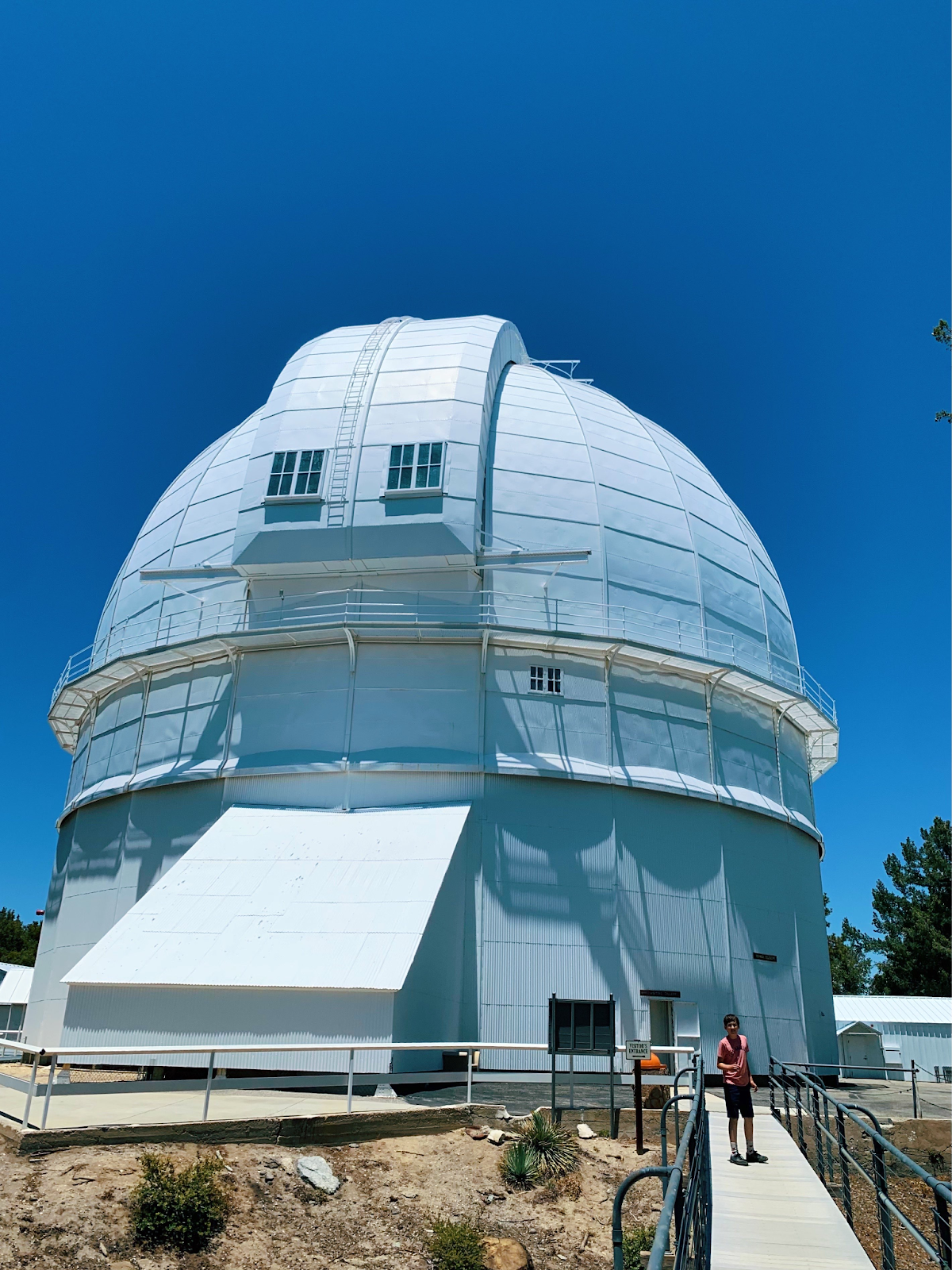
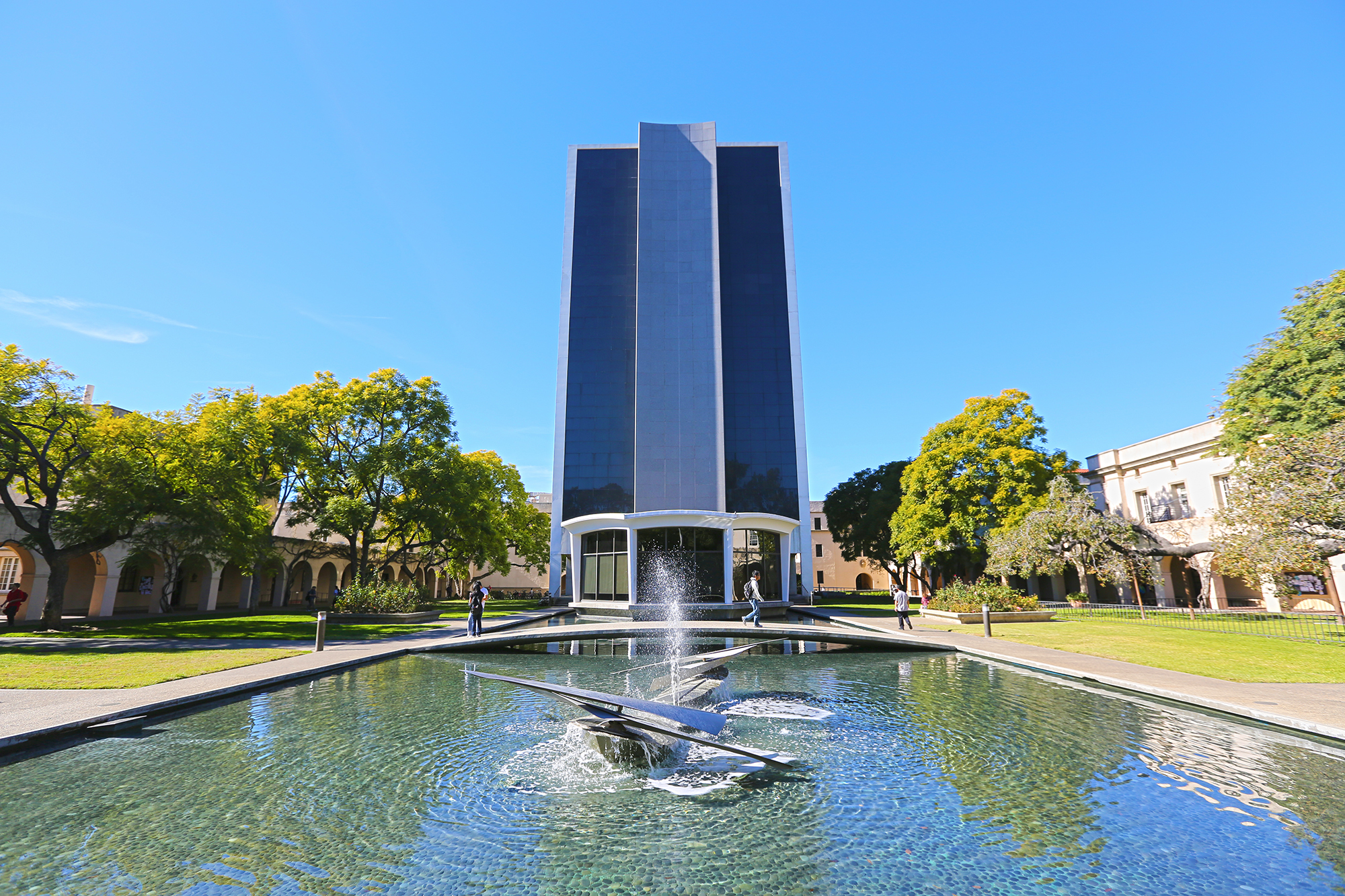
The Mount Wilson Solar Observatory was founded in 1904 by George Hale, who was also a trustee of Throop Polytechnic Institute (which later became Caltech). The first telescope built on-site was the Snow Solar Telescope in 1904, followed closely by the 60-foot Solar Tower and the 60-inch telescope, both of which were completed in 1908. Hale hosted many famous individuals during this time, including Andrew Carnegie in 1910 and Harlow Shapley in 1914. Carnegie was the main financial supporter of the observatory from its inception in 1904, and Shapley was an astronomer who discovered our position in the Milky Way galaxy using the 60-inch telescope.
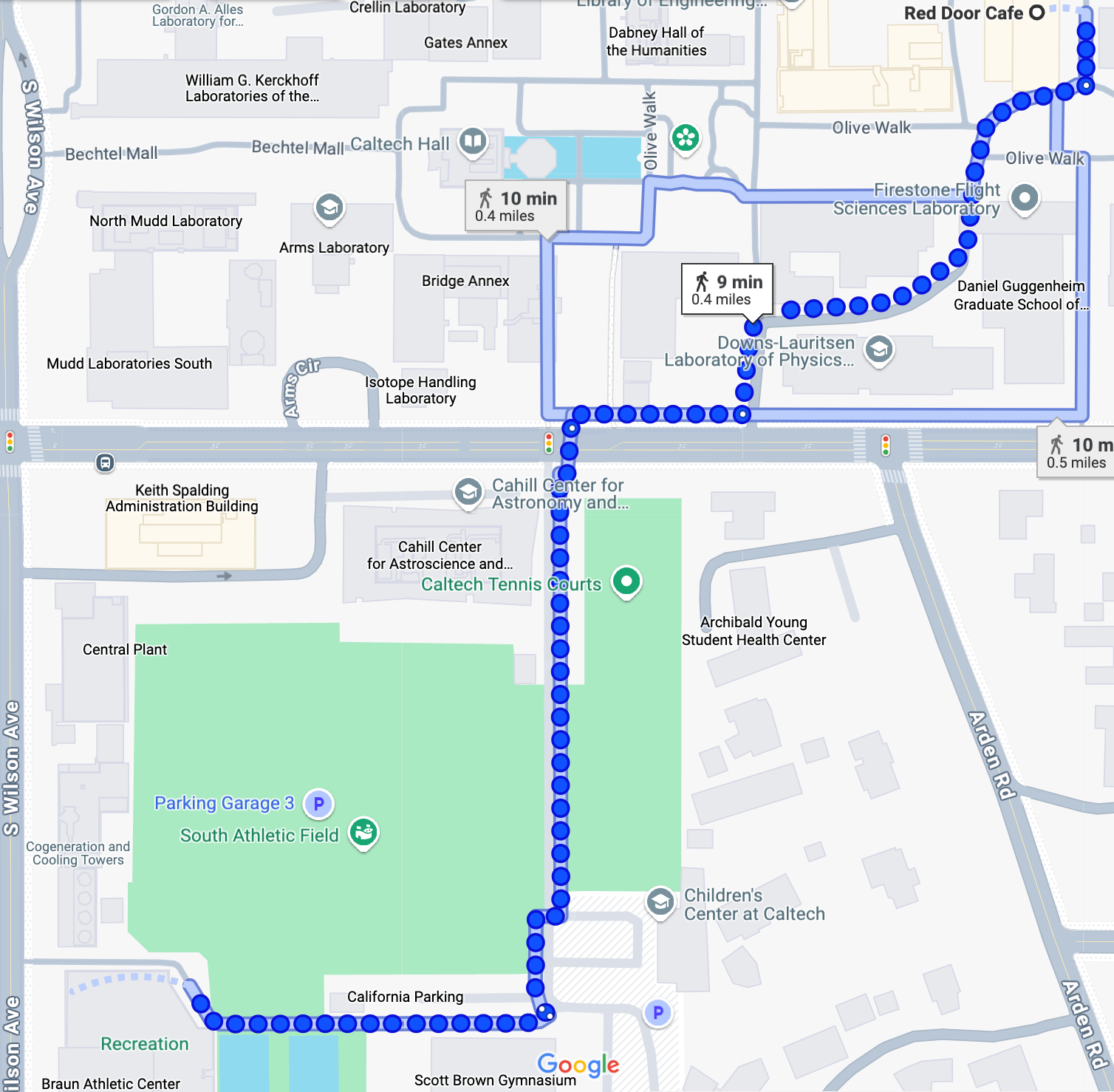
I can’t be sure, but if I had to take a gamble, I would guess most of you—like me—are always trying to optimize our paths around campus. There are multiple reasons this could be true: (almost) late for class and want to minimize how much you miss? Want to make it to Tom Mannion’s OH before the rest of campus wipes out all the Flamin’ Hot Cheetos? Want to get to bed when a coyote is chasing you down? Want to get the latest sighting of Ted Danson on campus? Want to make that last 2:58 p.m. dash to Browne on the weekend before all you have is Red Door? Want to beat the 10:30 a.m. line explosion at Red Door? Or the weekend 3 p.m. line explosion? Or the 10 p.m. line explosion, or… You get the idea.
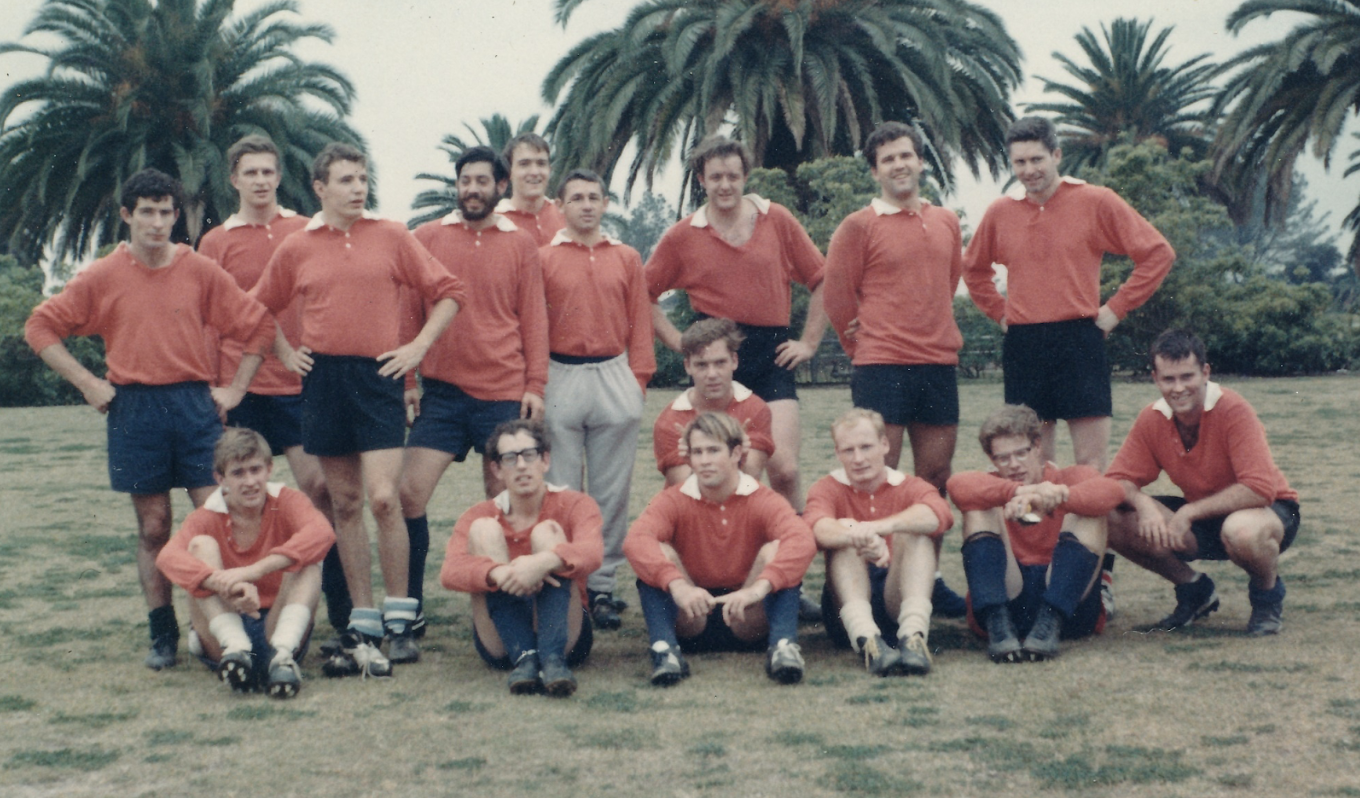
I read the article in The California Tech about the Caltech Rugby Club with great interest because I organised a rugby team at Caltech about 60 years ago (between 1965 and 1967). Most of the team were foreign graduate students from rugby-playing countries, but a few Americans joined us. We had mixed success but managed a few wins, notably against UCLA. The games against USC and Eagle Rock were particularly scary, as their teams consisted of very large American Football players looking for blood and violence in the off-season. We won a few games we didn’t deserve to because of the athletic ability of Mick Mortell from Ireland—he could kick penalties from 50 meters and more.
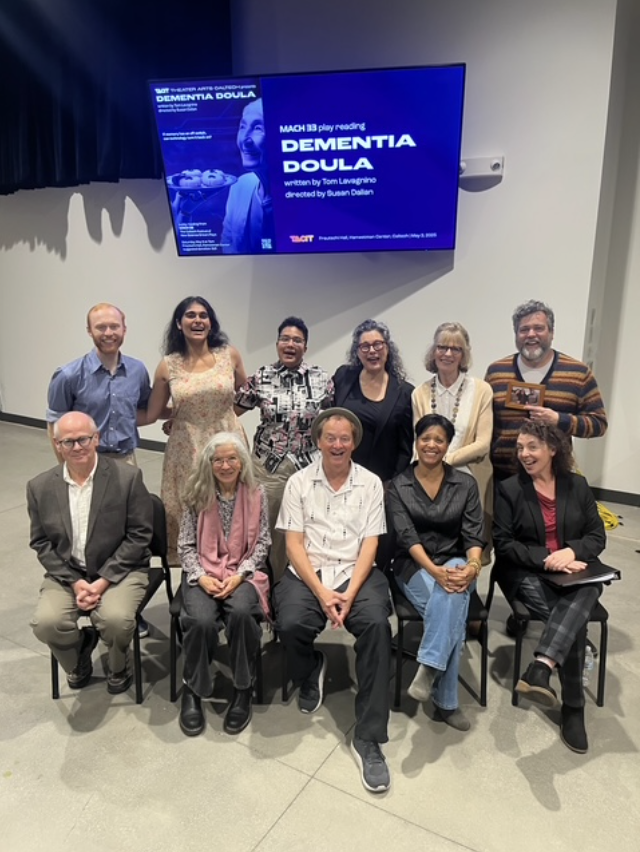
On May 3rd, Frautschi Hall, 7 p.m., as part of MACH 33: The Caltech Festival of New Science-Driven Plays, was the latest version of Tom Lavagnino’s Dementia Doula. Like the festival’s other show, entitled The Null Test (which explores the legal hijinks of a self-driving car company), this was a staged reading: the cast, directed by Susan Dalian, performing from scripts on music stands. Originally presented under the name Crisis Goalie at the 2024 Utah Shakespeare Festival, then directed by Britannia Howe, this pared-down staging celebrates the script on its own terms, privileging nuanced acting over elaborate production.
On April 21st, 2025, Pope Francis passed away. His successor is Pope Leo XIV, whose papacy began on May 8th, 2025. Pope Leo was a close advisor to Pope Francis.
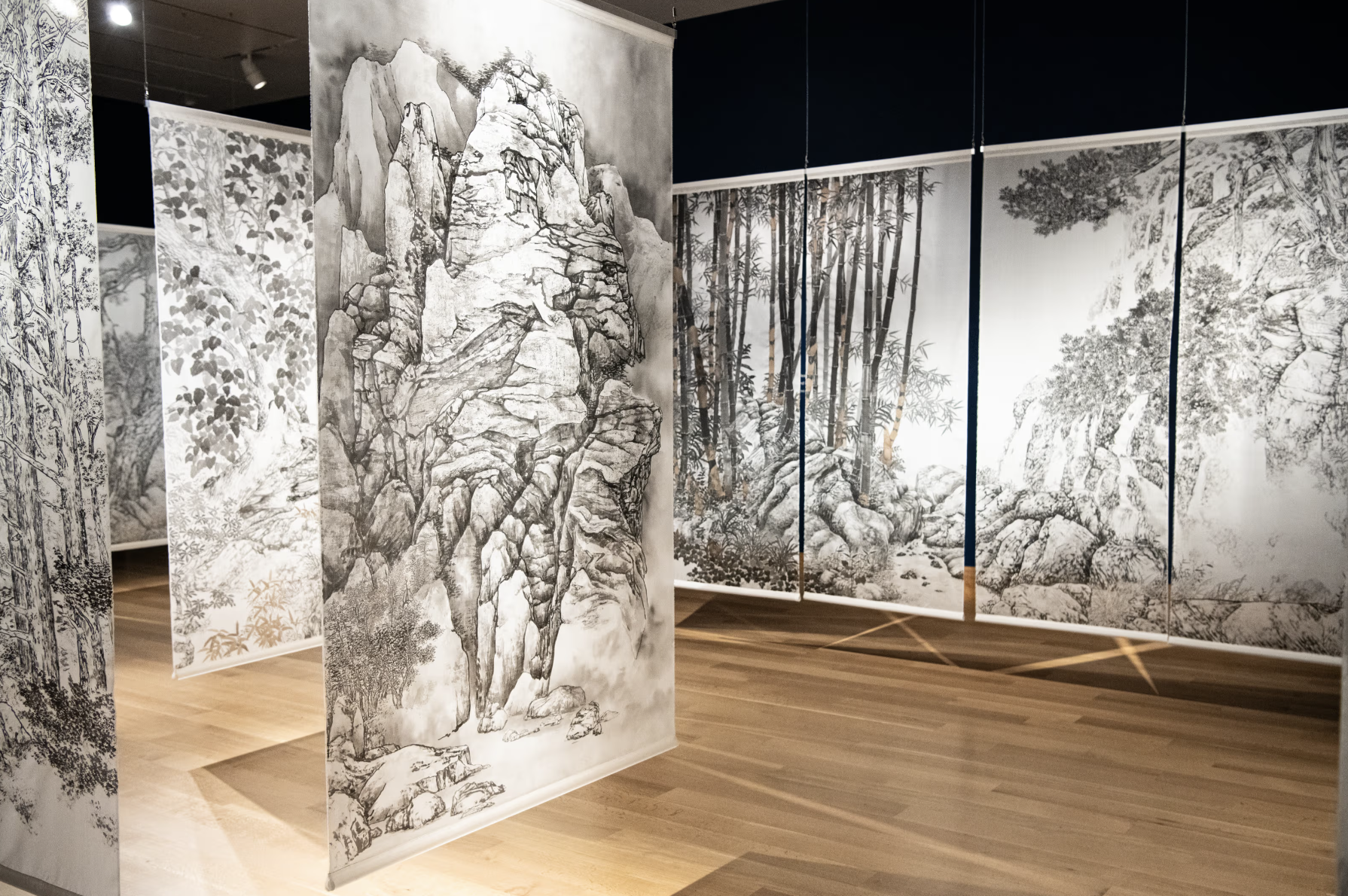
Looking down from a plane, Wang Mansheng felt uneasy about how much of the Earth is now covered by roads and buildings. Reflecting on this environmental change, he stated, “Pure nature is now unattainable except through my imagination or brush.” His new works at the Huntington put that imagined nature on display.
At first glance, Dr. Loraine Lundquist might strike you as a scientist with her head in the stars. After all, she holds a Ph.D. in physics from UC Berkeley and once helped launch a satellite to study the Sun’s magnetic field. But spend an hour with her, and that’s precisely what we did during the recent SASS Lunch hosted by the Caltech Y—and you’ll quickly realize that her gaze is firmly grounded on Earth, with a heart set on building a more just and sustainable future right here in Los Angeles.
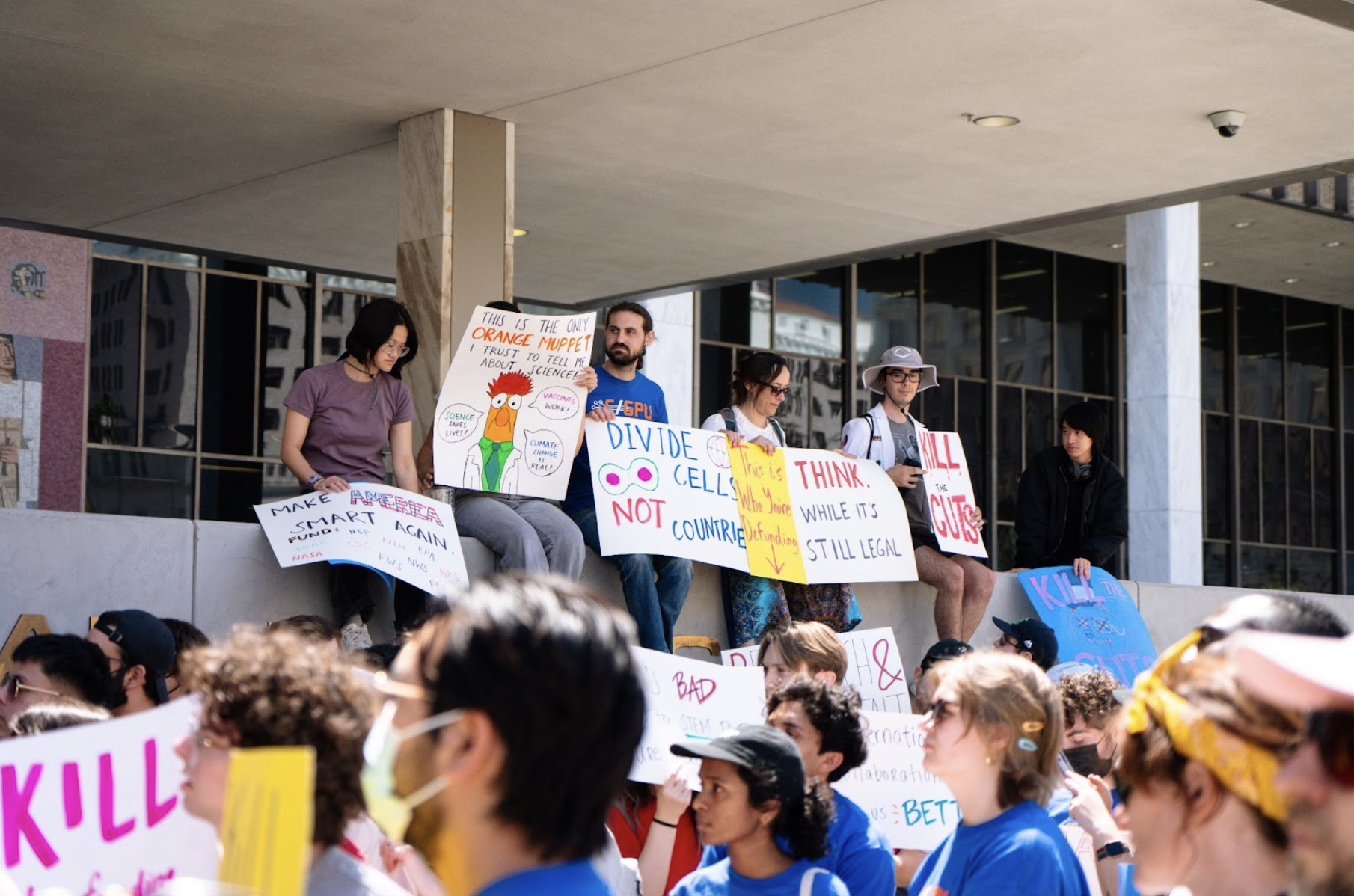
On April 8, members of the Caltech community joined forces with union members from USC for the Kill the Cuts rally in Downtown Los Angeles—part of a National Day of Action opposing proposed federal cuts to scientific research funding. From undergraduate students to postdocs, organizers, and union representatives, our presence at the protest was unified, urgent, and unrelenting.
At Caltech, student-athletes aren’t just competing—they are redefining what it means to balance intensity in both sports and academics. They exhibit not only commitment but a certain kind of mental toughness and passionate energy to their teams and to the Caltech community. Here’s the latest from Caltech Athletics, highlighting the records, rivalries, and relentless drive that define our teams. With the spring quarter underway, our Caltech athletics have achieved like never before. Let’s dive into the many accomplishments the spring sport beavers have to show off this year.