PALAISEAU, France — Rafael Crespo (BS ’26) traded the familiar backdrop of California’s San Gabriel Valley for the suburban outskirts of Paris for a term. As an exchange student at École Polytechnique, known on campus as “L’X,” Crespo found an environment that challenged his Caltech routine in many ways.
The sprawling campus sits on a plateau near Palaiseau, a 40-minute train ride outside Paris. The institution traces its roots back to 1794 during the French Revolution, and is one of the world’s oldest and most prestigious elite engineering schools with fiercely selective admissions. Originally founded in Paris, the university migrated to Palaiseau in 1976. Like Caltech, the L’X campus functions as a bustling hub for cutting-edge research.
For Caltech students accustomed to a relentless barrage of weekly problem sets in every course, the pedagogical shift at L’X is striking. Most courses have a two-hour lecture with a subsequent two-hour petite classe (PC), or “small class.” PCs operate as a hybrid of recitation and open office hours: teaching assistants distribute practice problems related to lecture, students collaborate, and the group reviews solutions together.
Classes meet just once a week, often leaving one or two entirely open days in a student’s schedule. Crespo noted, “I only have classes on Monday, Tuesday, and Wednesday, but they go for a total of 4, 6, and 8 hours, respectively.”
Final grades are based heavily on traditional assessment methods, typically consisting of timed, three-hour, in-person examinations utilizing pencil and paper. For those enrolled in the prestigious Ingénieur polytechnicien cycle, a majority of courses are delivered entirely in English.
The curriculum also accommodates immersive language training, which favors interactive coursework over written assessments. “I’m especially enjoying the French class,” Crespo said. “It’s an oral practice class, so we spend two hours just talking, acting from scripts, and practicing French pronunciation.” The university funded theater tickets for the exchange cohort to attend an evening performance of Molière’s “Le Misanthrope,” the classic play upon which the class curriculum was based.
Exchange students are housed together in a residential building, fostering a close-knit community. An intensive orientation day introduces incoming students to the campus community and all of the student-led clubs, sports and social activities, collectively managed by the student government body known as the Kès. Reflecting on his arrival, Crespo noted that the campus community was exceptionally welcoming, with both peers and staff eager to offer a helping hand.
Living in France offers a great opportunity to improve language skills, though it requires conscious effort. Because classes and administrative paperwork are readily accessible in English, and international cohorts default to it, immersion must actively be sought. “While I’m still getting used to how different life is here, I’ve enjoyed practicing my French with not just students here but also doing typically mundane things such as grocery shopping or riding the bus,” Crespo said.
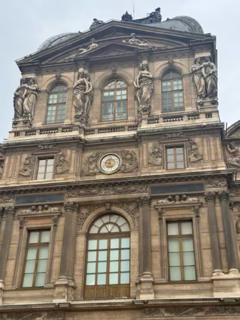
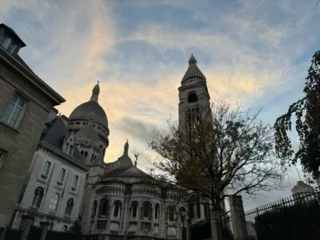
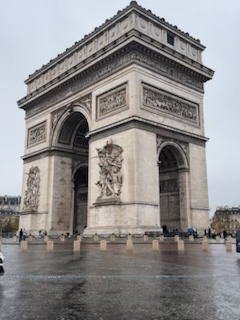
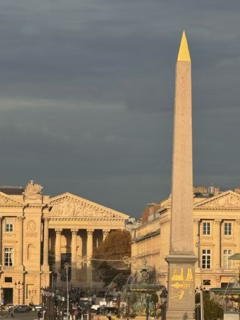
Ultimately, the structural shift in academics rewards exchange students with a profound lifestyle benefit. “It’s also great having time to explore events, both on and off campus,” Crespo stated. “I went with some friends to watch the event where they turn on the Christmas lights along the Champs-Élysées for the first time!”
For Caltech students weighing the decision to study abroad, École Polytechnique delivers a comprehensive combination: a rigorous academic environment, a rich social environment, and experience with a different approach to elite engineering education.
The Caltech FASA Office is currently holding information sessions on all the Caltech Study Abroad programs that are offered. Please visit our events page fasa.caltech.edu/events to find out more. Applications are due January 25, 2027 so there is still lots of time to learn about how you can study abroad in 2027 and still graduate on time!
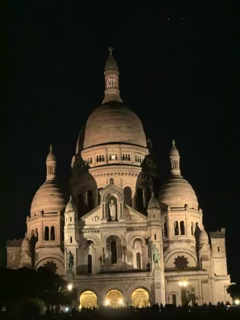
All photos by Rafael Crespo from Fall 2025.