Pizza at 4,630 meters, the Kissing Wall, and one very long summit night. Previously: a lost bag, four rowdy lads from Leeds, and two cold nights on the Machame Route. Now the mountain gets serious.
Day 3
The Mountain, a Naughty Babe
Altitude gain: 120m
A thing about living in Southern California is the sheer amount of Spanish you absorb. Before Caltech, my Spanish was confined to movie references. Those references might raise eyebrows over stereotypes, but for a kid in Sub-Saharan Africa, Narcos is about as Spanish as popular culture gets. Since then, I have challenged those stereotypes by meeting people, travelling, and learning about Spanish-speaking communities. In every sense, I strive to embody pura vida, while dishing out the occasional ¡su madres! in moments of awe, shock and disgust.
But beyond the popular phrases, one thing stuck with me: in Spanish, mountains are female. And not only because montaña ends in an a. Spanish-speaking communities in the Andes have long associated mountains with nature, and nature with Pachamama, the goddess of the earth. From then on, every mountain has been female to me — even Kilimanjaro, scary as she looks up close.
On Day 3, though, Kili was female not because of something I had learnt in class, but because of her mannerisms. After two days of forest and moorland, all of us were quietly hoping to reach her base. Which base? I couldn’t tell you. A few ups and downs across a few ridges and I was impatient. I had hoped to see base camp sooner, and not just because I was tired. For three days, the view of Kili had been much the same: a huge sweep of rust-red and chocolate-brown volcanic scree pouring down from the ridgeline in one long slope, pitted with loose stones and creased by a faint footpath that zigzagged toward the top. Near the crest, the slope broke into dark, jagged rock, with buttresses and cliff bands in deep maroon and charcoal. Thin streaks of white snow and ice clung to the cracks and folds, so that the summit zone looked as if it were holding on to its last bit of winter.
Breathtaking as it was, I wanted something different. A new view. Kili, naturally, had other plans. Anyone who has ever chased someone playing hard to get will understand Day 3. She had given me exactly one flirtatious glimpse at dusk in Machame, then drawn the clouds shut like a curtain, with ridge after ridge guarding her base. Now she was doing it again: huge, close, and entirely unavailable for comment.
The morning out of Shira Camp was a long, patient climb across bare, rocky moorland toward Lava Tower, the 4,630-metre volcanic plug we had sung about the day before. Lava tutapita, indeed. With every hundred meters, the plants got shorter, the air thinner and the rocks bigger. The guides’ favourite phrase, pole pole (slowly, slowly), stopped being advice and became law.
That day, though, I felt more energized than on the previous days. The only real difference, as far as I could tell, was that Shane had offered me a nose strap. I hesitated for a few minutes, my stubborn desire for a raw hiking experience overruling reason. But after the first break, I asked myself: why not? Suddenly my nose was drawing in more air than it was used to, and my feet had more gas. I wasn’t behind Shane. I wasn’t behind our guides. I was simply gone, striding across the ridges and arriving at Lava Tower ahead of everyone.
The day also taught me more about the lads. Aside from the strong British accents, the age gaps and the farting, we were alike in many ways. They had all run marathons or ultras, loved hiking, and were always pushing themselves physically. For that, I respected them.
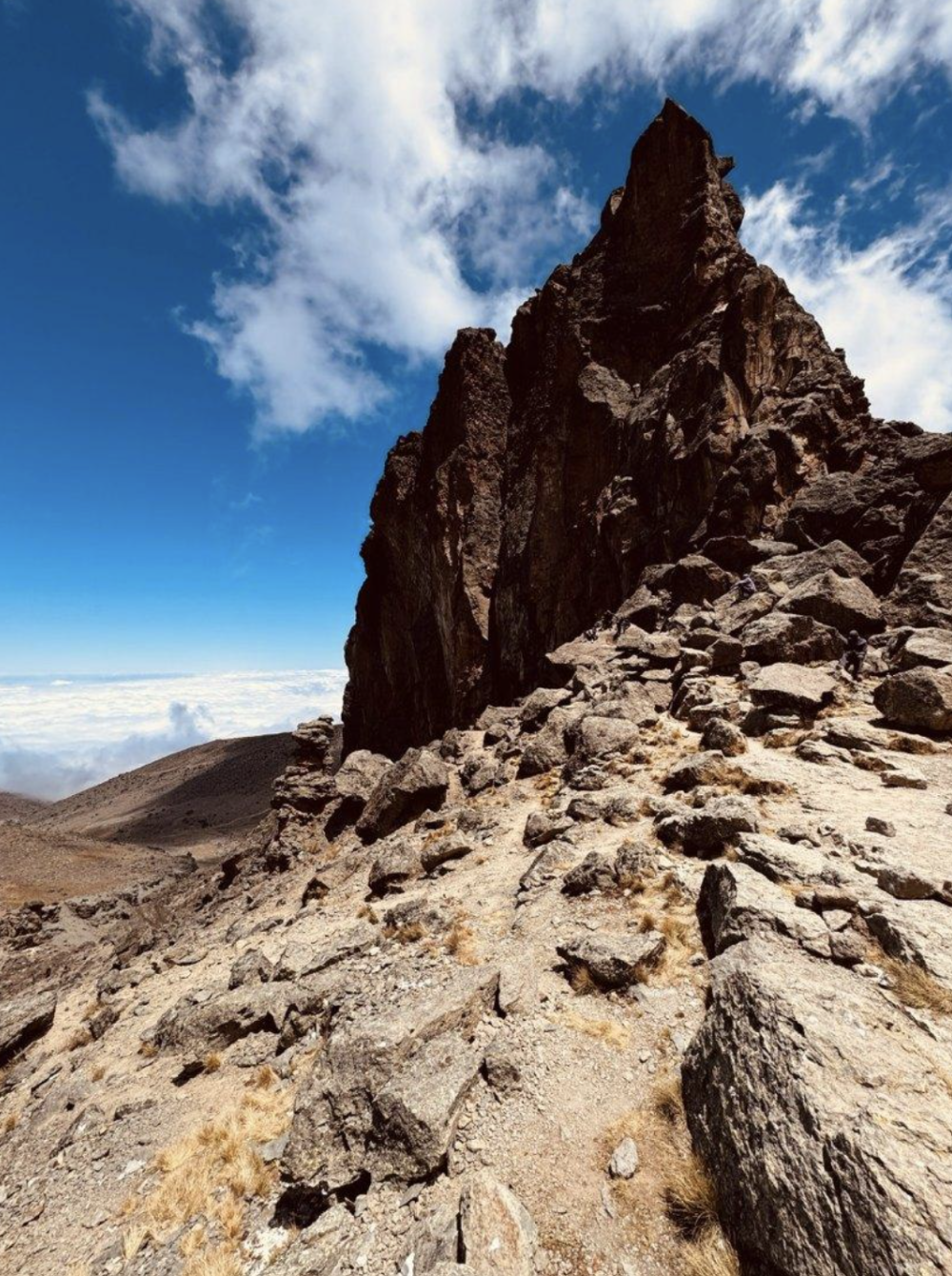
Lava Tower Camp. (Credit: Robert Otieno)
Then came the pizza our chef had prepared. To be honest, it shocked me in a conflicting way. Pizza high on a mountain is about as gas as lunch can get. But was my body going to process such a meal at such an altitude? Nope. Still, I couldn’t pass on the pizza, and that turned out to be a bad decision. I fought a stomach ache for the rest of the leg to Barranco Camp.
The descent was the plot twist. The moonscape softened into the Barranco Valley, a forest of giant groundsels — those spiky, prehistoric plants that look like something Dr. Seuss sketched at 3 a.m. and are native only to East Africa’s high mountains. At camp, the first order of business was not finding a chair to watch the setting sun. It was a restroom call.
The rest of the evening brought a few logical debates about the whole acclimatization method. Why would we haul ourselves up to 4,630 meters, eat lunch in the thin, cold air, then turn around and drop to Barranco Camp at roughly 3,960 meters?
Better acclimatization, apparently. Blah, blah, blah. Maybe it was my achieving self, always striving high and wanting to stay there. Besides, it was exactly what a naughty babe would do: make you climb all the way up to her, smile, and send you right back down to earn it.
Then came Kili’s boldest flirting yet. The Barranco Wall rose right above the tents, a sheer cliff we would climb in the morning, looking less like a route and more like a dare. This day was definitely complicated, dramatic and quite frankly, a little bit mean.
And I was already in far too deep to turn back.
Day 4
Approaching Base Camp
Altitude gain: 680m
Day 4 had a simple mission: reach Barafu Camp, the base camp for the summit push, at 4,673 meters. Finally, the base I had been so impatient for. And barafu, as any Swahili speaker will tell you, means ice. A camp named after the weather rather than the mood should have been my first warning.
But first, the wall. The Barranco Wall is roughly 250 meters of scrambling up rock ledges and narrow paths, nicknamed the Kissing Wall because you spend half of it hugging the rock. This was where the bouldering experience I had been warned about finally paid off. Hands, feet, trust and, maybe, a kiss.
My hiking boots and light daypack earned their keep too. I clamped onto whichever rock felt steadiest, swung a foot toward the next ledge, and powered up through my quads. Grab, swing, push. Repeat. What left me in awe, though, were the porters. Luggage in hand, they slipped swiftly through the rocks, the certainty of each step betraying years of experience up and down the mountain. After scaling the wall, I had a brief moment of contemplation. Being a porter is grueling work. I had the lightest backpack in my group, which made trekking, and even summiting, seem more possible. Carrying 30 kilograms on my back is not a situation I would ever want to be in. Mad respect to all of them. To my surprise, there were female porters too. Few as they were, I could not help but acknowledge them on the route.
“Mwanamke bomba!” I saluted them, which roughly means “Awesome woman!”
Beyond the wall, the route rolled through the Karanga Valley, where we stopped for lunch before the final push up to Barafu. The landscape had stopped trying to impress. No flowers, no heathers, just rock, dust and wind under a sky that felt closer than it should. This was an alpine desert, and it did not do small talk. Barafu clung to an exposed rocky ridge and was about as cosy as a car park. Naps in car parks? I’m no stranger to that. I set my head on my backpack, pulled my Caltech Y hat over my eyes, and drifted off into la-la land.
“I’m gonna kill you, you f****** c***!” Liam shouted, heading in my direction.
I jumped in shock, thinking the threats were meant for me. But he was shouting at Kili. Josh and Tim joined in, and for a moment there was an open invitation to join the mountain massacre. I steered clear out of the heightened reverence I have for such creations — a lesson drawn from my adventures in the Andes.
Still, here at last was what I had been begging for since Day 1: a new view. Kibo, Kili’s summit cone, loomed right above the tents, close enough to size up the climb ahead.
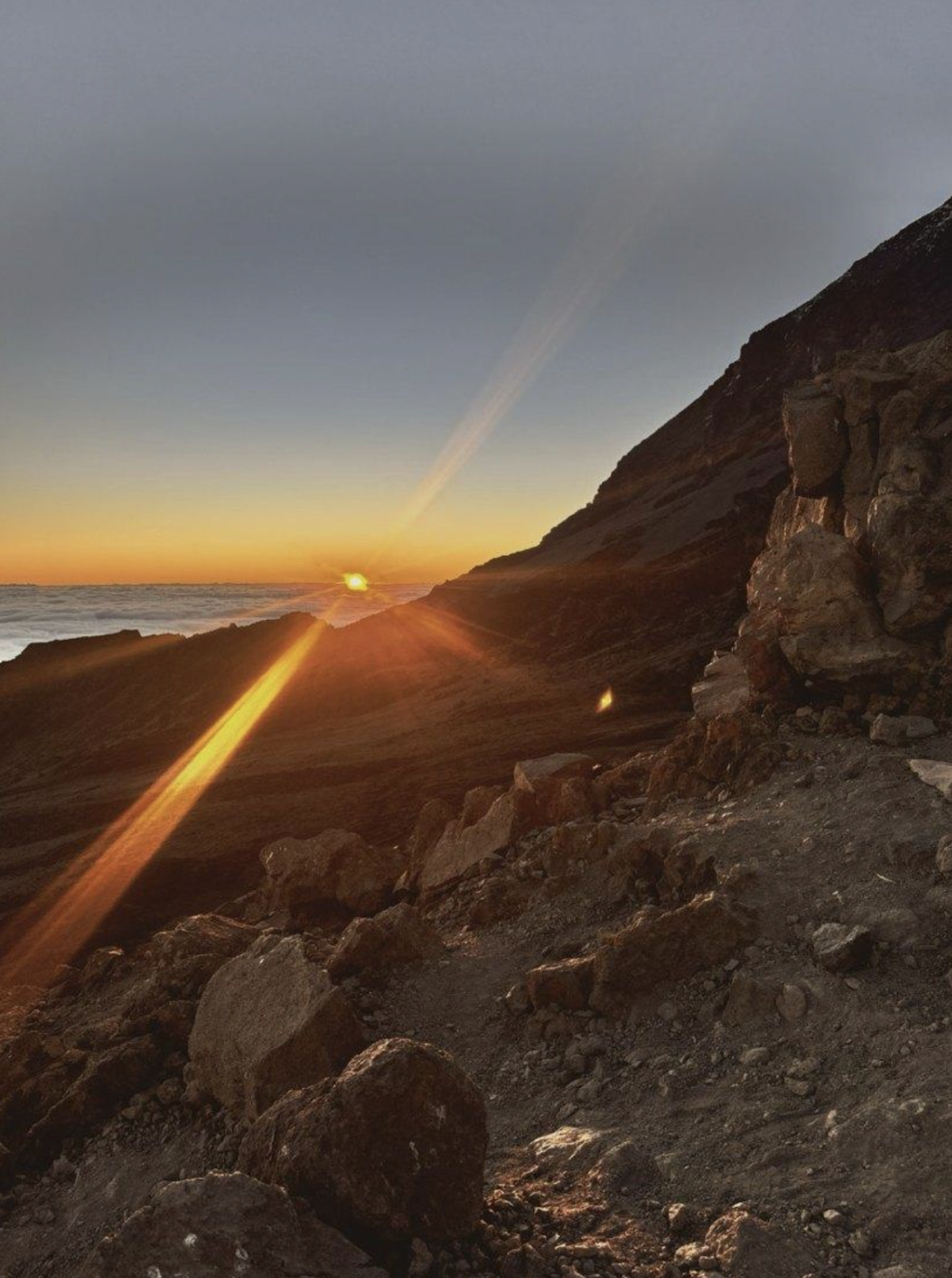
Sunset at Barafu Camp. (Credit: Robert Otieno)
Dinner was early and the briefing was serious. Lazaro laid out the plan: sleep a few hours, wake around midnight, layer up, check your headlamp, and start the final ascent in the dark so we would reach the top around sunrise. Silence filled the tent, the same silence that had filled the van on Day 1. My usually excited self was awfully quiet. This is it, I thought. The previous four days had all been building to this. At midnight, I would find out whether I was up for the challenge.
Outside, the stars took over the night in their thousands, spilling their light over the flat white bed of clouds that stretched out from our camp. I lay in my sleeping bag at 4,673 meters, doing the maths of what lay ahead. Tomorrow was the reason for everything: the lost bag, the rented jacket, the citizen discount, the border, four days without a shower.
Day 5
Summit
Altitude gain: 1255m
I woke at 11:45 p.m. and lay in my sleeping bag, thinking too hard about the task ahead. After being served coffee, I layered up, strapped on my headlamp and headed to the dining tent for breakfast. The stomach aches from Day 3 had dented my appetite, so I limited what I ate, a decision that turned out to be brutal hours later. It did not help to hear that Tim was feeling the effects of altitude sickness and had to drop to a lower camp. I was sympathetic, and having had altitude sickness myself, I understood his ordeal. Still, maybe, just maybe, he shouldn’t have called the mountain the c-word.
We left Barafu into a dark so complete that the world shrank to the boots in front of me and the small circle of light beneath them. Summit night on Kilimanjaro is a long, steep zigzag up loose scree, and temperatures can plunge well below minus 10 degrees Celsius. Forty-five minutes in, I was feeling the combined effects of too little sleep, too little food and, of all things, somebody farting in front of me. This time the culprit seemed to be Liam rather than Shane, though I couldn’t be sure: the earlier farts had been loud and public, but on summit night you only found out once you were already inside the blast radius.
Summit day, of all days, really? I had tolerated these lads’ horrors on the previous days, but on summit day I expected them to behave. I was under-fed, my lungs were grabbing whatever oxygen was available, and now they had to figure out what was oxygen and what wasn’t? I crashed. Instead of ruining everyone’s mood, I let the lads go way ahead, leaving me to take my time and keep what little fresh air there was to myself.
Up to Stella Point, the lack of sleep wrecked me, and the endless zigzags didn’t help. I was seeing waves, often drifting off the path before my guide came to fetch me. If I could reach Stella Point, I told myself, I could reach Uhuru Peak. Concentration, one step, one breath: that was all it took. At Stella Point, the crater rim at 5,756 meters, the slope finally eased and the sky began to change. The sun climbed above the clouds, and I felt hopeful. With hope came the energy to complete the task. Mawenzi Peak stalked us from behind, and beyond it lay a white bed of clouds with glimmers of urban light from the town of Moshi in the distance. We were over the ridge now, our sights set on Uhuru Peak.
We reached Uhuru Peak at 6:50 a.m. — 5,895 meters, the highest point in Africa. Uhuru is Swahili for freedom, and the peak took the name when Tanganyika gained independence in 1961. Three days earlier, I had sung Uhuru tutakwea: we will climb to Uhuru. Now I was standing on it. I came to the mountain to forget what was going on in my life, and for a few minutes at 5,895 meters, I did. The combination of standing on the highest point in Africa, so close to home, and everything the previous four days had thrown at me (limited gear, no shower, stomach aches, near heart attacks) weakened my knees. I fell to the ground, tears streaking down my face.
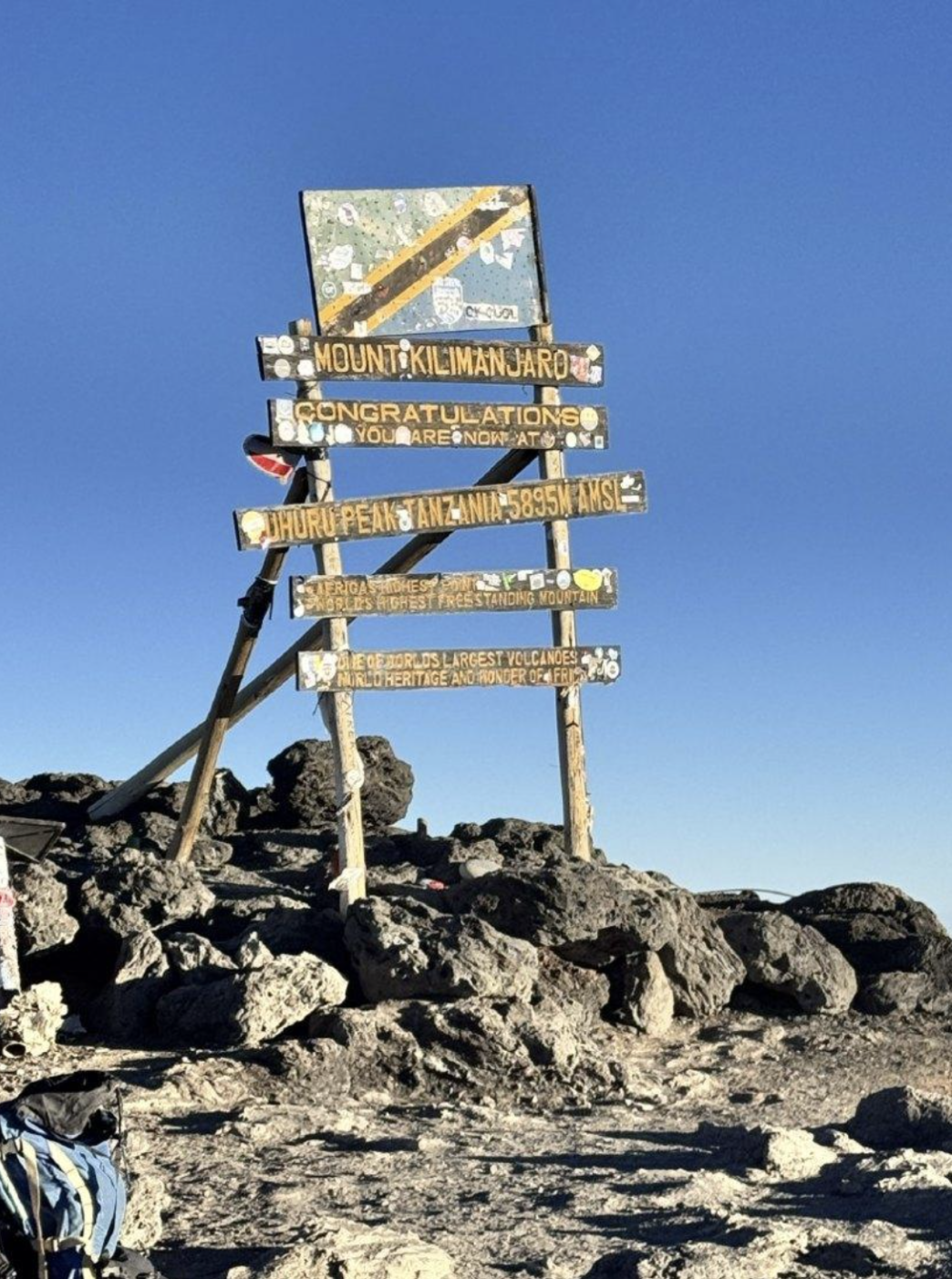
Uhuru Peak. (Credit: Robert Otieno)
A few photos at Uhuru Peak, and then came the long way down, which nobody mentions in the brochures. Because everyone in our group was desperate for a hot shower, we decided to descend the mountain in one day: 5,895 meters down to about 1,800. Knees complained, legs wobbled, and the thick air of lower altitudes felt like a luxury. The only joy in the descent lay with the porters and guides, who were exhilarated at the thought of coming back to their families early. Later, though, that joy found us too: The thicker the air got, the more energy we found, until we were zooming down through the alpine forest to the gate.
The van down to Moshi gave me plenty of time to think. I had witnessed Kilimanjaro in all its magnitude. Not in one giant leap, but in baby steps, with giant views ahead.
And when it got tough, all I relied on was the next step forward. After twelve hours in Moshi, I drove back to Kenya and saw her from the Kenyan side. There she was, the view I had wanted all along: all of her, at once. And what better way to celebrate her than to crack open a cold Kilimanjaro lager in the Swahili philosophy of baada ya kazi (after work)?
If I do lack words for the experience, if I had to narrow my experience into two words, they would be: Cheers, Kili.
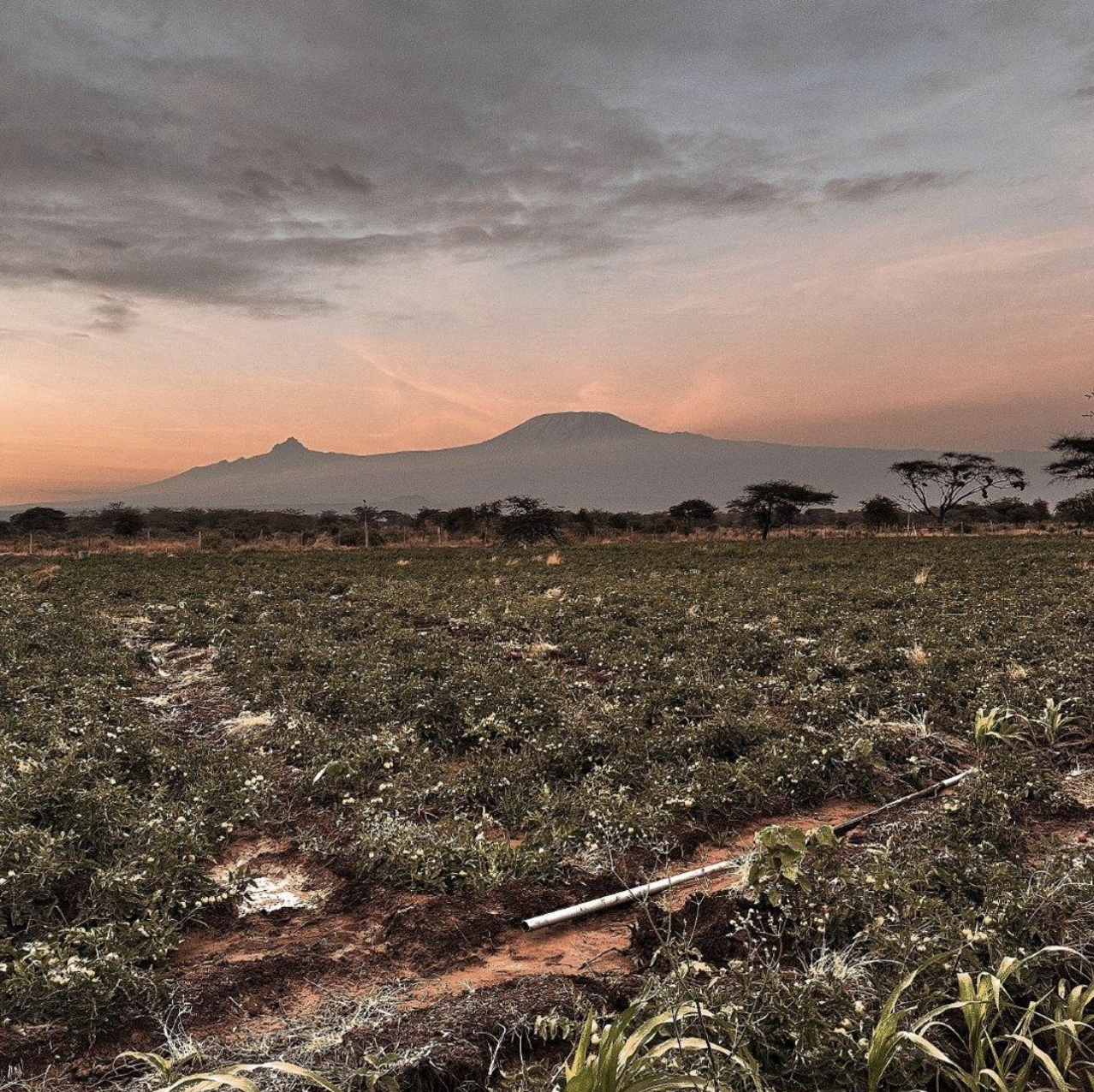
Kilimanjaro From Kenya. (Credit: Robert Otieno)
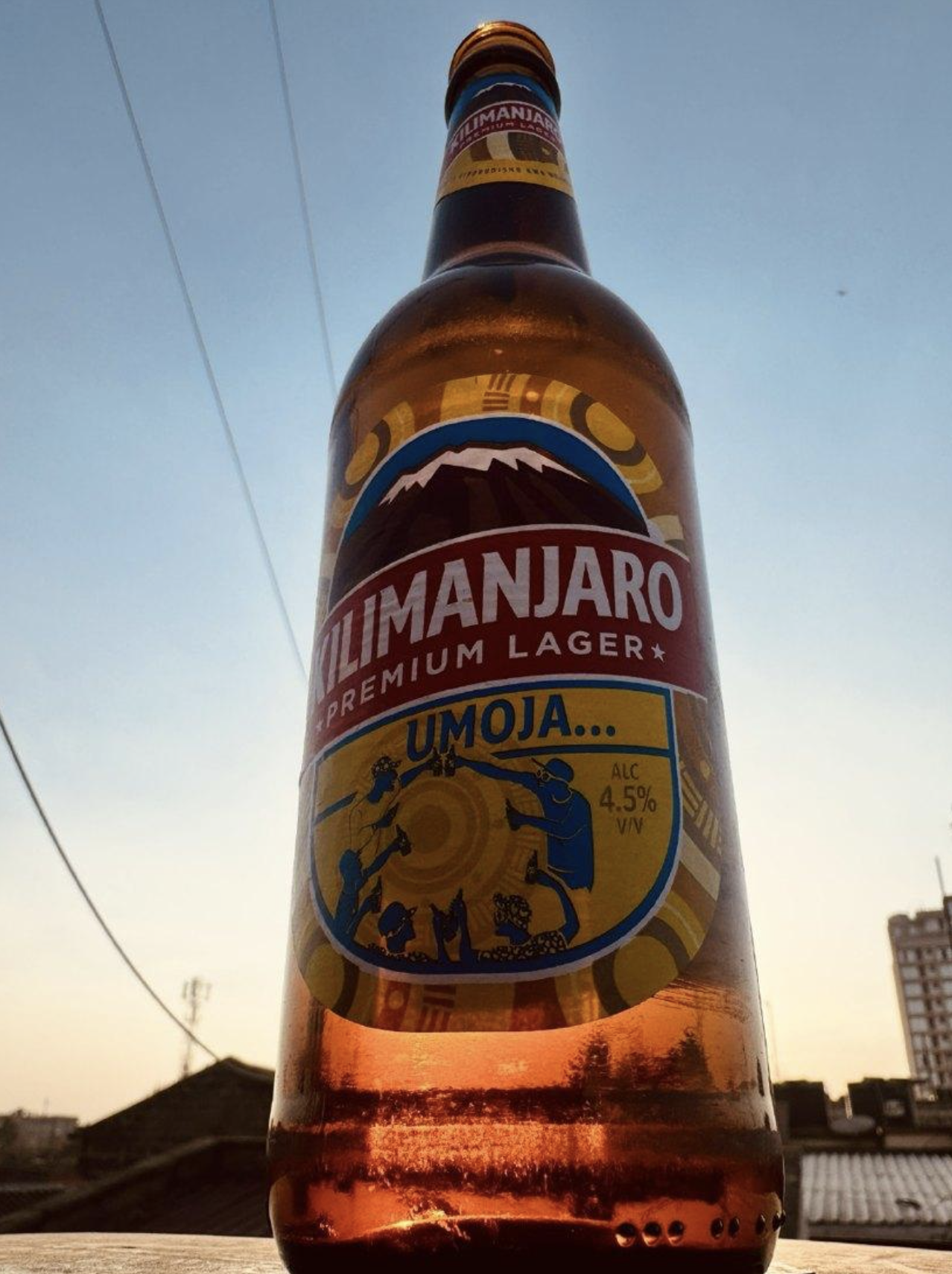
Kilimanjaro Lager. (Credit: Robert Otieno)