The personal belongings of Caltech professors past, including Richard Feynman, Linus Pauling, and Clair Patterson, went on the auction block, among other scientifically historic items. This summer, as part of its Geek Week, Sotheby’s hosted a History of Science & Technology auction at its New York headquarters on the Upper East Side of Manhattan, which featured several items that were once housed in Pasadena.
Lots spanned over two centuries and numerous fields in science and technology. Items provided by the Feynman family comprised 10 of the 55 lots in the auction’s catalogue. Eight of those 10 contained letters. The contents offered a glimpse into Feynman’s personal life, including one to his mother discussing pine needle tea as scurvy treatment and another describing his work schedule at Princeton. A letter to his sister, Joan, from the early 1940s, detailed his high school academic advice, telling her not to take a solid geometry course as he only learned 5 useful equations and “didn’t even learn how to spell pyramid,” and to take trigonometry or advanced algebra instead.
Fast forwarding a couple of decades after the letters, the auction sold xeroxed lecture notes from Feynman’s famous 1962-63 course on gravitation at Caltech, along with the original transcriptions of lectures 12-16 by Fernando Morinigo and Bill Wagner, who had transcribed all of the course’s 27 lectures given in East Bridge. The transcriptions for the first 11 lectures became a textbook after Feynman edited those transcriptions. Lectures 12-16 were added in 1971 in a third revision of the lectures. The lot sold for $23,040.
In the catalogue note for the lecture transcriptions, Sotheby’s stated that “despite the disclaimer that Feynman had not checked the lectures, NOTATIONS IN FEYNMAN’S HAND can be found” on lectures 12 and 14, providing “a behind-the-scenes glimpse into the extensive labor that went into producing the Feynman Lectures on Gravitation.”
Just north of East Bridge, on the other side of Caltech Hall, an item from the Gates and Crellin Laboratories of Chemistry fetched just over $5,000. Lot 28 of the auction consisted of a pair of polypeptide chain models from Linus Pauling and Robert Corey’s laboratory, with parts custom made from the Caltech chemistry machine shop. Pauling and Corey’s finding that peptide groups are planar due to partial double-bond character allowed them to propose the beta-sheet structure and, with Herman Branson, the alpha-helix in 1951, laying the foundation for modern structural biology. The models were offered by the estate of Richard E. Dickerson, a pioneer in structural biology who worked at Caltech before moving to UCLA.
The auction also included material from Clair Patterson’s laboratory in North Mudd. Patterson used measurements of lead isotopes in meteorites to establish an age of about 4.55 billion years for Earth. The lead contamination he encountered in that work led him to investigate industrial lead pollution and campaign against the use of lead in products such as gasoline. Lot 32, consigned by his family, sold for $76,800. It included the 24-karat gold J. Lawrence Smith Medal awarded to him by the National Academy of Sciences in 1973 for his work determining the age of Earth and the solar system, along with one of his Canyon Diablo meteorite samples. A bronze replica of the medal and four photographs documenting his career were also included.
Lots 53-55, the final three lots, were works by neuroscientist and artist Greg Dunn in collaboration with applied physicist Brian Edwards. Many on campus may recognize “Self Reflected,” an edition of which is displayed in the lobby of the Chen Neuroscience Research Building. The 23-karat gold microetching depicts neural activity through patterns of reflected light. “I hope this artwork serves as a daily reminder of the audaciousness of our attempts to tackle some of the most difficult and compelling scientific questions of our time,” said Dunn in 2021 in Caltech Magazine. The edition offered at Sotheby’s measured just over eight feet tall and 10 feet 7 inches wide, and weighed about 300 pounds. With an estimate of $800,000 to $1.2 million, it went unsold. Two smaller microetchings, “Brain Machine Interface,” which explores the possibilities and risks of technology connecting brains and machines, and “Chaotic Connectome,” depicting neural circuitry, sold for $38,400 each.
In total, the auction brought in $2.3 million across 50 sold lots, including Sotheby’s premiums. Early personal computers and their documentation were also sold. The Apple IIc and Apple Macintosh Plus Systems, in their original boxes, had estimates under $10,000; the systems sold for $35,840 and $44,800, respectively. A disbound Apple-1 Operation Manual, with penciled notes and faint stains, sold for $7,680.
Lecture notes, molecular models, and personal computers are familiar parts of everyday teaching and research. The historical significance of materials now sitting in campus offices and laboratories may become clear decades from now.
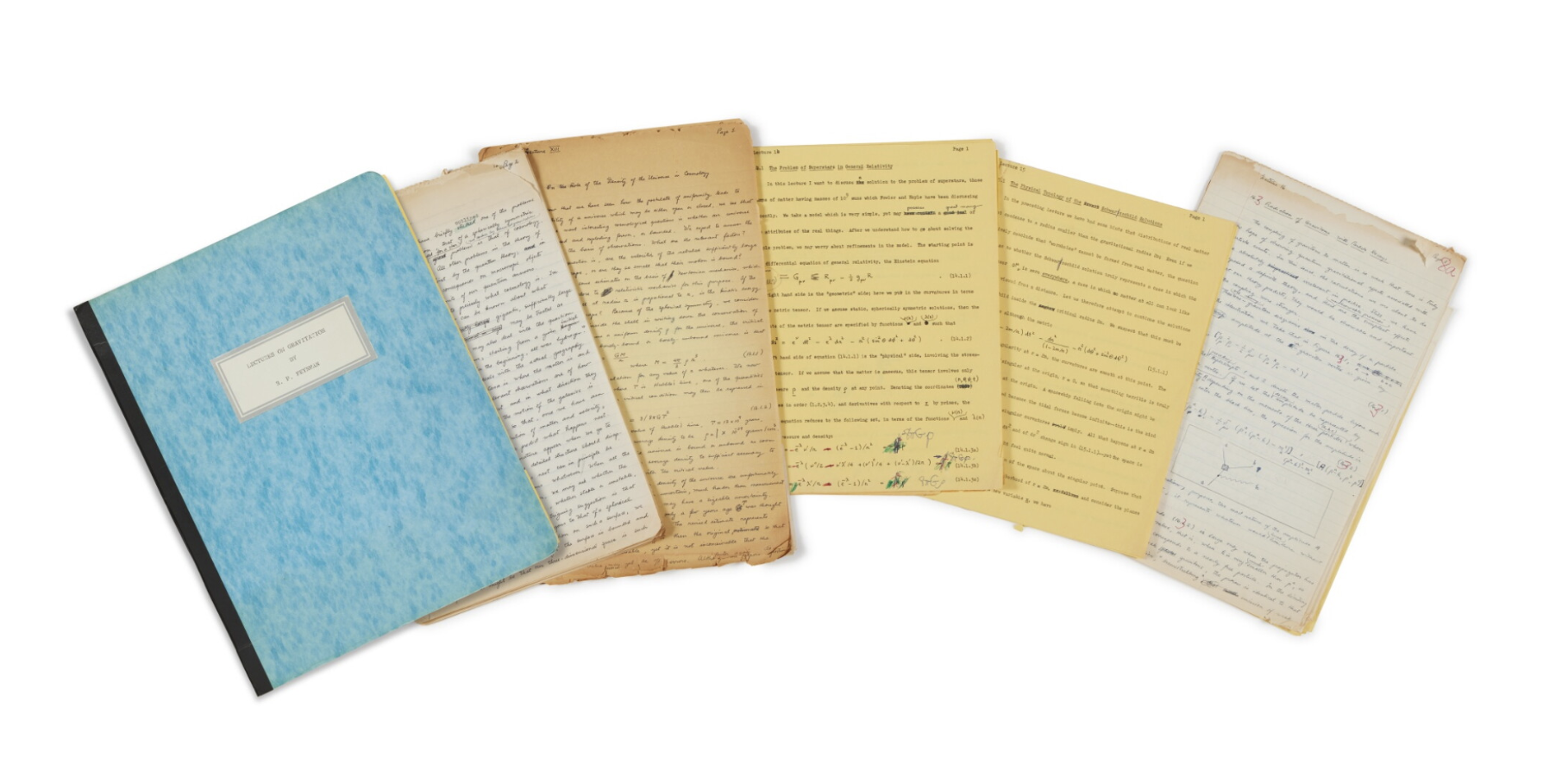
Feynman’s Lectures on Gravitation 1-16, including the original transcriptions of lectures 12-16 by Morinigo and Wagner. (Credit: Sotheby’s)
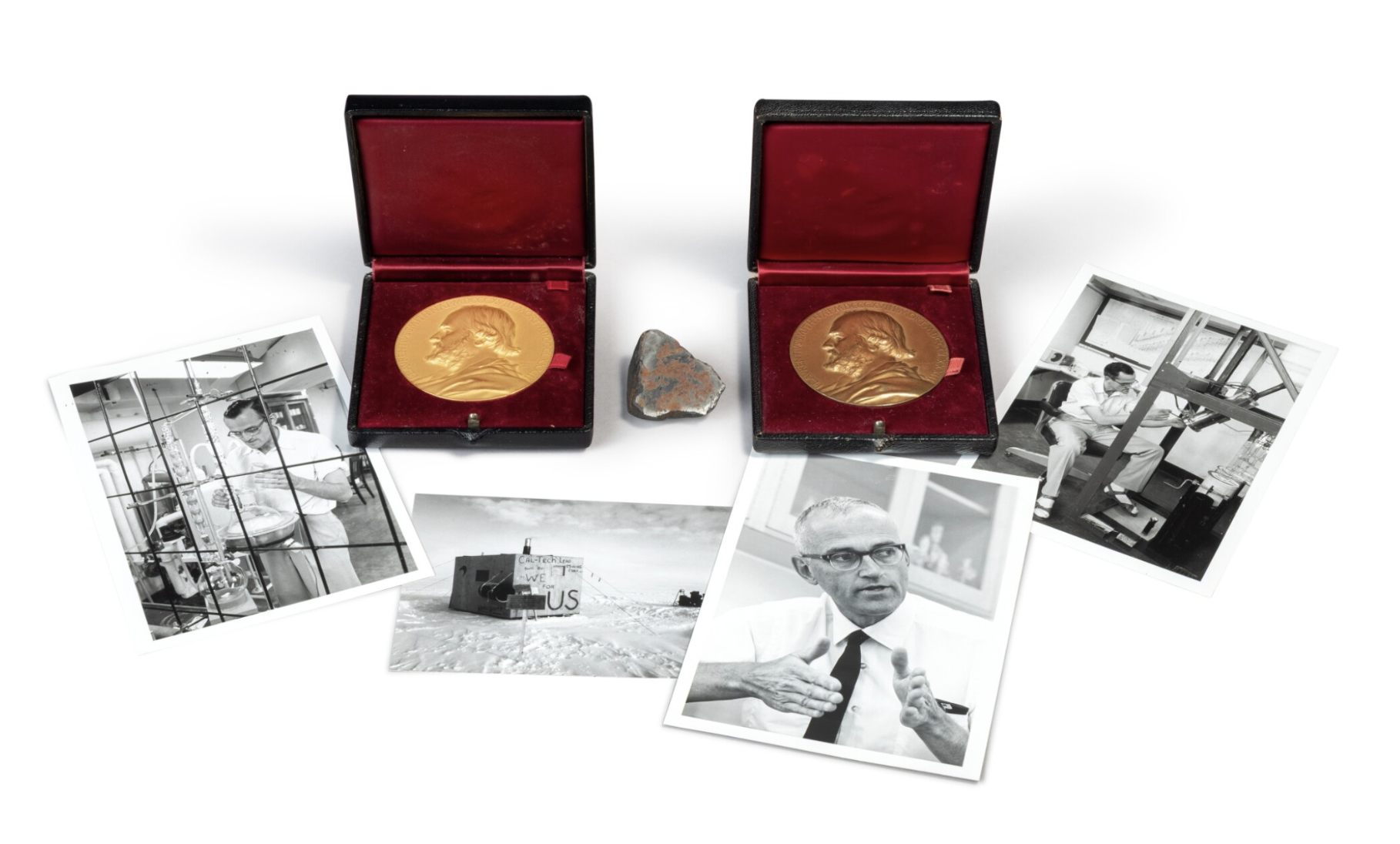
Patterson’s J. Lawrence Smith Medal, Canyon Diablo meteorite sample, bronze replica medal, and archival photographs. (Credit: Sotheby’s)
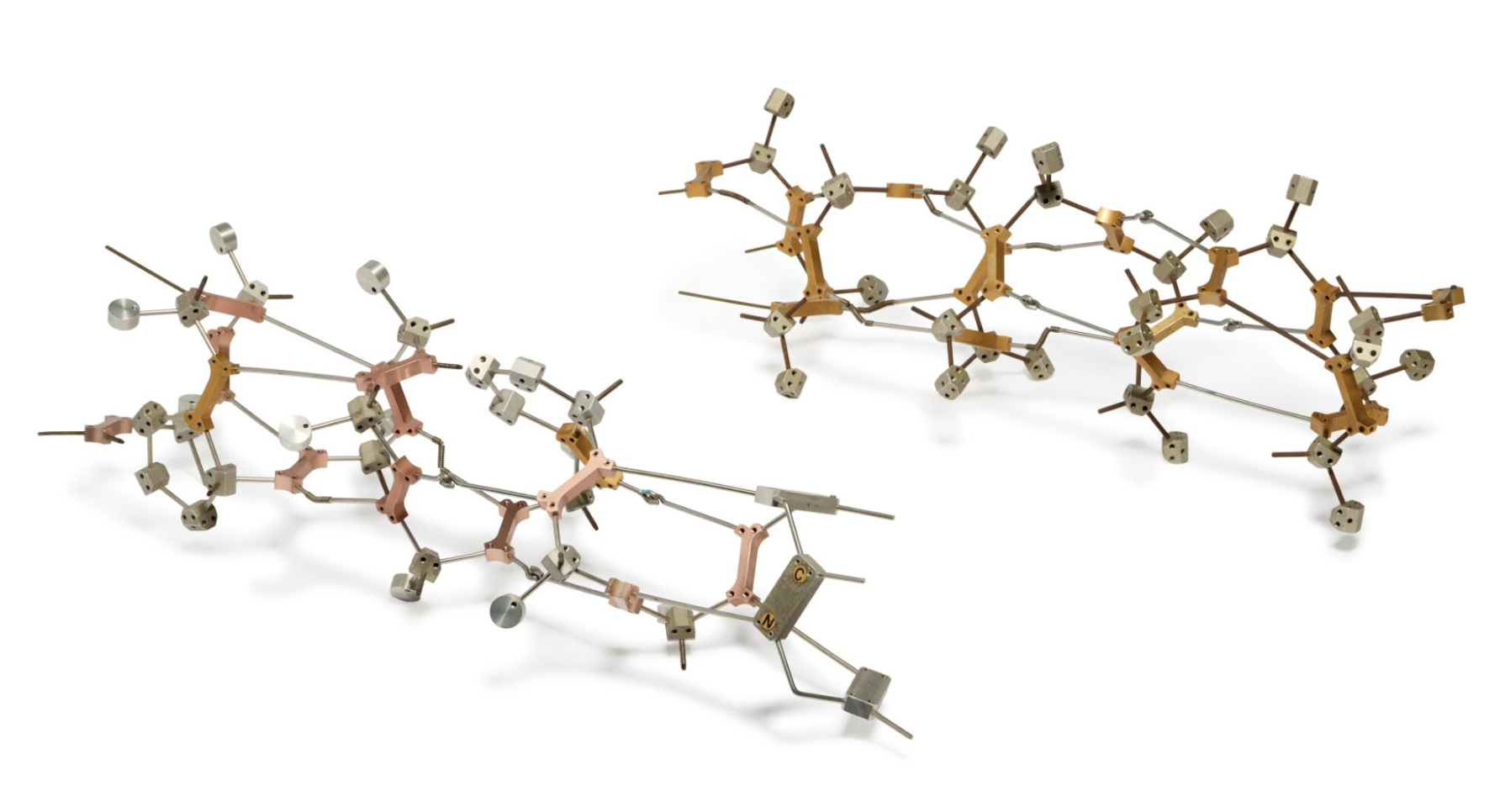
Polypeptide chain models from the lab of Pauling and Corey. (Credit: Sotheby’s)
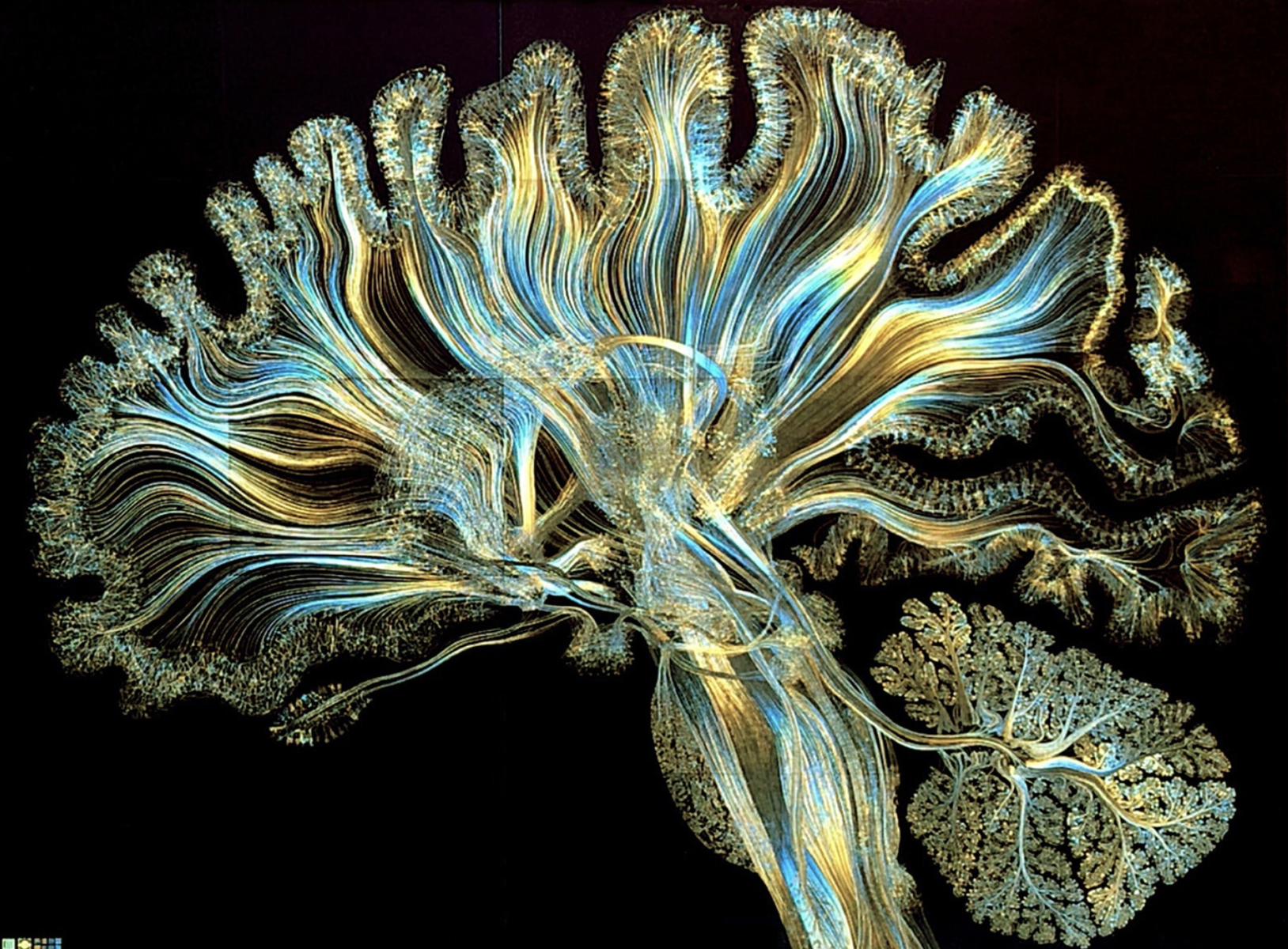
Greg Dunn & Brian Edwards, Self Reflected, 2019-2022. (Credit: Sotheby’s)